Updated Oct. 20: This explainer has been rewritten with current figures on cost, size and training, sourced to official records and major news outlets. Material that could not be verified has been removed.
The Atlanta Public Safety Training Center is a police and fire training campus in DeKalb County, just outside Atlanta. It opened in April 2025 after years of protests. Opponents call it “Cop City,” a name that stuck far beyond Georgia.
What is the Atlanta Public Safety Training Center?
It is a training campus for the Atlanta Police Department and Atlanta Fire Rescue Department. Police officers and firefighters train side by side there.
The campus includes burn buildings for fire training, a mock village for live scenario training, virtual reality training rooms, a driving course, a shooting range and a wellness center, WABE reported when it opened.
The Atlanta Police Foundation, a private nonprofit, led fundraising and construction. The foundation describes the project on its website.
Where is it?
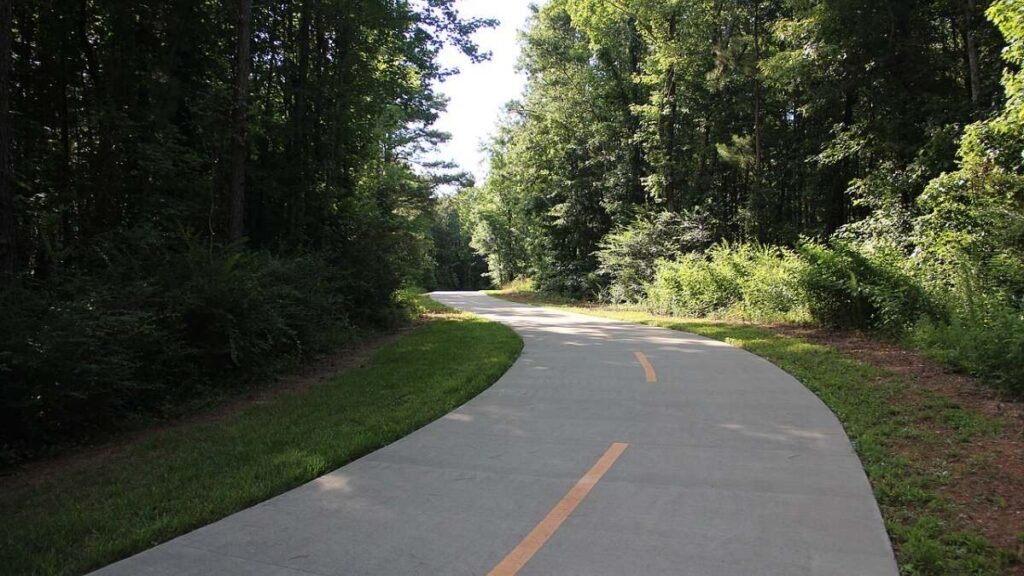
The center sits on 85 acres of the old Atlanta Prison Farm, city-owned land in unincorporated DeKalb County, southeast of downtown Atlanta. The site is part of a larger wooded area known as the South River Forest, next to Intrenchment Creek.
Because the land is in DeKalb County but owned by Atlanta, nearby DeKalb residents had no vote on the Atlanta City Council members who approved it, a point opponents raised early on.
When did it open?
The center held its formal ribbon cutting on April 29, 2025. Police recruits had already started training there in 2024, WSB-TV reported.
“This thing is state of the art, and it is for the people of Atlanta,” Mayor Andre Dickens said at the opening.
How much did it cost?
About $117 million to $118 million, according to The Atlanta Journal-Constitution and WABE. When the Atlanta City Council approved the land lease in 2021, the estimate was $90 million, with the city paying $30 million.
The city’s share grew. In June 2023, the council approved funding that put taxpayers’ cost at up to $67 million, including a 30-year lease-back arrangement of $1.2 million a year, Atlanta News First reported. Corporate donors, through the police foundation, paid most of the rest.
Who trains there?
By May 2026, about 650 recruits had trained at the center, including 458 police recruits and nearly 200 fire recruits, the AJC reported. The police department had held nine graduations there. In the center’s first year, eight academy classes put 157 new officers on the street, Atlanta News First reported.
City leaders say it has helped with hiring and keeping officers. “It’s certainly given us an edge in recruitment, but it’s helped our retention,” Police Chief Darin Schierbaum told WSB-TV in May 2026.
Why do activists call it “Cop City”?
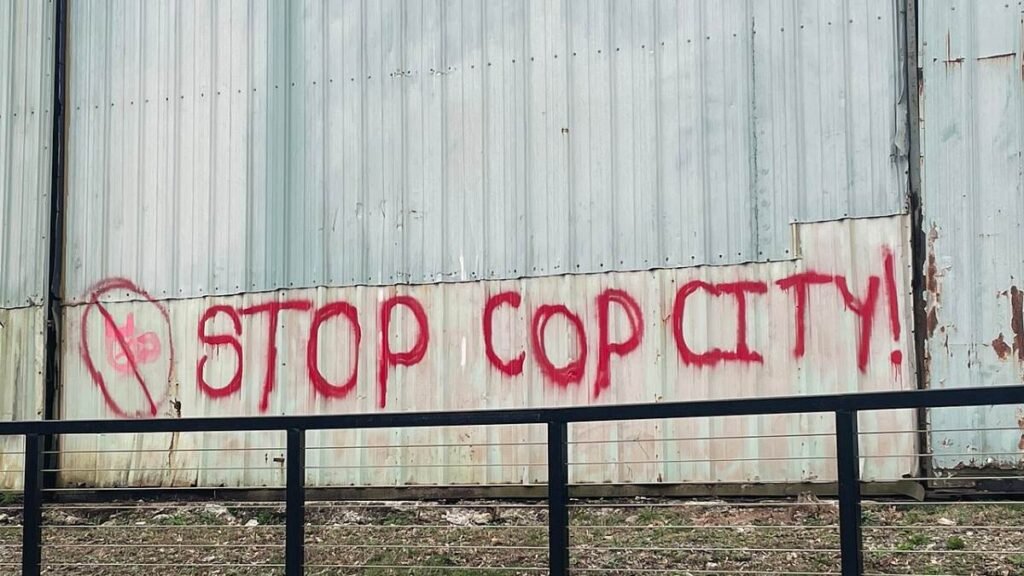
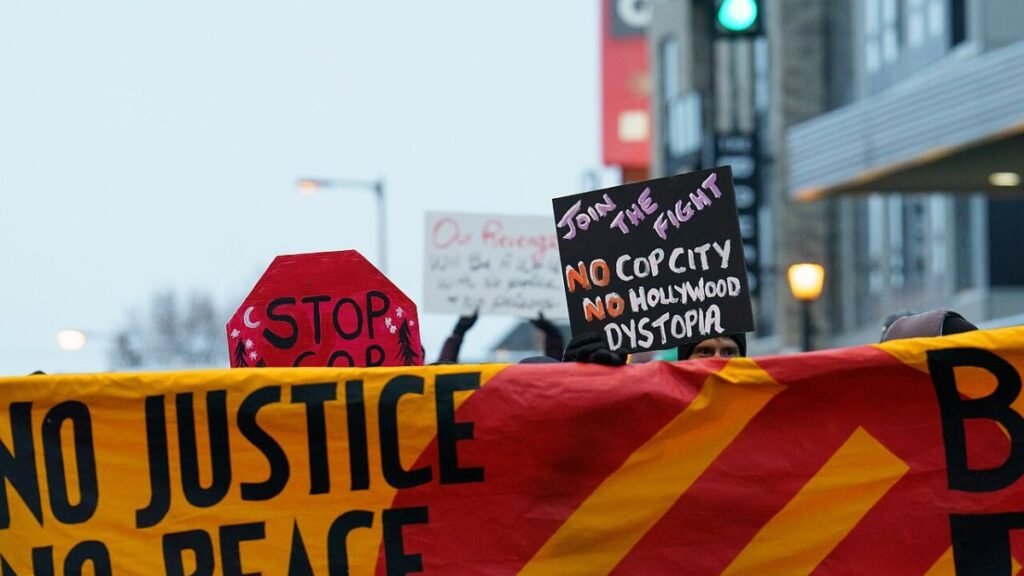
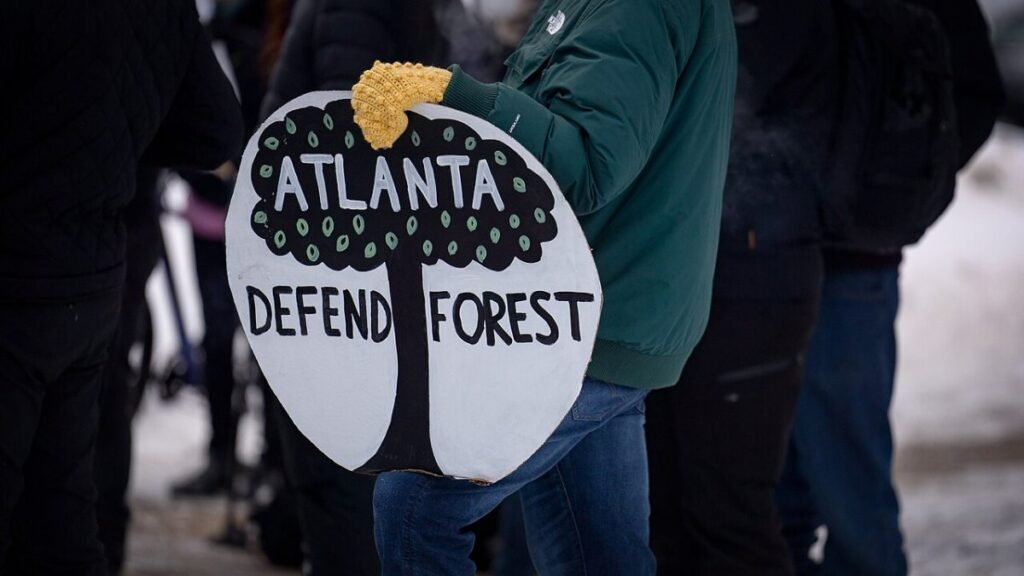
Opponents coined the name to argue that the campus, with its mock village and tactical training, would prepare police for urban conflict with the communities they serve, and that the money would be better spent elsewhere. The movement against it became known as “Stop Cop City.”
Supporters reject the label. They say Atlanta’s old training facilities were outdated, that the city struggled to recruit and keep officers, and that modern training, including de-escalation and scenario work, makes policing safer. “It’s the gold standard for public safety training,” City Council President Marci Collier Overstreet told the AJC in 2026.
Why did people protest?
Opponents raised several objections, including:
- The forest. Clearing part of the South River Forest for construction, and the risk of runoff into Intrenchment Creek
- Policing. Concerns that the center would militarize the police
- Money. Spending public funds on police training rather than other city needs
- Democracy. Nearby DeKalb residents had no vote on a project approved by Atlanta’s council
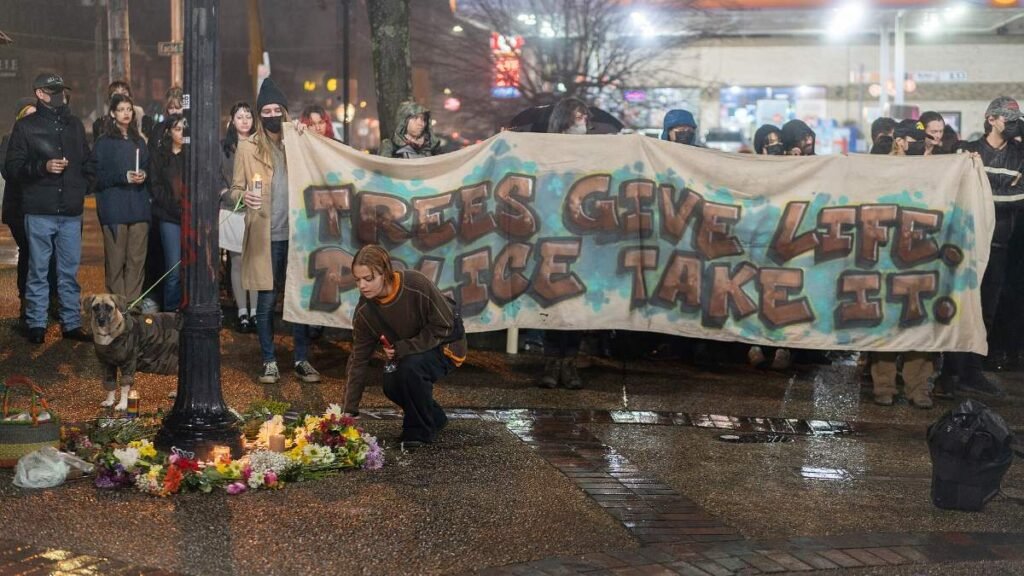
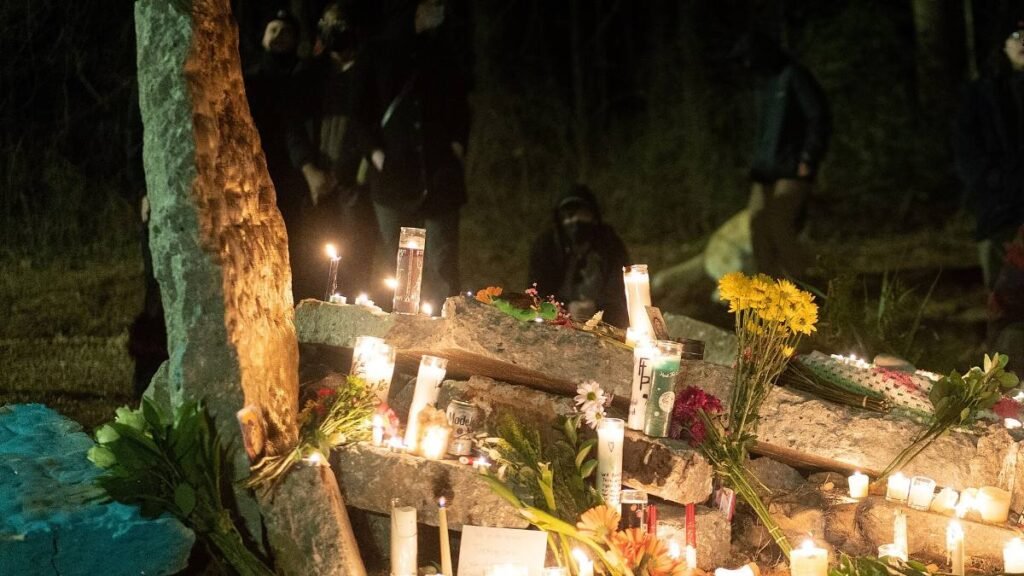
The protests drew national attention after Jan. 18, 2023, when Georgia State Patrol troopers shot and killed Manuel “Tortuguita” Paez Terán, a 26-year-old protester, during a raid on a camp in the forest. The Georgia Bureau of Investigation said Paez Terán fired first; the family has disputed that account. A federal judge dismissed the family’s civil rights lawsuit in 2026, WABE reported.
What happened with the environmental concerns?
Runoff from construction drew legal challenges. In January 2024, a federal judge refused to halt construction over alleged sediment flowing into Intrenchment Creek after the city committed $227,000 for extra erosion controls and inspections, Georgia Public Broadcasting reported. In late 2024, the city reached a settlement in a Clean Water Act lawsuit brought by the South River Watershed Alliance over stormwater discharges; the terms had not been made public as of that November, the AJC reported.
Were protesters charged with crimes?
Yes. In August 2023, 61 people were indicted under Georgia’s racketeering law over the protests, The Associated Press reported. A Fulton County judge dismissed the racketeering charges in December 2025, ruling that the attorney general lacked authority to bring them without the governor’s permission, AP reported. The state has appealed, and the Georgia Court of Appeals agreed to hear the case in February 2026, according to the Georgia attorney general’s office.
Could voters have stopped it?
Opponents gathered more than 100,000 signatures in 2023 to force a citywide referendum on the land lease. The city never counted them, and in January 2026 the 11th U.S. Circuit Court of Appeals vacated an order that had kept the petition drive alive, citing Georgia precedent limiting such referendums to charter amendments, and sent the case back to a lower court, CBS News Atlanta reported.
Is it finished?
Yes. The center has been operating since 2025. The arguments over it have not ended. They now play out in court cases, in City Council debates over police technology, and in the Atlanta Police Department’s recruiting numbers.
Sources
- WABE: Atlanta public safety training center opens after years of controversy
- The Atlanta Journal-Constitution: Training center opinions haven’t changed
- Atlanta News First: City Council approves funding for public safety training center
- AP via PBS NewsHour: 61 indicted on racketeering charges
- CBS News Atlanta: Referendum ruling
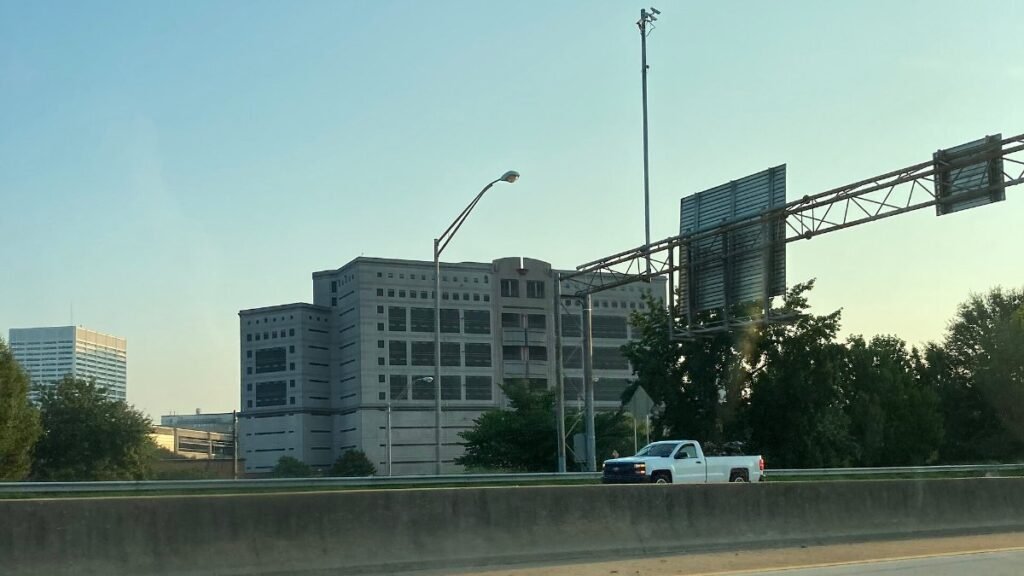
Featured image: Tyler Lahti / Wikimedia Commons, CC BY-SA 4.0 (cropped)

Pingback: Environmental Justice In Atlanta: Why Stop Cop City Still Matters After 2026 Completion - StopCop.City
Pingback: From Tree-Sits to Courtrooms: The Tactics Used by Activists in the Stop Cop City Movement - StopCop.City