Federal employees on the General Schedule will no longer have to sit in their current grade for a full year before they can be promoted. The Office of Personnel Management published a final rule in the Federal Register on Oct. 19 that scraps the time-in-grade restriction, a rule that has governed GS competitive-service promotions since the 1950s. The change takes effect Jan. 19, 2027.
OPM Director Scott Kupor told Federal News Network the old requirement was “probably a well-intentioned idea at one point in time,” but he called it an “anti-merit-based principle.” “If [employees] truly are performing above and beyond what we expect at that level, we should be able to promote them,” Kupor said in the interview.
The rule, published at 91 FR 65887, lands in a tough season for federal paychecks. The White House has proposed freezing most civilian pay in 2027, and the average employee share of health insurance premiums is set to rise by double digits for the third year in a row. Here is what the promotion change does, what it leaves alone and how it lines up with next year’s pay and benefits picture.
What changes under the time-in-grade rule
Under the old rule in 5 CFR part 300, subpart F, a candidate generally needed 52 weeks at the next-lower grade, or two grades lower in certain two-grade-interval occupations, before moving into a covered GS-6 or higher job. The final rule removes that waiting period entirely. Specifically:
- The 52-week clock is gone. Subpart F of 5 CFR part 300 is eliminated, so time served at a grade is no longer a governmentwide gate for promotion.
- Training agreements no longer need OPM sign-off. The rule strikes the training-agreement exception in Section 300.603(b)(6) and a related cross-reference in Section 410.307(a)(3).
- Conforming edits hit four other parts. OPM also amended 5 CFR parts 315, 316, 352 and 410 to remove references to the old restriction.
- Agencies keep the power to set their own waits. The language allowing agencies to expand on the restrictions disappears along with subpart F, but OPM says agencies still have that authority under 5 CFR 335.103(b)(1).
- Effective date is 90 days out. The rule takes effect Jan. 19, 2027, about three months after publication.
OPM’s own explanation in the rule is blunt. “[Time in grade] prevents nothing that a supervisor intent on favoritism cannot accomplish by waiting 52 weeks,” the rule states, as quoted by Federal News Network. “What it reliably prevents is the timely promotion of employees who are ready.”
OPM first proposed the change on May 28 and took comments for 60 days, through July 27. It received 75 comments, and 41 of them supported the change, according to the rule’s summary. This is not the agency’s first attempt. OPM finalized a similar elimination in 2008, then withdrew it in August 2009. The new rule says OPM is taking a position contrary to the one it took in 2009 and sets out its reasons.
What stays the same
Dropping the waiting period does not mean anyone gets promoted faster by default. The rule says plainly that it “does not create an entitlement to promotion” and that it “does not waive specialized-experience or education requirements.”
Several pieces of the promotion system are untouched:
- OPM qualification standards, including specialized experience, education requirements and position classification.
- Merit promotion procedures under 5 CFR part 335.
- Merit system principles and the ban on prohibited personnel practices, found at 5 U.S.C. 2301 and 2302.
- Within-grade step increases and quality step increases under 5 CFR part 531.
- Veterans’ preference, the Veterans Employment Opportunities Act and agencies’ collective bargaining obligations.
The rule also “does not require agencies to promote any employee or to accelerate compensation growth.” It also does not require agencies to promote career-ladder employees on any particular schedule. Agencies that want to keep internal progression intervals for specific jobs can do so if the intervals are job-related and documented in the agency’s merit promotion plan, and OPM says agencies should confirm that documentation is in place before Jan. 19.
“Eliminating a tenure-based measure of qualification does not eliminate the requirement of qualification,” OPM wrote in the rule.
Who could benefit and who’s worried
The clearest winners are high performers stuck behind a calendar, and the managers who want to move them. Kupor said the change “gives managers the flexibility and ability to move people at the pace that is appropriate,” and said it could boost interest in federal jobs among early-career workers. Commenters in support told OPM about candidates who were selected or already doing higher-grade work but were blocked by the 52-week rule, and one said the wait often stretched to 15 to 18 months in practice.
The worry is favoritism. OPM chose not to write new governmentwide standards for accelerated promotions, and that gap drew most of the criticism Federal News Network reported.
Max Stier of the Partnership for Public Service backed removing the rule but wants a replacement system for objective, merit-based fast-track promotions. “Managers and HR offices will not automatically know how to implement this new process well,” he wrote in July public comments, according to Federal News Network.
Rob Shriver of Democracy Forward said he was not opposed to removing the restriction but criticized the lack of standards, warning of “the obvious risk of accelerated promotions” being used to reward loyalists. Federal employment attorney Michael Fallings of the Tully Rinckey law firm said, “OPM should recognize that there is going to be more subjectivity and potential for favoritism by managers.”
Kupor pushed back on that concern. “I don’t think there’s anything nefarious about actually recognizing people differentially,” he told the outlet. He said he expects agencies to “establish very clear criteria,” which he acknowledged “may take some time, obviously, for agencies to roll that out.”
OPM said it will issue implementation guidance covering model criteria, documentation and how the change interacts with veterans’ hiring rules.
The final rule does not identify any union as a commenter. Two comments did raise bargaining obligations and asked for a 90- to 180-day transition. OPM declined to write a transition period into the regulation, set the effective date 90 days out and said it expects agencies to meet their labor-relations requirements when they revise promotion plans.
How it fits with 2027 pay and benefits
A faster promotion is one of the few ways a GS employee could see a meaningful raise next year. President Donald Trump’s alternative pay plan, sent to Congress in late August, would hold base and locality pay for most civilian employees at 2026 rates. “I have therefore decided to set at zero the pay adjustment to be made for the 2027 pay year,” Trump wrote, Government Executive reported. Federal law enforcement officers would get 3.8%.
The freeze is still a proposal. Final rates are set by executive order, which usually happens in December. Leaders of the Democratic-led Federal Workforce Caucus plan to try attaching the FAIR Act, which calls for a 4.1% raise, to a 2027 spending package during the lame-duck session, Federal News Network reported. Rep. James Walkinshaw, D-Va., warned “there’s not a guaranteed outcome.” The current continuing resolution funds agencies through Dec. 11.
Health costs are moving the other way. OPM’s open season highlights show the average FEHB enrollee share rising 10.9% in 2027. “Federal employees cannot afford to keep paying more while their paychecks fall further behind,” NTEU National President Doreen Greenwald said, Government Executive reported. AFGE National President Everett Kelley called the pay freeze “a slap in the face to the dedicated civil servants who keep our nation running,” according to Government Executive.
| Item | 2027 figure | Status |
|---|---|---|
| GS base and locality pay, most civilians | 0% (frozen at 2026 rates) | Proposed in alternative pay plan; executive order expected in December |
| Federal law enforcement pay | 3.8% | Proposed in alternative pay plan |
| FAIR Act civilian raise | 4.1% | Pending legislation |
| FEHB average enrollee share | +10.9% | Final, announced by OPM |
| FEHB government contribution | +8.6% | Final |
| FEHB overall average premium | +9.3% | Final |
| FEHB average biweekly increase, self-only / family | $13.37 / $40.25 | Final |
| PSHB average enrollee share (Postal Service) | +8.2% | Final |
| FEDVIP dental / vision average premiums | +1.0% / +1.6% | Final |
| Federal Benefits Open Season | Nov. 9 to Dec. 14, 2026 | Scheduled |
| Time-in-grade elimination | Effective Jan. 19, 2027 | Final rule |
FAQ
When can I be promoted without waiting a year?
Not before Jan. 19, 2027, when the rule takes effect. After that date, your agency’s merit promotion plan and the job’s qualification standards control the timing, not a governmentwide 52-week clock.
Can my agency still require a year in grade?
Yes. Agencies may keep job-related waiting periods under 5 CFR 335.103(b)(1). Any such requirement must be published in the agency’s merit promotion plan and available in writing to candidates. OPM says agencies should confirm those requirements are documented before Jan. 19, 2027.
Does this affect Wage Grade or pay-banded employees?
No. Time-in-grade never applied to Federal Wage System employees, pay-banded positions, most excepted-service employees or competitive-service appointments made through open competitive examination, so those employees see no change.
Do I still need specialized experience for a GS-7 or higher job?
Yes. OPM qualification standards, including specialized experience and education requirements, still apply in full. The rule removes only the time-served requirement.
Official links
- Federal Register: Elimination of Time-in-Grade (91 FR 65887)
- Federal Register public inspection PDF of the final rule
- OPM: Federal Benefits Open Season Highlights, 2027 Plan Year
- OPM: FEHB premiums
- OPM: PSHB 2027 premiums
- GovInfo: 2009 withdrawal of the earlier time-in-grade rule
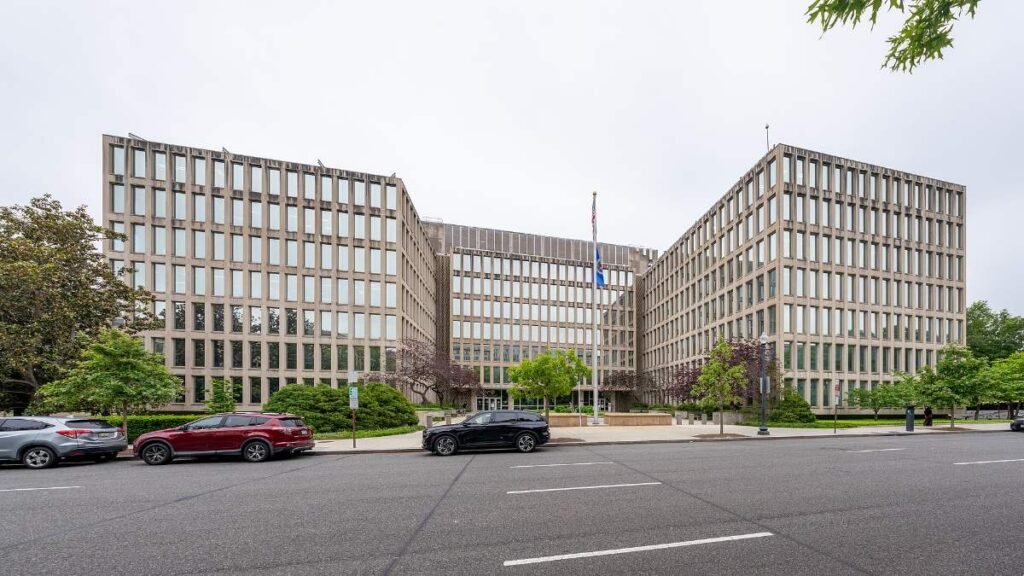
Photo: Ajay Suresh/Wikimedia Commons, CC BY 4.0.