SYRACUSE, N.Y. — When someone in Onondaga County calls the non-emergency line, there’s a good chance the first voice they hear isn’t a person. Since this summer, an artificial intelligence system has been answering some of those calls at the county’s 911 center, handing them to a human dispatcher only when it detects an emergency.
The dispatchers’ union says that’s illegal, and it has gone to court to shut the system off.
Civil Service Employees Association Local 834, which represents workers at the Onondaga County 911 Center, filed suit in state Supreme Court asking Judge Danielle Fogel to order the county to stop using the software. A hearing is set for Nov. 5, Syracuse.com reported.
The union argues the tool violates its contract and a New York law that bars public employers from handing work that employees now do to AI systems.
A law written for this fight
That law began as part of the state’s LOADinG Act, signed in December 2024. Its labor provisions, now in Civil Service Law Section 80, prohibit using an AI system in a way that leads to the “discharge, displacement or loss of position” of public employees, or the “transfer of existing duties and functions currently performed by employees” to an automated system, even if no one loses a job or pay, according to an analysis by the Manhattan Institute.
At first the protections covered only state agencies. Lawmakers extended them to school districts and public universities in late 2025, and in February 2026 to counties, cities, towns and villages. Public-sector unions, CSEA among them, pushed for that expansion, and Gov. Kathy Hochul signed it.
The law does carry an open question that the Onondaga case may help answer. Its protections apply to AI systems that make predictions, recommendations or decisions that “directly impact the public,” a definition the Manhattan Institute called open to interpretation. The union will need to show that a tool answering non-emergency calls falls under that definition.
What the county says the tool does
Onondaga County is paying Axon, the maker of Taser stun guns and police body cameras, $350,000 for a software package that includes the AI call-handling tool. Non-emergency calls make up about one in three calls to the 911 center.
County Executive Ryan McMahon and Emergency Communications Commissioner Julie Corn promoted the system at a July news conference. McMahon called it part of the county’s priorities “to adopt the use of AI.” At a budget hearing, Corn called the tool “a win for everyone.”
“What this actually does is unload non-emergency calls to allow emergencies to get through even better,” she said. The county plans to expand its use of AI, including for translation.
A county spokesman, Justin Sayles, declined to comment on the lawsuit.
Onondaga is far from alone in experimenting. Axon and Motorola Solutions have both invested in AI platforms for 911 centers, and startups such as Hyper sell AI call-handling platforms. The Nov. 5 hearing will be an early test of whether a union can use New York’s law to keep AI out of a dispatch room.
Documents and reporting cited
- Syracuse.com via Police1: N.Y. dispatcher union sues, alleging AI tool that answers some non-emergency calls violates state law
- Officer.com: Onondaga County 911 dispatchers union sues over AI call-handling system
- Manhattan Institute: New York’s LOADinG Act, protecting public-sector jobs from AI
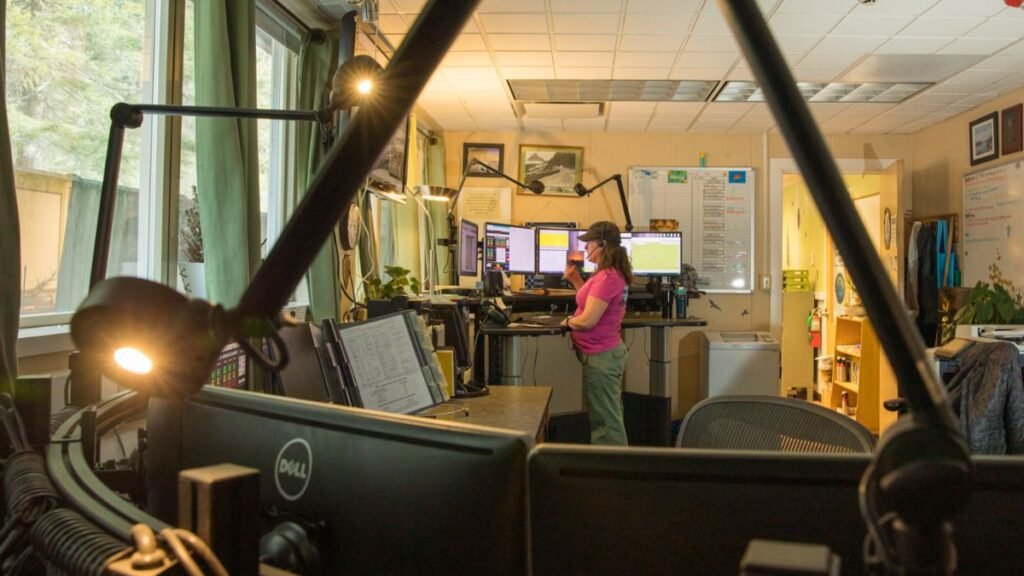
Featured image: Glacier National Park / National Park Service via Wikimedia Commons, public domain (cropped)