Updated Oct. 24, 2026: Adds the Army’s selection of an air defense unit for Golden Dome, the Pentagon’s 2027 fielding goal and a House bill to add Golden Dome sites to the Pentagon’s Critical Asset List.
The Pentagon’s Golden Dome missile shield has spent most of its first $22.5 billion. It doesn’t have a dime lined up for what comes next.
Fiscal 2027 started Oct. 1 under a stopgap spending bill, and that bill does nothing for Golden Dome. Stopgaps keep programs running at last year’s appropriated level. Golden Dome never had one. Its money came from the 2025 reconciliation law, not the regular defense budget.
Space Force Gen. Michael Guetlein, who runs the program, saw this coming. Without new money, he warned in August, “if they don’t figure it out, there is no Golden Dome because there is no funding,” The War Zone reported.
The money so far
Congress set aside $24.4 billion for air and missile defense in the reconciliation law, according to the Congressional Research Service. Guetlein’s office got $22.5 billion of it in March. The rest went straight to the services.
By mid-August, about 90% had been put on contract, Guetlein said, as reported by Aerospace America. That’s roughly $20 billion for radars, space-based interceptors, other interceptors and the sites to put them on. That money keeps flowing; the 2025 funds don’t expire until Sept. 30, 2029.
The problem is the next round. The administration asked for $17.5 billion for 2027. All but about $400 million of it depends on a second reconciliation bill that hasn’t gone anywhere. The $400 million that went through the normal budget process cleared the House and Senate Armed Services committees and House appropriators. The rest is stuck.
Senators: put it in the budget
At a Senate Armed Services subcommittee hearing Sept. 29, members of both parties said they like the idea of Golden Dome and hate how it’s been paid for.
“We need to get back to a bipartisan approach to this as soon as possible,” said Sen. Mike Rounds, R-S.D., who wants the program in the regular appropriations bill.
Sen. Angus King, I-Maine, called it one of the “most expensive and important initiatives of this government” and said skipping the appropriations process was “very bothersome.”
Sen. Deb Fischer, R-Neb., pointed out that a layered homeland missile defense was written into the 2024 defense policy bill her committee drafted. “So, it came from us,” she said.
Tom Karako, who runs the Missile Defense Project at the Center for Strategic and International Studies, told the panel the name might be part of the problem. He floated renaming the program so it’s less tied to one party, and suggested folding it into the Missile Defense Agency rather than building a new permanent office.
A test nobody can check
Guetlein says the work is paying off. In a test in late July, he said, the team “shot down everything that we put in the air in a matter of 34 minutes.” He wouldn’t say what was tested or what the targets were.
He’s sticking to the timeline, too: operational by “the summer of 2028, as we promised.” President Donald Trump has said it’ll be up before he leaves office in early 2029.
The total bill keeps growing. Trump put it at $175 billion when he unveiled the plan in May 2025. The Pentagon’s current estimate is about $185 billion, Air & Space Forces Magazine reported.
The team building it
While the money fight plays out, the military is laying groundwork. U.S. Northern Command stood up Joint Task Force-Gold in January to turn Golden Dome plans into deployed hardware, Air & Space Forces Magazine reported Oct. 16. The task force is led by Army Lt. Gen. John Rafferty, who also heads Army Space and Missile Defense Command, and has about 100 people at Peterson Space Force Base in Colorado.
Its teams are surveying sites. The first confirmed hub is Fort Story, Virginia. The task force is now building a defensive cyber team for Golden Dome, Col. Kevin Stonerook, Rafferty’s deputy, told reporters Oct. 14 at the Association of the U.S. Army’s annual meeting in Washington. “That’s one of the main things that we’re really focused on,” he said.
“They’re in a sprint to deliver materiel,” Rafferty said of the program office. The task force’s next planning sprint is set for the end of October, Defense News reported. Army Space and Missile Defense Command already operates about 40 Ground-Based Midcourse Defense interceptors, the core of today’s homeland missile defense.
Contracts are moving too. The Space Force revealed in April that it had picked 12 companies to compete for space-based interceptor work, Air & Space Forces Magazine reported. In July, the Space Development Agency awarded $1.75 billion for 36 more missile-tracking satellites that will feed Golden Dome, DefenseScoop reported.
Army picks a unit, but the 2027 money is still tied to reconciliation
The Army has set aside an air defense unit to operate Golden Dome equipment once it is fielded, Lt. Gen. John Rafferty, commanding general of U.S. Army Space and Missile Defense Command, told reporters at the Association of the U.S. Army’s annual meeting, Defense News reported Oct. 20. He didn’t name the unit. He called it “a well-trained organization that we know can meet the demands of Golden Dome for America when the systems are fielded.”
Rafferty said the design would let sensors, interceptors and command-and-control systems spread across the country work together, so any sensor can be paired with any shooter. “So we’re all in to help to deliver that,” he said. Pentagon officials want an early version fielded by the end of 2027 and a fuller system built out by 2035, according to Defense News.
None of that changes the money picture. The $17.5 billion fiscal 2027 request still rides on a $350 billion reconciliation package, with only about $400 million sitting in the base budget’s research and development accounts, Defense News reported. In the House, Rep. Keith Self, R-Texas, introduced H.R. 10766 on Oct. 6. It would direct the defense secretary to update the Pentagon’s Critical Asset List to cover what Golden Dome needs to be built and run. The bill went to the House Armed Services Committee.
The price tag question
The cost estimates keep climbing. The Congressional Budget Office put Golden Dome’s cost at up to $542 billion over 20 years in May 2025, and at nearly $1.2 trillion over the same span in a May 2026 analysis that assumed about 7,800 interceptors in orbit, The War Zone reported. The Pentagon’s own figure is about $185 billion.
That gap came up at a Sept. 29 Senate hearing. Sen. Angus King said nationwide coverage looked “not in the cards” given the cost estimates, and asked “who is protected and who isn’t?” Axios reported Oct. 7. Sen. Deb Fischer told a CBO official she wants “more informed analysis in the future.”
CBO got its first briefing from the Golden Dome office only about five days before that hearing, according to Axios. A Golden Dome spokesperson declined to comment to the outlet.
Almost all of this year’s request depends on a second reconciliation bill, Axios reported. Because Golden Dome has no regular appropriation to use as a baseline, it has “nothing to fall back on” under the stopgap that took effect Oct. 1, Air & Space Forces Magazine reported.
What happens Dec. 11
That’s when the current stopgap runs out. Lawmakers can pass full-year spending bills, extend the stopgap or carve out a special exception, called an anomaly, to give Golden Dome money to work with in the meantime. No anomaly made it into the current bill.
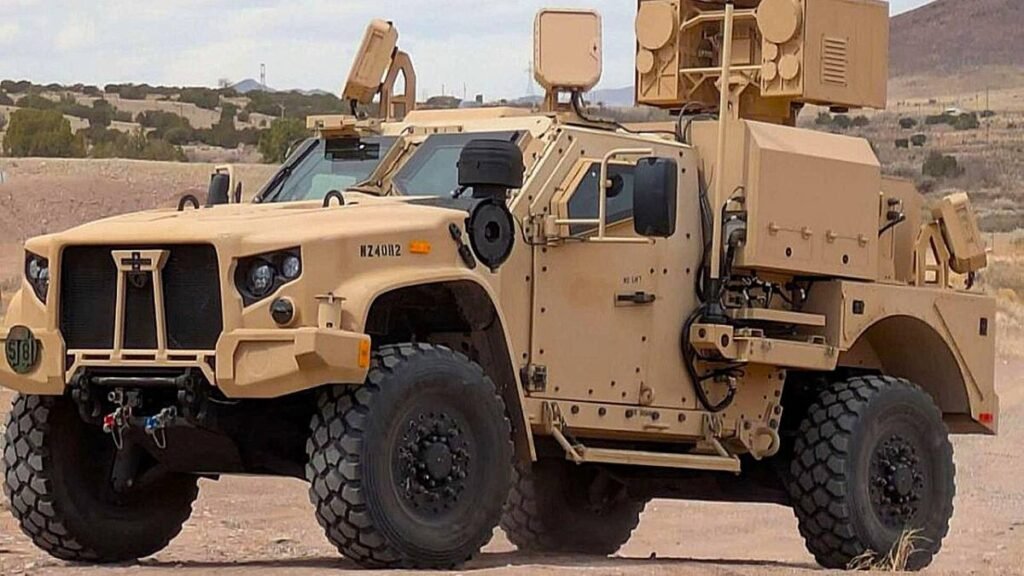
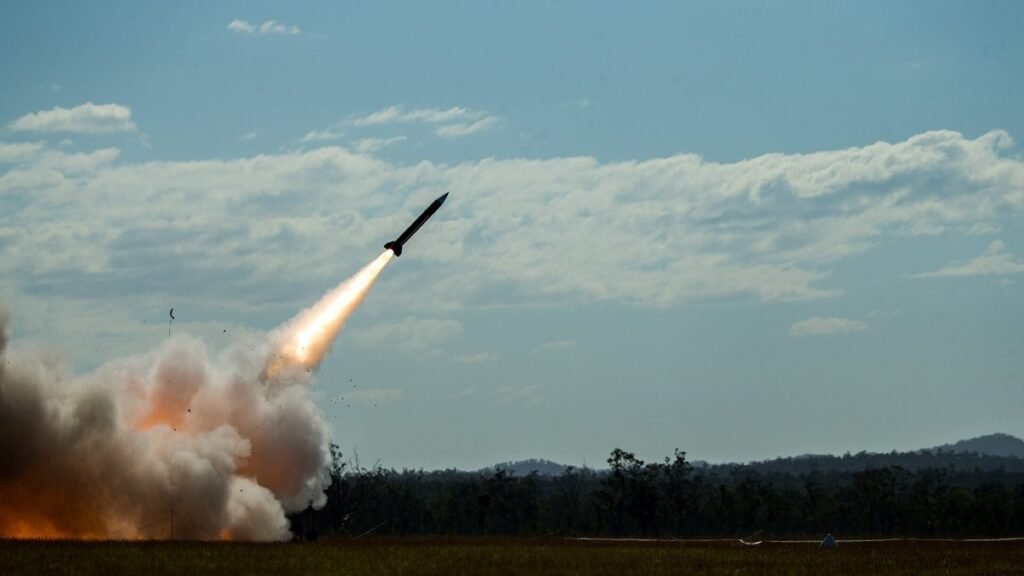
Meanwhile, the Pentagon is already fielding smaller defenses against cheaper threats, like the lasers and microwave weapons headed to five U.S. bases to knock down drones. Golden Dome is supposed to handle the big stuff: ballistic, cruise and hypersonic missiles aimed at the homeland.
Guetlein, for his part, insists what’s been bought will work. The capabilities on contract, he said, “are going to absolutely be effective against the threat.”
Sources and further reading
- The War Zone: Golden Dome at risk of grinding to a halt due to budget impasse
- Aerospace America: Golden Dome funding is 90% obligated
- Air & Space Forces Magazine: Lawmakers push for bipartisan fix
- Breaking Defense: If funding falters, there is no Golden Dome
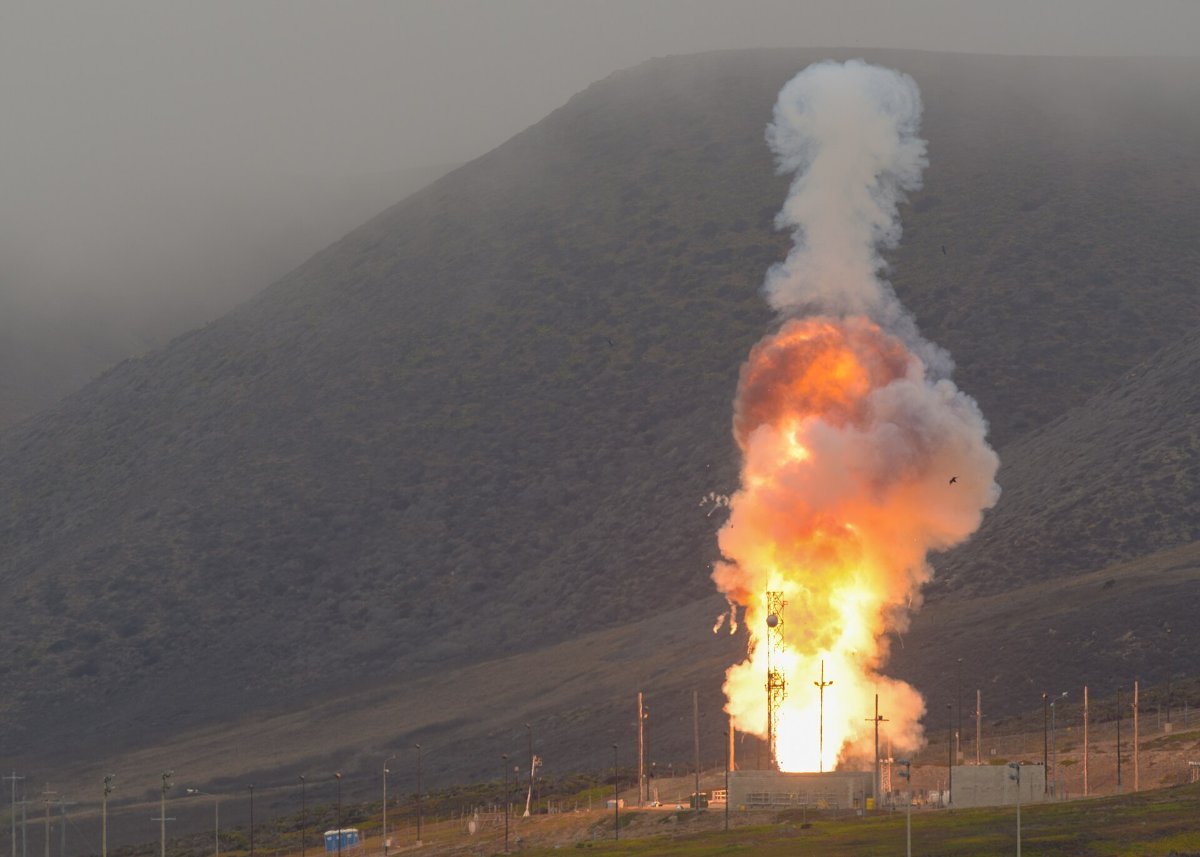
Featured image: U.S. Space Force SLD 30 photo by Senior Airman Tiarra Sibley / Wikimedia Commons, public domain (cropped)