The Justice Department has reached a three-year settlement with the police department in Lexington, Mississippi, two years after federal investigators found it jailed poor residents over unpaid fines, used excessive force and targeted Black residents, the department announced Oct. 16.
The out-of-court agreement requires the city of about 1,200 people to stop jailing anyone for unpaid fines without first checking whether they can pay, to drop warrants for unlawful fines and fees, and to end any quotas or incentives tied to stops, tickets or the money they bring in, according to the Justice Department and The Associated Press.
It is a settlement agreement, not a consent decree. No judge has to approve it, and neither the Justice Department nor The Associated Press reported an independent monitor.
What Lexington agreed to do
Under the agreement, the city and the Lexington Police Department must:
- Rewrite policies on fines and fees, bail and release, and conflicts of interest
- Stop jailing people for unpaid fines without first assessing their ability to pay
- Dismiss existing warrants for unlawful unpaid fines and fees, and move to expunge convictions based on them
- Ban quotas or incentive systems tied to stops, warnings, citations, arrests or the revenue they generate
- Train officers, with Justice Department approval, on stops, searches, arrests and use of force
- Build new systems to document and review officers’ conduct
The agreement lasts three years, AP reported. It can end early, or be extended, if both sides agree on whether the city has complied.
“The Department of Justice supports local law enforcement,” said Harmeet K. Dhillon, the assistant attorney general for civil rights, in announcing the deal.
J.E. Baxter Kruger, the U.S. attorney for the Southern District of Mississippi, said: “Today’s agreement reflects a shared commitment to meaningful and sustainable change.” The reforms aim to “strengthen public trust and promote practices that respect the rights and dignity of every person,” he said, according to AP.
City and police officials did not respond to AP’s requests for comment before publication.
What investigators found in 2024
The settlement grows out of a 2024 report. On Sept. 26, 2024, the Justice Department said its investigation found the Lexington Police Department violated residents’ constitutional rights in a long list of ways, according to its findings announcement.
Investigators said officers arrested and jailed people who could not pay fines without asking whether they were able to, used excessive force, and stopped, searched and arrested people without probable cause. They found illegal “investigative holds,” people arrested only because they owed money, money bail set without justification, people held in jail without prompt access to a judge, and retaliation against residents who criticized police.
The department also found that police discriminated against Black residents and operated under an unconstitutional conflict of interest because the department’s funding depended on the fines it collected.
The numbers were stark. Over two years, police made nearly one arrest for every four residents, more than 10 times Mississippi’s per-capita rate, according to the Justice Department. In 2023, Black people were 17.6 times more likely than white people to be arrested. The city was owed more than $1.7 million in outstanding fines.
Fines and fees made up more than a quarter of the police department’s budget, about $1,400 per resident, and the department had fewer than 10 officers, The Washington Post reported at the time.
“For too long, the Lexington Police Department has been playing by its own rules and operating with impunity,” Kristen Clarke, who then led the Civil Rights Division, said in 2024.
“Police have the authority to enforce the law, not to act as debt collectors for the City,” said Todd Gee, then the U.S. attorney.
The cases behind the numbers
The 2024 findings included specific episodes. Officers broke down a Black man’s door to arrest him for swearing at a public official. Officers followed a man home over a tinted windshield, forced their way inside and used a Taser on him for 15 seconds. On the day the federal investigation opened, officers used a Taser on a man nine times; he was accused only of disturbing a business and owed $7,500 in fines, the Post reported.
A man accused of not paying for $15 of gas was fined $300 and jailed for two weeks, according to the Post’s account of the findings.
How Lexington got here
- July 2022: The Board of Aldermen fires Police Chief Sam Dobbins after a recording surfaced of him using racist and homophobic language, Mississippi Today reported.
- June 2023: Jill Collen Jefferson, a civil rights lawyer whose group had sued the police department, is arrested while filming a traffic stop, NBC News reported.
- Nov. 8, 2023: The Justice Department opens its pattern-or-practice investigation.
- Sept. 26, 2024: The department releases its findings.
- May 2025: The ACLU of Mississippi sues the city on Jefferson’s behalf, alleging First, Fourth and Fourteenth Amendment violations.
- Oct. 16, 2026: The settlement is announced.
The law behind it
The Justice Department acted under 34 U.S.C. 12601, a provision of the 1994 crime bill that bars police from engaging in a “pattern or practice” of violating constitutional rights and lets the attorney general sue to stop it. The text is published by Cornell Law School’s Legal Information Institute.
The ability-to-pay requirement rests on decades of Supreme Court rulings. In Bearden v. Georgia in 1983, the court held that a person cannot be jailed for failing to pay a fine without a court first asking whether they were able to pay. Earlier cases, including Tate v. Short in 1971, barred turning fines into jail time for people who are poor.
The conflict-of-interest finding draws on Tumey v. Ohio in 1927 and Ward v. Village of Monroeville in 1972, in which the court found due process problems when a town’s justice system funds itself through the fines it imposes. The Justice Department’s 2015 investigation of Ferguson, Missouri, raised the same issues.
A different approach under this administration
The Lexington deal stands out because the current Justice Department has pulled back from police oversight. In May 2025, the Civil Rights Division dropped its lawsuits seeking court-enforced consent decrees in Louisville and Minneapolis, and retracted findings against police in Phoenix, Trenton, Memphis, Mount Vernon, Oklahoma City and the Louisiana State Police, according to a department announcement.
“Overbroad police consent decrees divest local control of policing from communities where it belongs,” Dhillon said at the time.
Lexington was not on that list. Instead, the department chose an out-of-court agreement, which leaves enforcement to the Justice Department and the city rather than a federal judge.
Separate lawsuits continue. Jefferson’s case against the city, filed with the ACLU of Mississippi, was still pending, according to the group. Three residents settled their own federal lawsuits against the city, officers and two former chiefs in August for undisclosed amounts, with no admission of wrongdoing, according to the ACLU of Mississippi.
If the agreement runs its full term, it will expire in October 2029.
Documents and reporting
- U.S. Department of Justice: Settlement agreement with the City of Lexington, Mississippi (Oct. 16, 2026)
- U.S. Department of Justice: Findings on the City of Lexington and Lexington Police Department (Sept. 26, 2024)
- The Associated Press via ABC News: DOJ reaches settlement with Mississippi police department
- U.S. Department of Justice: Civil Rights Division dismisses police investigations (May 21, 2025)
- 34 U.S.C. 12601
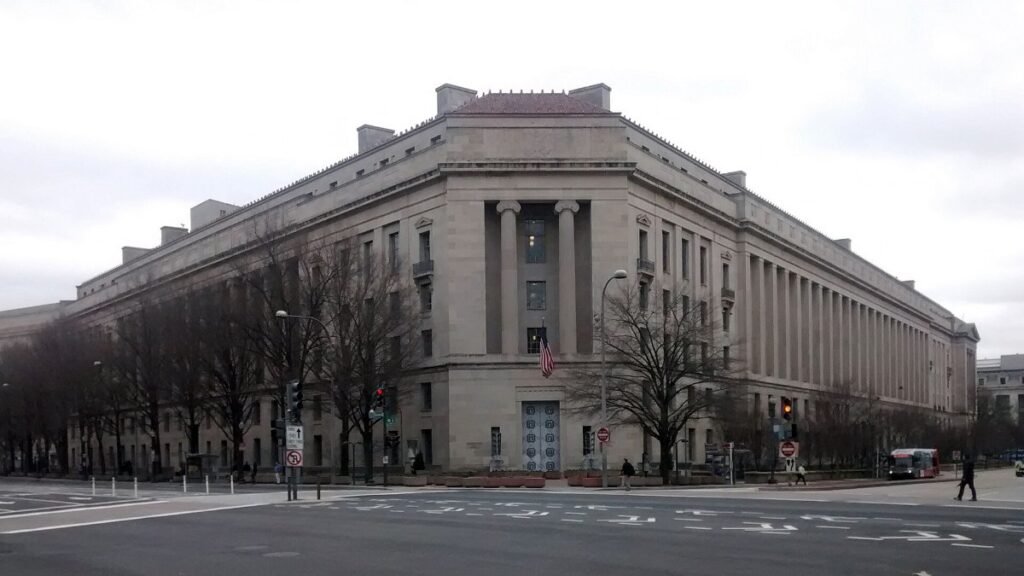
Photo: Gunnar Klack via Wikimedia Commons (CC BY-SA 4.0).