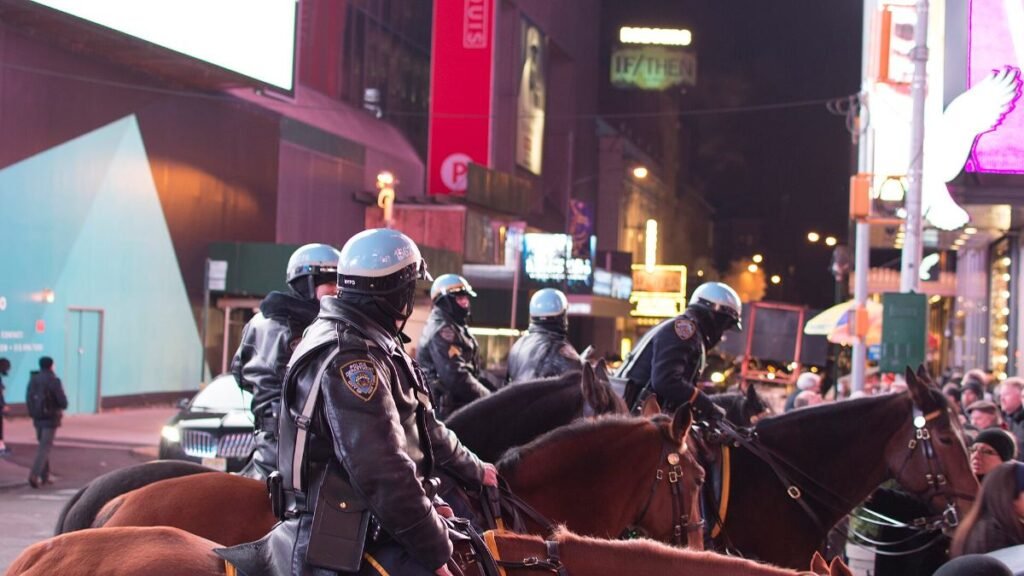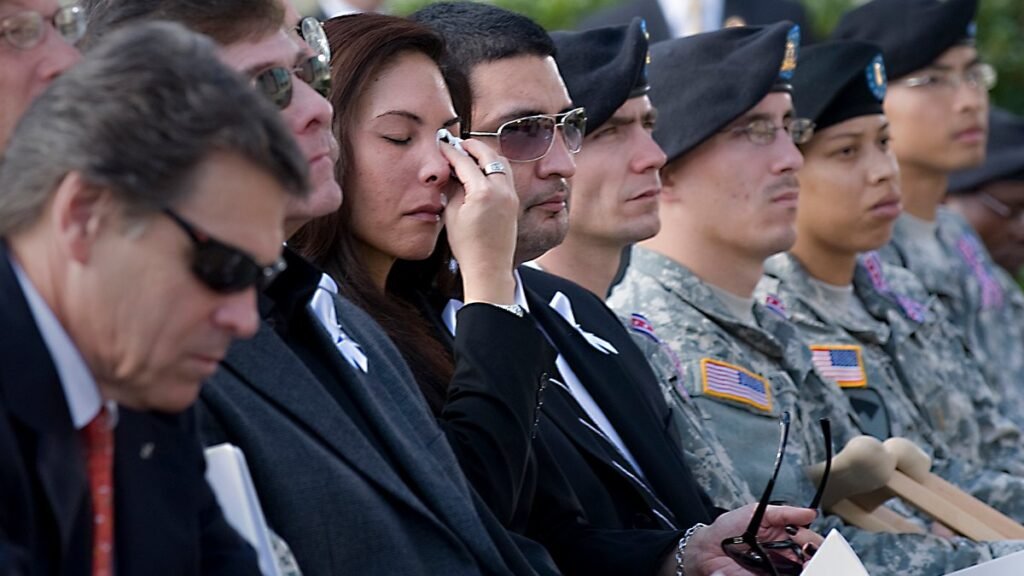
Standing in the White House Rose Garden on Oct. 15 with police officers and firefighters, President Donald Trump said he had directed Attorney General Todd Blanche to seek the death penalty in cases where someone kills a police officer, and said the same should apply to people who kill firefighters.
Trump said seeking execution would deter such attacks and predicted the shootings would stop quickly. “America owes our first responders a debt it can never fully repay,” he said, Police1 reported.
The event was a White House Rose Garden lunch honoring firefighter organizations, Reuters reported. Steve Hirsch, chairman of the National Volunteer Fire Council, which represents 750,000 firefighters, presented Trump with a helmet, USA Today reported.
It is not a new idea for Trump. But what a president can do about it is narrower than the speech suggested, and three things decide how far it goes: the Supreme Court, the states, and federal jurisdiction.
The case supporters make
Backers argue that the threat of execution deters attacks on officers and that killing someone who wears a badge is an attack on public order itself, deserving the law’s harshest penalty. Many police groups support tougher sentences in these cases. Some Police1 readers who commented on the speech made a simpler point: an executed killer cannot kill again.
The danger to officers is real. The FBI counted 64 officers feloniously killed in 2024 and 53 in 2025, according to its Law Enforcement Officers Killed and Assaulted reports. Killings fell, but assaults rose: 90,178 officers were assaulted in 2025, a rate of 13.8 per 100 officers and the highest in a decade, according to the FBI’s preliminary 2025 figures.
The Fraternal Order of Police counted 169 officers shot in the first half of 2026, 15 of them killed. “A police officer has been shot almost every day in the first half of 2026,” FOP President Patrick Yoes said in a July statement.
The speech came five days after Philadelphia Officer Shane Seiber, 40, a 10-year veteran, was shot and killed on a call about a man with a gun in West Philadelphia. His partner was shot 12 times and survived. The suspect, Eric Lewis, 35, is charged with homicide and is being held without bail, The Associated Press reported. District Attorney Larry Krasner called it “a brutal, senseless, horrific killing.”
The legal hurdle
In his March 2025 address to Congress, Trump called for a mandatory death penalty for anyone convicted of murdering a police officer. The Supreme Court has already ruled on that.
In Roberts v. Louisiana in 1977, it struck down a state law that made death the automatic sentence for killing a police officer, holding that sentencers must be able to consider the individual case. That followed its 1976 ruling in Woodson v. North Carolina against mandatory death sentences generally.
So any death sentence still has to go through a separate penalty phase in which a jury weighs aggravating and mitigating factors. In many states, killing an on-duty officer is already one of the aggravating factors that can make a murder eligible for death, according to the Death Penalty Information Center. Pennsylvania’s list also covers firefighters.
Reality check: most cases aren’t federal
The attorney general’s power reaches federal cases. A Jan. 20, 2025, executive order already tells the Justice Department to seek federal jurisdiction and the death penalty “regardless of other factors” when a law enforcement officer is murdered, and to encourage state prosecutors to bring capital charges. It also directs the attorney general to make sure states have enough lethal injection drugs.
But the large majority of police killings are prosecuted by local district attorneys under state law. Federal prosecutors can step in only when a federal crime is involved, such as the killing of a federal officer or certain firearms and drug offenses tied to the killing. One federal law, 18 U.S.C. 1121, covers killing a state or local officer working with federal agents on a federal criminal investigation.
The Justice Department has been busier with capital cases since Trump returned. By April, the administration had authorized seeking death against 44 defendants. “Under President Trump’s leadership, the Department of Justice is once again enforcing the law and standing with victims,” Blanche, then acting attorney general, said, NPR reported. The department also moved to reinstate single-drug pentobarbital injections and add the firing squad, with electrocution and lethal gas as fallback methods, according to the Death Penalty Information Center.
Authorizations have not translated into executions. About a third of the defendants approved since January 2025 have since had death taken off the table, The Intercept found in July. Only three people remain on federal death row after President Joe Biden commuted 37 of 40 federal death sentences in December 2024, and no federal execution has taken place since January 2021.
The state map
State policy is where most of these cases land, and it varies widely. Twenty-seven states have the death penalty and 23, plus Washington, D.C., have abolished it, according to DPIC’s state tracker. Four states with the death penalty have governor-imposed moratoriums: California, Ohio, Oregon and Pennsylvania.
Pennsylvania, where Seiber was killed, is one of them. Gov. Josh Shapiro announced in 2023 that he would not sign execution warrants while in office, so even a death sentence there would not lead to an execution under his administration.
Public support has also slipped. Gallup’s October 2025 poll found 52% of Americans favor the death penalty for murder, the lowest since 1972, and 44% oppose it, the highest since 1966, DPIC reported. Among adults 18 to 34, support was 41%.
Firefighters
Trump’s remarks on firefighters were looser. “They’re shot at going up ladders. They get shot up in some neighborhoods. You ought to blow up the damn place,” he said, Police1 reported. He also said he wanted the death penalty for “anybody that murders a firefighter going up a ladder,” Reuters reported.
The January 2025 order names law enforcement officers, not firefighters. Extending the policy would take a new directive, federal jurisdiction in each case, or action by state legislatures, which decide what counts as an aggravating factor in their own capital statutes.
Where this reporting comes from
- Police1: Trump renews calls for death penalty for those who kill officers
- Reuters: Trump says he wants death penalty for anyone who kills a firefighter
- FBI: Law Enforcement Officers Killed and Assaulted, 2025
- The White House: Restoring the Death Penalty and Protecting Public Safety (Jan. 20, 2025)
- NPR: DOJ recommends firing squads, more execution methods
- The Intercept: Federal death penalty prosecutions under Trump
- Death Penalty Information Center: State by state
- Cornell LII: Roberts v. Louisiana, 431 U.S. 633 (1977)
- Cornell LII: Woodson v. North Carolina, 428 U.S. 280 (1976)
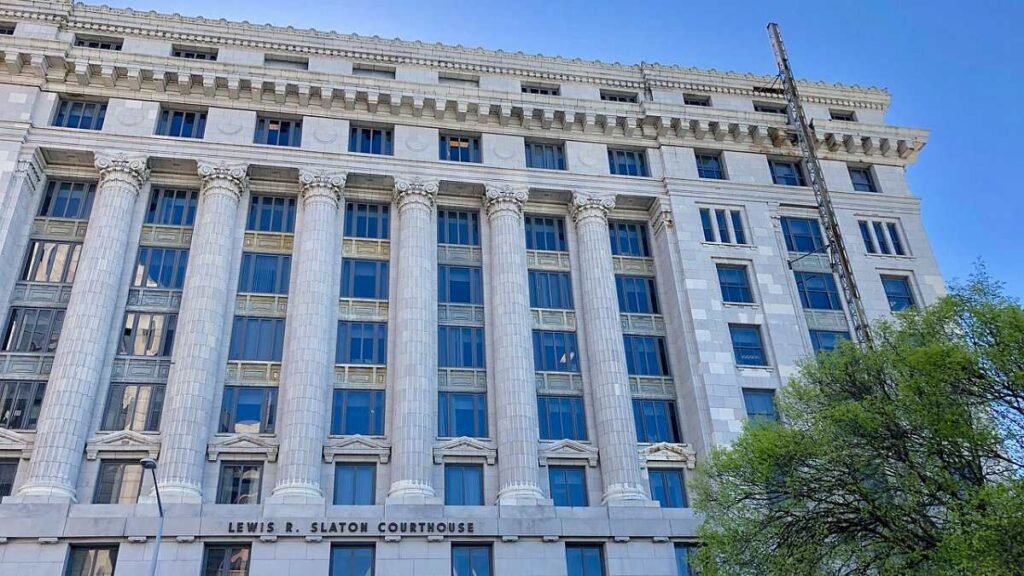
Photo: Carol M. Highsmith via Wikimedia Commons (public domain).