The Army’s biggest trade show opened Monday in Washington with a new acting secretary at the podium, a lot of drones on the floor and a few announcements that will shape what soldiers drive, shoot and do for a living over the next decade. Here is what stood out from the first day of the Association of the United States Army’s annual meeting.
Telle’s first big speech. Acting Army Secretary Adam Telle, who took over after Dan Driscoll resigned Aug. 31, used his first major address to troops to go after the service’s habits. He opened with Genesis, arguing that “controlling land is fundamental to humanity,” and then turned on Army jargon, saying the service had “drowned ourselves and the public in buzzwords” and that its job was “too fundamental for goofy corporate jargon,” Defense News reported. He never mentioned Driscoll by name but said the Army is holding the course Driscoll set. There is still no nominee for the permanent job, a gap we looked at before the show opened.
“Non-negotiable” open architecture. Telle’s sharpest line was aimed at contractors. “Everything we buy from here on out will have open architecture; it’s non-negotiable,” he said, warning that proprietary data lock-in undermines command and control. He also restated the Army’s right-to-repair push, which limits how much control vendors keep over intellectual property and what they can charge for fixes and spare parts.
An Amazon for small drones. Telle demonstrated an online marketplace where units can shop for small drones and read other soldiers’ reviews of the gear. He also pointed to a test range reservation system launched under Driscoll that officials have compared to Booking.com and say can cut scheduling time from as long as 18 months to 30 days.
A “manufacturing rodeo.” Early next year, the Army plans a competition that pits industrial suppliers against each other to stress the supply chain and, in Telle’s words, “find the weak links,” DefenseScoop reported. He did not say how it would work.
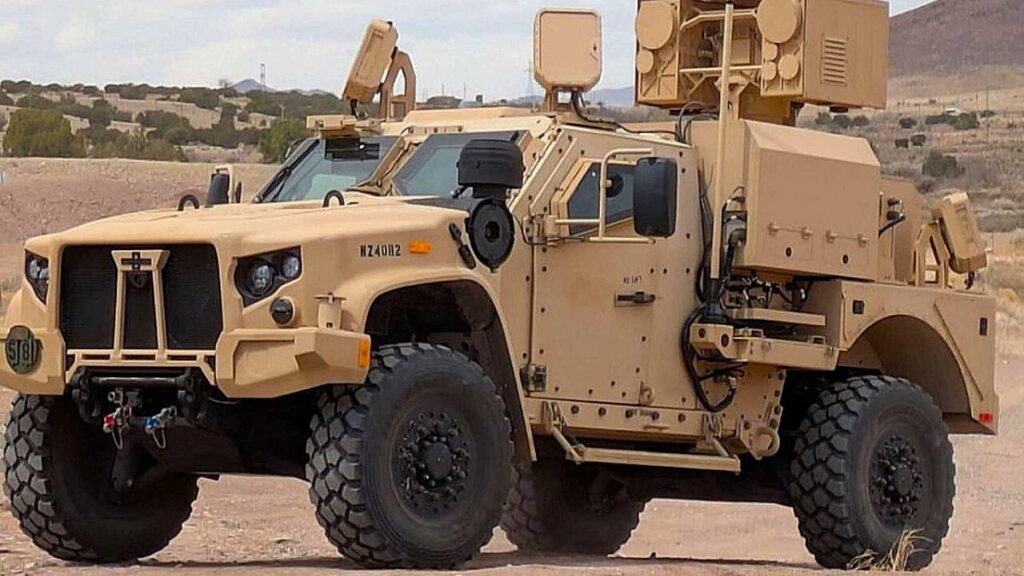
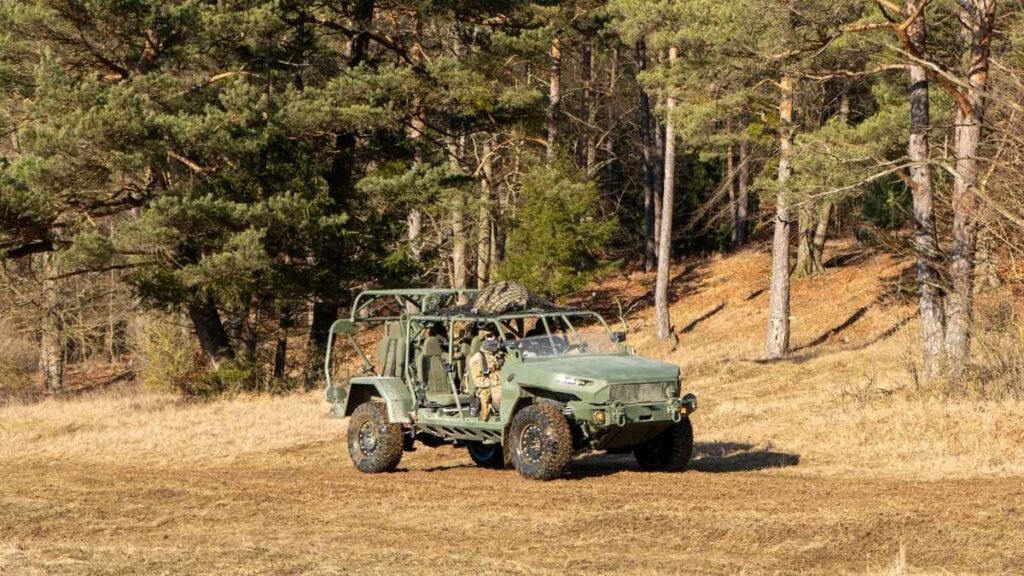
12,000 Infantry Squad Vehicles. GM Defense said Army orders for the lightweight, Chevrolet Colorado-based Infantry Squad Vehicle have grown from an initial 649 to nearly 12,000. A utility variant will go to 39 active-duty and National Guard brigades, and GM said it wants to begin testing an unmanned ground vehicle concept in 2027. Neither side gave a dollar figure for the larger order.
The M777’s replacement has arrived. The Army received the first Mobile Tactical Cannon, a self-propelled 155mm howitzer from Hanwha Defense USA based on South Korea’s K9, officials said. The four-year prototyping contract is worth up to nearly $263 million for as many as 18 systems. The towed M777, in service since 2005, reaches less than 24 kilometers with standard rounds; the K9 can fire beyond 60. Stryker brigades get it first. “We’re excited to have that and get ready to test it,” said Brig. Gen. Robert Mikesh, who runs the Army’s offensive fires portfolio, according to Defense News.
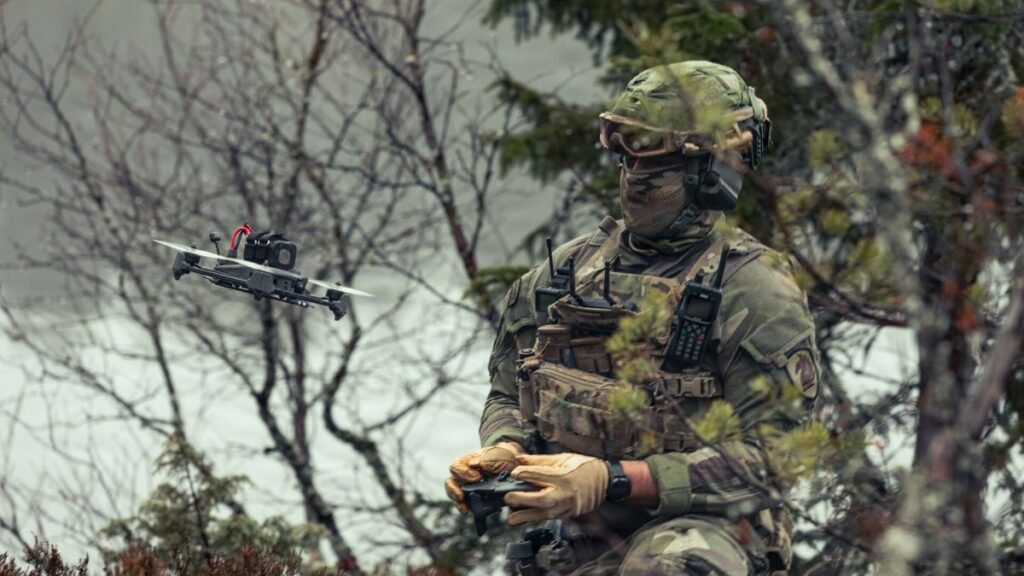
A new job for drone builders. Vice Chief of Staff Gen. Christopher LaNeve said the Army is “scaling this across the Army” as it stands up 390A robotics technician, a warrant officer specialty for soldiers who build, program and repair drones and robots. The first 10 were inducted at Fort Bragg this month. We break down what the job involves and how to apply.
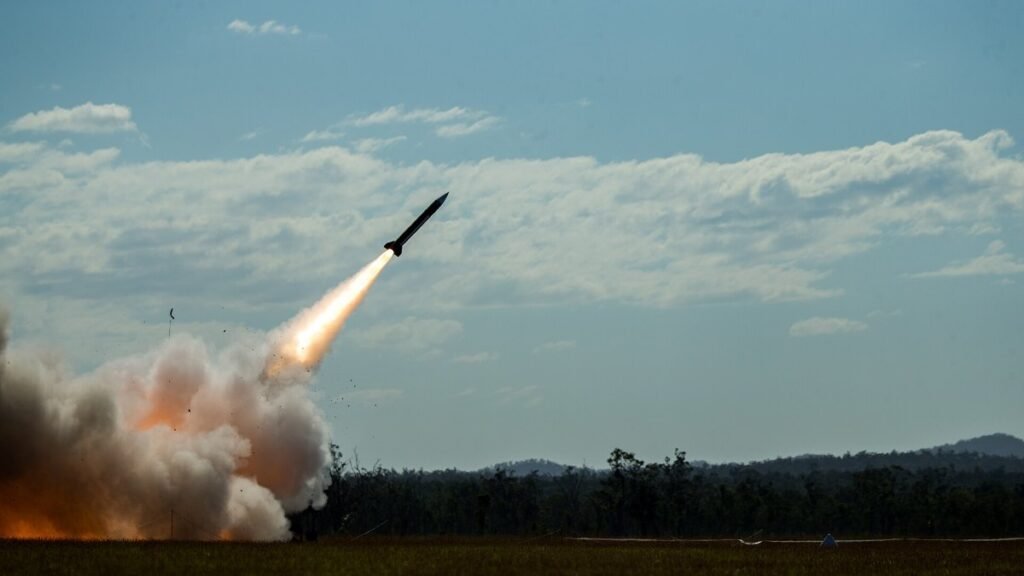
An interceptor built to turn harder. Lockheed Martin brought the PAC-3 Edge, the Patriot interceptor it unveiled days earlier, and pitched its agility against hypersonic threats. It arrives as the Pentagon tries to rebuild stocks drained in the war with Iran, which we explained here.
And back to the jungle. Away from the show floor, Army Times published a look inside the Army’s jungle school and its notorious “Green Mile” of mangroves and mud, alongside a report on Panamanians showing U.S. soldiers the way through the jungle. It is a reminder that for all the talk of drones and software, the Army still trains people to walk.
Sources
- Defense News: ‘We’ve drowned ourselves in buzzwords’: Acting US Army secretary gives sermon-like first speech
- DefenseScoop: Telle says Army will ‘find the weak links’ through ‘manufacturing rodeo’
- Defense News: US Army, GM Defense agree to add 12,000 Infantry Squad Vehicles to fleet
- Defense News: US Army gets first mobile cannon to replace M777 howitzer
- Defense News: US Army creates robotics technician job to focus on drone warfare
- Army Times via Defense News: Inside the Army jungle school’s notorious ‘Green Mile’
Featured image: Capt. Thomas McCarty / U.S. Army via Wikimedia Commons, public domain (cropped)