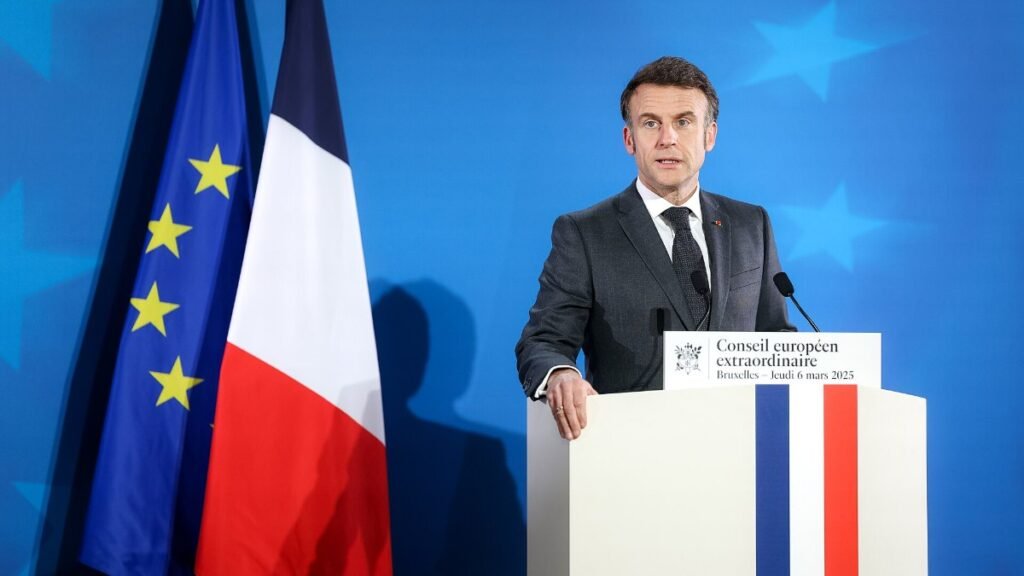
French President Emmanuel Macron was set to chair a defence council on Friday, Oct. 23, the day before another nationwide day of protests. The government has already said it will allow only union-organized marches on Saturday and will put Operation Sentinelle soldiers on the streets. Macron announced the meeting on Thursday, saying it “will be convened tomorrow (Friday) under my chairmanship, and we will take further decisions,” Euronews and AFP reported. As of Friday, no decisions from the council had been made public. Paris is already shutting down for the weekend: the government said the Louvre, Orsay and Picasso museums would stay closed Saturday, Al Jazeera reported, and Art Basel Paris said it would close two days early, according to AFP.
The meeting comes as France deals with three things at once: its worst street violence in years, a public fight with President Donald Trump over what is behind it, and a sell-off in French government bonds that has pushed borrowing costs to levels last seen in the euro zone debt crisis.
What the defence council is weighing before Saturday’s protests
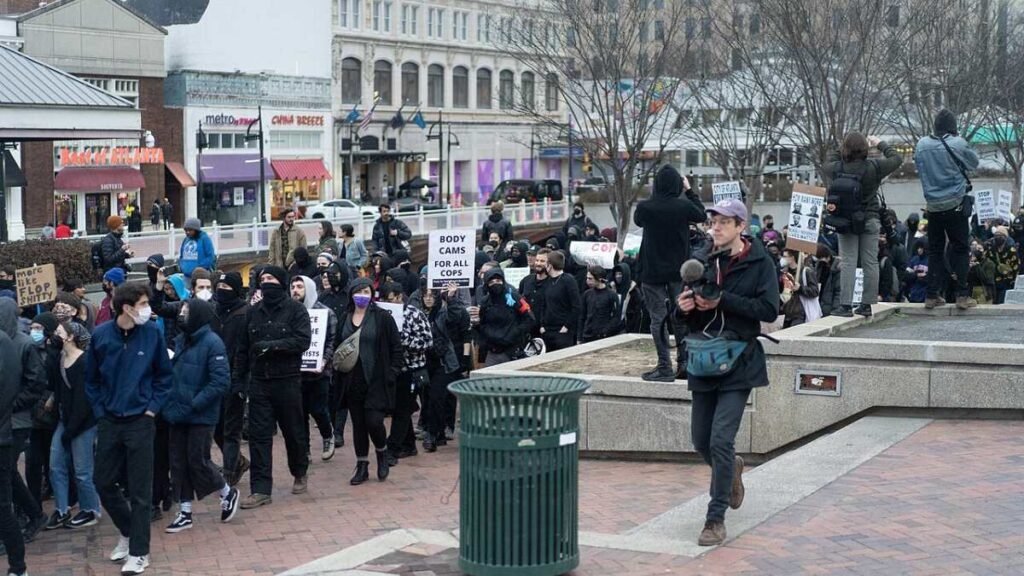
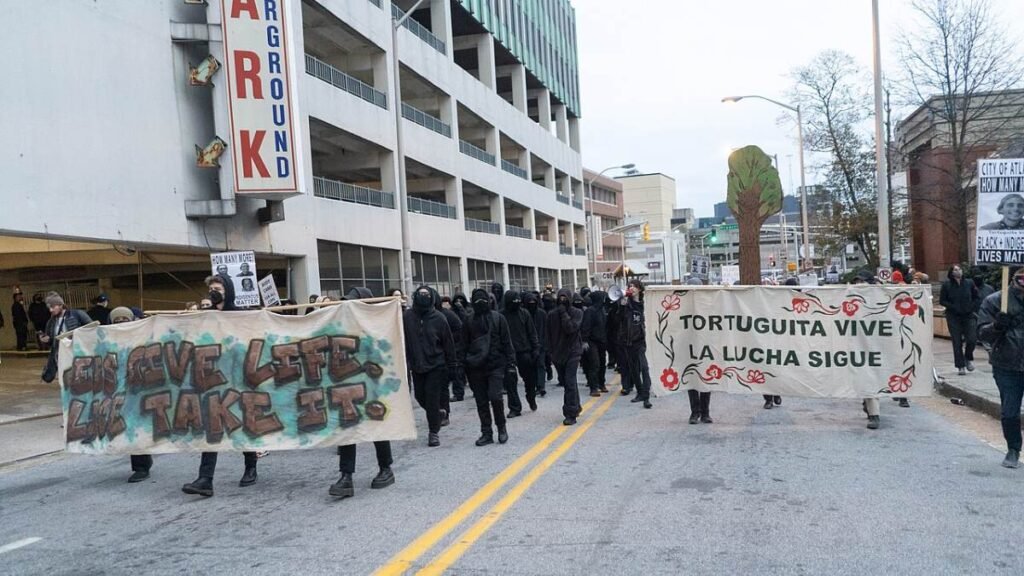
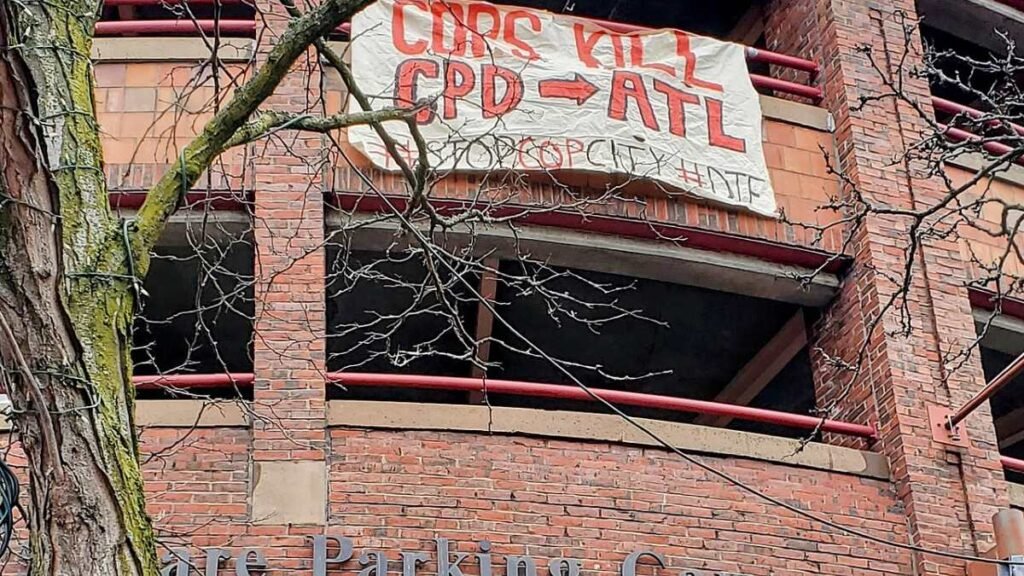
Several measures were in place before the council met. Speaking from the Elysee on Thursday, Macron said France would ban “illegitimate” protests in the coming days. Union-approved marches would be sent on alternative routes away from city centers to protect businesses, Al Jazeera reported. He blamed the weekend riots on “seditious acts” by “ultra-left” groups he accused of trying to “bring down the Republic.”
The Associated Press quoted Macron as saying, “The general recommendation is that there should be no demonstrations in the coming days.” Regional prefects, the state’s representatives in each department, can now ban gatherings by groups the government says lack “legitimacy,” according to Euronews.
Police, gendarmes and soldiers
Nearly 60,000 security personnel were deployed on Oct. 17 and still could not stop vandalism on the edges of the marches, Euronews reported. For Saturday, junior Interior Minister Jean-Didier Berger told BFMTV that law enforcement numbers would be 20% higher than on Oct. 17. Elite police and gendarmerie units will be used, along with soldiers from Operation Sentinelle, the military patrol mission launched in 2015.
Interior Minister Laurent Nuñez said on Tuesday that the soldiers would help prevent violence at the Oct. 24 demonstrations, Xinhua reported. Far-left presidential candidate Jean-Luc Mélenchon has already complained that the army was guarding buildings instead of police, Al Jazeera reported.
Bans, closures and a court defeat
- Officials in Bouches-du-Rhône, the department that includes Marseille, banned all protests on Saturday, citing “obvious reasons of security,” according to Al Jazeera.
- Lyon banned all protests on Saturday. Grenoble, Rouen, Le Havre and Toulon restricted demonstrations in their city centers, AFP reported.
- In Paris, police said Saturday’s march may start at Place de la Bastille but may not enter the city center.
Not every ban has survived. On Thursday, a Paris administrative court overturned a police ban on a student protest after organizers challenged it, and thousands gathered, the AP reported. AFP put that crowd in the hundreds. The AP noted that the right to demonstrate is protected by the French Constitution.
Why France is protesting
The movement started in mid-September as student-led protests over overcrowded classrooms, teacher shortages and limited opportunity, Al Jazeera reported. It then grew to take in wider anger over the cost of living and fuel prices, and trade unions and Yellow Vest protesters joined in. Meanwhile, Prime Minister Sébastien Lecornu’s government is trying to pass a budget that cuts the deficit through spending restraint and tax measures.
Timeline of the unrest
- Mid-September: Student-led protests begin over school conditions.
- Oct. 13: Interior Ministry figures show the IGPN police inspectorate has opened 36 investigations into alleged police violence since the high school protests began.
- Oct. 17: About 550,000 people march according to authorities, and 800,000 according to unions and organizers. Looting and arson hit Paris, Marseille, Lyon, Limoges and Bordeaux.
- Oct. 18: Macron gives a televised address to the nation.
- Oct. 19: Macron declines Interior Minister Laurent Nuñez’s offer to resign. Lecornu asks local authorities to impose “partial” and “localised” curfews, and Paris sets an overnight one around Place de la République and Les Halles.
- Oct. 21: Speaking in Qatar, Macron condemns foreign leaders’ comments on the unrest.
- Oct. 22: Macron announces protest bans and calls the defence council.
- Oct. 23: Macron’s defence council is scheduled; no decisions announced as of Friday.
- Oct. 24: The next nationwide protest day.
Arrests, injuries and the policing record
Nuñez said nearly 1,800 people were arrested on Oct. 17 and more than 500 police officers, gendarmes and firefighters were injured, Al Jazeera reported. By Sunday, the AP counted at least 2,400 arrests nationwide, as published by PBS NewsHour. Paris police said one person died of a heart attack, and the Paris prosecutor’s office is investigating. On Thursday, Justice Minister Gérald Darmanin said at least 2,700 people had been taken into custody, 217 had been convicted and jailed, and 1,000 more were being prosecuted.
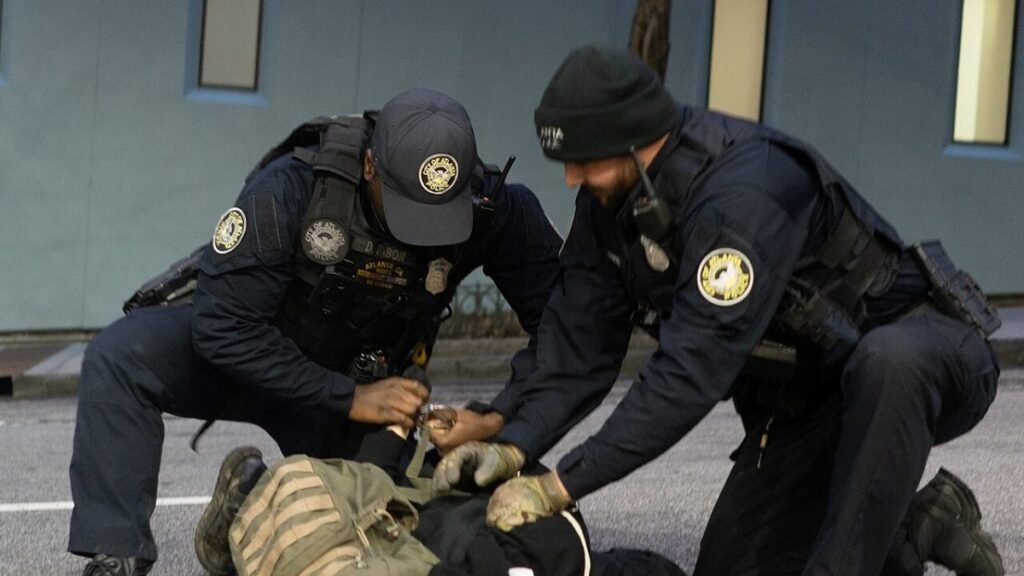
Protesters have been badly hurt too. The AP reported that a 17-year-old girl lost an eye in Mulhouse and a young protester lost a hand in Saint-Étienne. Christophe Calvao of the Paris Young Lawyers’ Union pointed to an “increasingly systematic use of crowd-control measures,” Al Jazeera reported. Nuñez has admitted that police “lost control” during the Oct. 17-18 weekend, Al Jazeera reported.
Nuñez set out the line the government says it is holding:
“Protesting is a fundamental right. Causing disorder through violence and in a concerted manner is not.” — Interior Minister Laurent Nuñez, as quoted by Al Jazeera
Lecornu has pushed back on criticism from both directions. In a letter to party leaders reported by Euronews, he said police are attacked both for killing or injuring people and for failing to act, and called this a “very French kind of politico-media schizophrenia.”
Macron calls Trump’s comments ‘stupid’
Trump weighed in from Washington and blamed migration. “What’s happening in France has to do with immigration, not schools, not anything,” he told reporters, according to AFP via The Times of Israel. “It’s immigration, and I told President Emmanuel Macron, close up your borders.” He also said, “Paris is going to be a Muslim city very soon,” and warned that “Europe is finished” if it does not close its borders.
Macron answered on Oct. 21 in Qatar, at the end of a tour of energy suppliers. He said comments by “many people, including foreign leaders,” were “unacceptable as they are stupid,” the Associated Press reported. Asked whether he meant Trump, he said, “Among others.” He called claims that France was being “invaded by hordes of migrants and Islamists” “completely false.” He said leaders on “the other side of the Atlantic” and elsewhere were using France’s unrest for political gain at home.
French bond market pressure
Investors are pricing in more risk. On Thursday, France’s 10-year yield rose 11.5 basis points to 5.11% after touching 5.1415%, its highest since July 2002, Reuters reported. The gap over German 10-year Bunds, the standard measure of French risk, widened to 173.58 basis points. That is the widest since November 2011, at the height of the euro zone sovereign debt crisis.
The pressure falls on a weak government. Macron’s term ends next year, and the 2027 presidential race is already shaping the politics. Marine Le Pen accused the government of being too soft, while Mélenchon blamed “non-stop brutal repression,” Al Jazeera reported.
Why it matters for the U.S. and NATO
Macron has tied much of his second term to rearmament. In July 2025, he said France would reach 64 billion euros in defense spending in 2027, three years earlier than planned, doubling the budget from 2017, Defense News reported. “To be free in this world, you have to be feared,” he said at the time.
An updated military planning law, presented in April by Armed Forces Minister Catherine Vautrin, sets defense funding at 63.3 billion euros for 2027 and adds 36 billion euros over four years, Breaking Defense reported. Spending would reach 76.3 billion euros by the end of the decade. That works out to about 2.6% of GDP, still short of NATO’s pledge of at least 3.5% by 2035. Parliament has to approve each year’s amount.
Each of those yearly votes now has to get through a parliament dealing with riots, a contested budget and borrowing costs above 5%. If debt costs keep rising, France will have less room to keep defense spending growing.
For American travelers, the State Department keeps France at Level 2, “Exercise Increased Caution.” Its advisory tells visitors to avoid demonstrations and areas with heavy police activity.
FAQ
What is a French defence council?
It is a meeting of key ministers chaired by the president. Macron called Friday’s session to “take further decisions” before Saturday’s protests, AFP reported.
Are all protests banned in France this weekend?
No. Macron said only union-organized marches would be allowed nationwide on Saturday, and some will be rerouted away from city centers. Lyon and the Bouches-du-Rhône department have banned all protests, and other cities have restricted them.
How big is the French bond spread?
On Oct. 22, the gap between French and German 10-year yields reached 173.58 basis points, the widest since November 2011, Reuters reported.
Official links
- Elysee Palace (French presidency)
- French Ministry of the Interior
- French Ministry of the Armed Forces and Veterans
- U.S. State Department France travel advisory
Photo: European Union, CC BY 4.0.