Defense Secretary Pete Hegseth has tapped a Medal of Honor recipient to check whether the Pentagon’s barracks fixes are actually reaching troops. Dakota Meyer, a Marine Corps reservist, will serve as Hegseth’s senior advisor to the Barracks Task Force, a job that sends him to installations to inspect rooms, hold town halls and flag what is slowing repairs, Military Times reported on Oct. 20.
His first stops are three Marine Corps installations in Southern California: Marine Corps Base Camp Pendleton, the Marine Corps Air Ground Combat Center Twentynine Palms and Marine Corps Air Station Miramar. By the end of December he is expected to have visited 21 bases, most of them on the East Coast, according to the report, which Defense News also carried.
Hegseth announced the move in a social media video. “I want you to ask this question for the next couple of months: Where’s Dakota?” he said, according to Military Times. “Could he be coming to my base, to my installation, to my camp, my fort? Because he might be.”
Meyer put the point in plainer terms. “Our warfighters should be focused on training, readiness and defending this great nation,” he said in the video. “They shouldn’t have to fight for basic living conditions when they come home at night.” In a separate social media post, Military Times reported, he wrote: “If we don’t get this fixed, there’s only one person to blame. Me.”
Who Dakota Meyer is
Meyer was a 21-year-old corporal with Embedded Training Team 2-8 when his unit was ambushed in Kunar province, Afghanistan, on Sept. 8, 2009. His Medal of Honor citation, published by the Congressional Medal of Honor Society, says more than 50 enemy fighters attacked and that four U.S. team members were cut off. Meyer made five trips into the ambush area. On the first two, he and his driver evacuated two dozen Afghan soldiers, many of them wounded. On the last, he moved on foot to find and recover the bodies of his fallen teammates.
President Barack Obama presented the medal at the White House on Sept. 15, 2011. A Pentagon profile credits him with saving 13 U.S. service members and 23 Afghan soldiers and notes he was the first living Marine to receive the medal for actions in Iraq or Afghanistan. It also notes that he left active duty in June 2010.
He came back last year. Meyer reenlisted on April 17, 2025, in a Pentagon Hall of Heroes ceremony hosted by Hegseth, the Marine Corps said. The service described him as the only living Medal of Honor recipient then serving in the Corps.
What the Barracks Task Force does
Hegseth created the task force with an Oct. 6, 2025, memo that he posted publicly three days later. It is led by the assistant secretary for energy, installations and environment, and it was ordered to produce an initial barracks plan within 30 days that identified investment opportunities and set department-wide barracks standards, with priority on air and water quality, Defense News reported at the time.
A Pentagon news article said the group pulls in contracting experts, installation leaders and personnel, readiness and finance staff. It was told to work on immediate fixes and a longer plan to bring barracks up to standard. It also lets unit commanders and senior enlisted leaders fix more problems locally. “No delays, no excuses and no more business as usual,” Hegseth said, according to the article, which also cited a video he posted Nov. 25.
Military Times listed recent task force projects including modernized housing at Fort Stewart-Hunter Army Airfield, Georgia, and a housing project at Naval Base Kitsap-Bremerton, Washington.
The scale of the barracks problem, by GAO’s numbers
The clearest public record of what troops are living with comes from the Government Accountability Office. Its September 2023 report, Military Barracks: Poor Living Conditions Undermine Quality of Life and Readiness, was based on tours of barracks at 10 installations and 12 discussion groups with service members. The sample was not generalizable, but the findings were blunt. An August 2026 follow-up looked at maintenance across the whole department.
| Finding | What GAO reported | Report |
|---|---|---|
| Mold | Service members in all 12 discussion groups called mold a problem; GAO saw mold or mildew in barracks at five installations | GAO-23-105797 (Sept. 2023) |
| Heating and air conditioning | Officials at all 10 installations said broken, malfunctioning or nonexistent HVAC systems were a problem | GAO-23-105797 |
| Pests | Six of 12 groups reported bedbugs, rodents, cockroaches or wasps | GAO-23-105797 |
| Safety hazards | Sewage overflow, inoperable fire systems, broken windows | GAO-23-105797 |
| Squatters | Officials at two installations reported squatters in vacant rooms; GAO saw evidence of it | GAO-23-105797 |
| Substandard rooms | About 5,000 sailors and 17,000 Marines lived in substandard barracks as of March 2023 | GAO-23-105797 |
| Condition scores | Barracks at seven of 10 installations appeared to need significant improvement despite condition scores above 80; GAO called DOD’s assessments unreliable | GAO-23-105797 |
| Recommendations | 31 recommendations; DOD concurred with 23 and partially concurred with 8 | GAO-23-105797 |
| Maintenance backlog | An estimated $285 billion in fiscal 2025, covering installation maintenance across DOD’s more than 736,000 facilities, not barracks alone | GAO-26-107255 (Aug. 2026) |
| Funding gap | Services fund about 80% of maintenance needs against a DOD goal of 90% | GAO-26-107255 |
The 2023 report also found that at one installation, service members were expected to clean up biological waste left in a barracks room after a suicide. And GAO said DOD did not know how much it spent on housing allowances for troops who were supposed to live in barracks but did not because of insufficient space or poor living conditions.
The August 2026 report on installation maintenance is the source of the $285 billion figure. That number is often quoted next to barracks stories, but it covers every kind of facility the department maintains, worth an estimated $2.6 trillion. GAO said the department does not request full funding for its installation maintenance needs and has not fully worked out the risks to its mission and to personnel’s quality of life. It made 13 recommendations.
The money for barracks
The biggest recent infusion came from the reconciliation law Republicans call the One Big Beautiful Bill Act, Public Law 119-21, signed July 4, 2025. Military Times put the barracks total at $1.2 billion. The Pentagon comptroller’s spending plan for the law shows the line items under Section 20001, the quality-of-life section:
- $1 billion for Army, Navy, Air Force and Space Force sustainment, restoration and modernization of unaccompanied housing
- $230.5 million for restoration and modernization under the Marine Corps Barracks 2030 initiative
- $119 million for base operating support costs under Barracks 2030
Hegseth called that money “the down payment” on barracks upgrades and deferred maintenance, Defense News reported. The same outlet noted that in May 2025, Military.com reported the Pentagon had moved $1 billion meant for barracks to support the troop deployment at the southern border.
Some of the money is already visible. The Army says its share is paying for $20 million in new furniture at 40 installations, affecting more than 106,000 soldiers, plus $59 million for lighting, plumbing, mold remediation and door lock work orders and $405 million for repair and modernization projects, according to a Pentagon news story.
The bigger number is in the fiscal 2027 budget request. Space Force Lt. Gen. Steven P. Whitney, the joint staff director for force structure, resources and assessment, said it seeks $57 billion for facility sustainment, restoration and modernization. “Investments in this budget will fix all substandard barracks and eliminate barracks that have been deemed poor or failing,” Whitney said, according to a Pentagon article on the request.
What troops in bad barracks can do now
Meyer’s town halls are one place to raise a problem. A written complaint leaves a record. These are official channels:
- Put in a work order with your building or unaccompanied housing manager. Note the date, take photos, and keep the ticket number.
- Sailors: Navy Installations Command has posted building-specific QR codes in unaccompanied housing. Scanning one opens a short online maintenance request form, so you don’t have to report at the quarterdeck or write in a logbook.
- Marines: MARADMIN 289/23 lists your guarantees, including housing that meets health and safety standards, responsive repairs, the chance to check your room before you move in, and the right to refuse uninhabitable housing and report substandard conditions without reprisal. Issues go to the housing manager and your chain of command.
- Soldiers and airmen: Go through your installation housing or unaccompanied housing office and your chain of command. Some Army posts publish their own barracks contacts, such as Fort Gordon’s housing and barracks hotline page, which lists a barracks service order desk. Check your installation’s home.army.mil or base website.
- Inspector general. If repairs stall or you face retaliation, the local or command IG is usually the fastest route. The DoD Hotline takes confidential complaints about mismanagement, waste and misconduct through an online form.
Official links
- GAO-23-105797: Military Barracks: Poor Living Conditions Undermine Quality of Life and Readiness
- GAO-26-107255: Installation Maintenance report
- Department of War: Hegseth directs barracks task force
- Pentagon comptroller: FY2026 mandatory funding allocation plan
- Public Law 119-21 (govinfo.gov)
- Congressional Medal of Honor Society: Dakota L. Meyer
- MARADMIN 289/23: Unaccompanied Housing Guarantees and Responsibilities
- DoD Inspector General Hotline
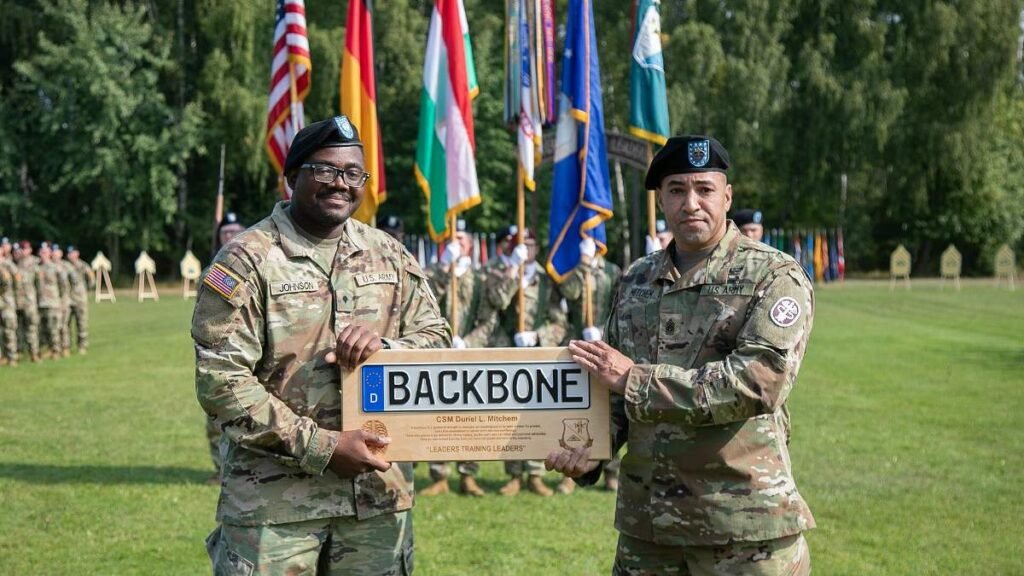
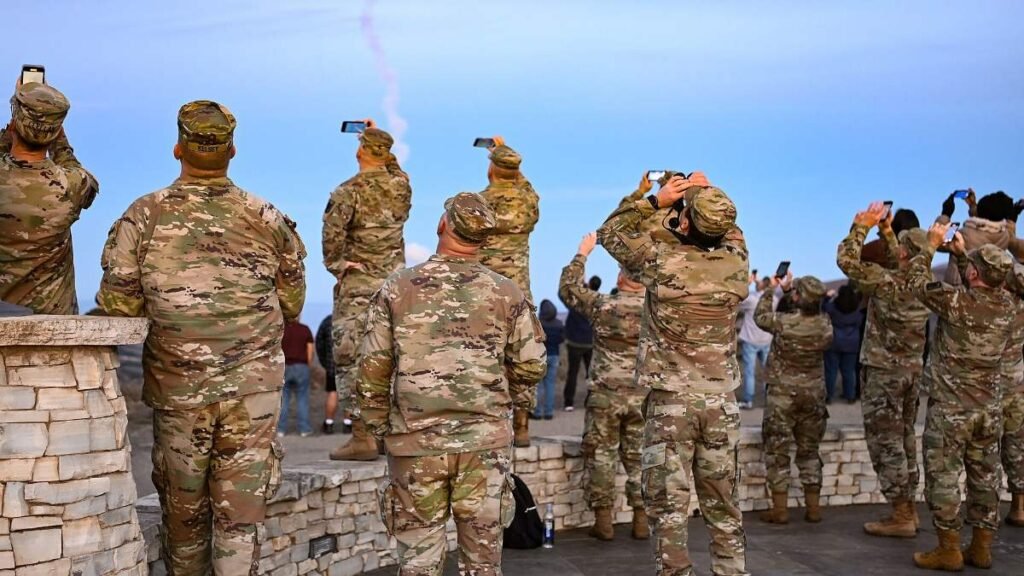
Photo: Petty Officer 1st Class Alexander Kubitza/U.S. Navy (DoD).