Updated Oct. 21, 2026: Added the Oct. 14 federal appeals court ruling against California’s officer ID law, the Justice Department’s Oct. 15 lawsuits against St. Paul and Portland, and what they mean for Denver’s case.
DENVER — The Justice Department has sued Denver over a city law that bars federal immigration agents and other officers from covering their faces while they work in the city, setting up a test of how far a local government can go in policing federal agents.
The lawsuit, filed Oct. 8 in U.S. District Court in Colorado, names the city, Mayor Mike Johnston, City Attorney Miko Brown and Police Chief Ron Thomas. It asks a judge to declare the ordinance invalid as applied to federal law enforcement and to permanently block Denver from enforcing it.
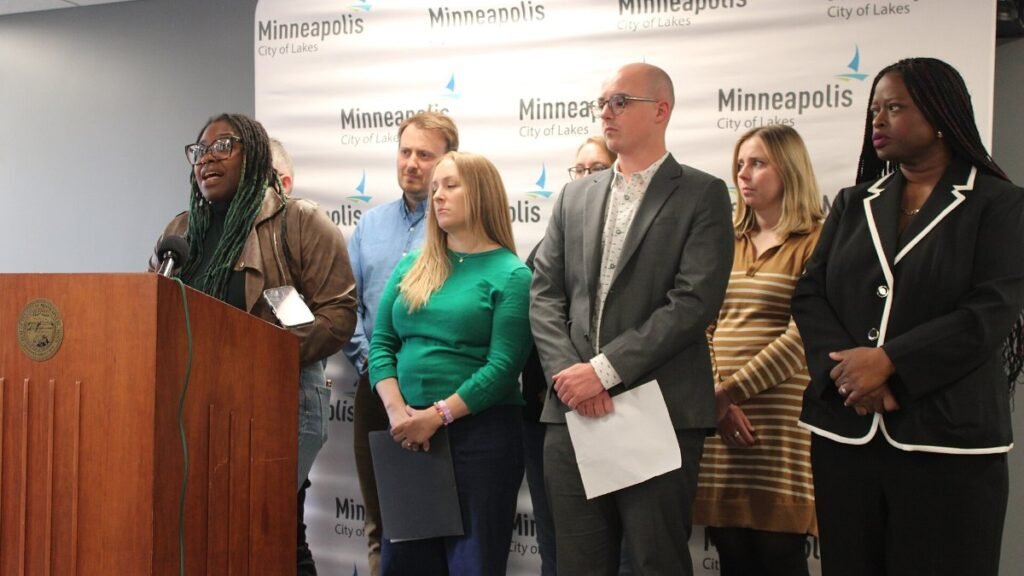
Johnston said on Instagram that the city would “fight to the very end on this battle.” Officers, he said, “should have a badge, they should have a name, they should have a badge number that you can track.”
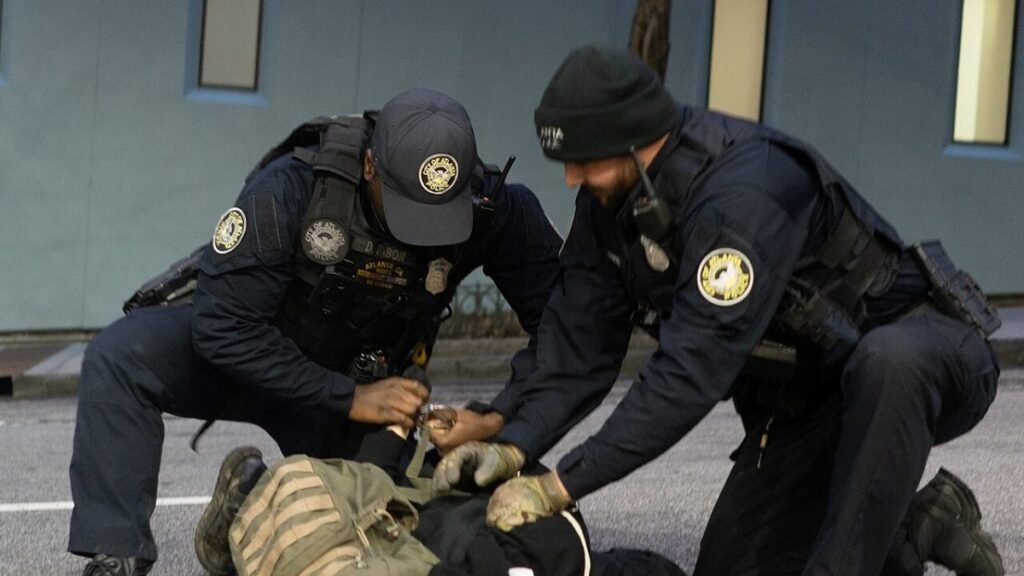
The City Council passed the ordinance unanimously in February. It applies to every law enforcement officer working in Denver, local, state or federal. Officers may not cover their faces while detaining or arresting someone, and they must display visible identification. Denver police can cite violators, and the penalty can reach a $999 fine and up to 300 days in jail, Denver7 reported.
The Justice Department’s main argument is the Supremacy Clause of the U.S. Constitution, which makes federal law override conflicting state and local laws. Threatening officers with prosecution for protecting their identities “chills the enforcement of federal law,” the department said in announcing the suit.
The complaint also argues that complying “would endanger officers and reduce operational effectiveness.” It says the families of two federal agents, one in the Denver area and one in Durango, were doxxed and harassed after the agents’ images were posted online. Filming officers in public is protected by the First Amendment, the government acknowledged, but it said posting their identities online can help criminal organizations target them.
“Denverites deserve to know who is arresting them and what they’re being arrested for,” said Jon Ewing, a spokesman for the mayor, in a statement to The Denver Post.
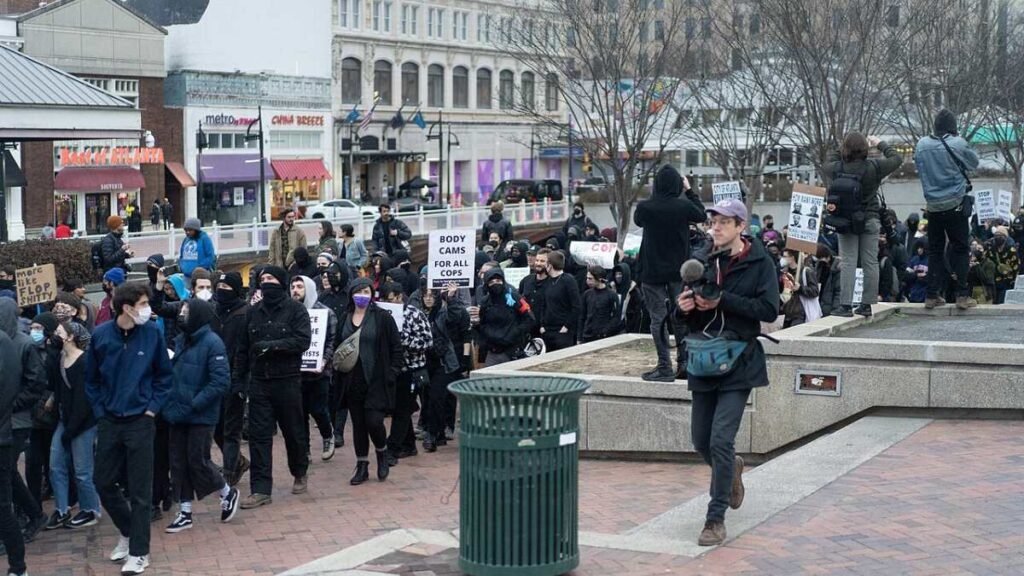
Denver is not the first to try this, and the record so far favors the federal government. Los Angeles, New York, Seattle, Chicago, Milwaukee and Philadelphia all adopted similar mask bans this year, and most have been blocked by federal judges or are tied up in federal court, Denver7 reported. Earlier this year a federal judge in California blocked the state’s anti-masking law because it exempted state officers while applying to federal ones. Denver’s council wrote its ordinance to cover every level of law enforcement, including its own police, in the hope of avoiding the same problem. That approach took a hit Oct. 14, when a federal appeals court ordered California’s separate ID law blocked as applied to federal officers, even though the state argued that law covered every officer equally.
The fight is part of a wider standoff between Denver and the Trump administration. Days after signing the mask ordinance, Johnston signed an executive order barring Immigration and Customs Enforcement from city-owned or city-controlled property, and the city has sued to keep armed federal immigration agents away from polling places during the midterm elections.
Local officers would be the ones writing any citations, and their union has questions. Brian Pacelko, president of the Denver Police Protection Association, has asked what would happen if a federal agent tried to charge a Denver officer for enforcing the law. The Denver Police Department said discretion and de-escalation are its priorities.
An appeals court ruling and two new DOJ lawsuits raise the stakes for Denver
Denver’s lawyers got a preview of the fight ahead in the week after the city was sued. Two developments outside Colorado bear directly on the case.
Ninth Circuit sides with the government on California’s ID law
On Oct. 14, a three-judge panel of the 9th U.S. Circuit Court of Appeals ordered a lower court to block California’s No Vigilantes Act from being enforced against federal officers, Bloomberg Law reported. The law requires officers working out of uniform to display their agency and a name or badge number. Judge Mark Bennett wrote the opinion, joined by Judges Daniel Collins and Jacqueline Nguyen.
That matters for Denver because of how the city built its ordinance. California had argued its ID law applied equally to every officer and didn’t single out the federal government, The Associated Press reported in April, when the same panel first put the law on hold. In that earlier order, Bennett wrote that the law “attempts to directly regulate the United States in its performance of governmental functions.”
Denver made the same bet, covering its own police so it couldn’t be accused of targeting federal agents. The 9th Circuit ruling suggests that approach may not be enough on its own. The ruling doesn’t bind courts in Colorado, which sits in the 10th Circuit, but federal judges there can and do look at how other appeals courts handle the same question.
St. Paul and Portland are next
On Oct. 15, the Justice Department sued St. Paul, Minnesota, and Portland, Oregon, over local laws that bar federal officers from wearing masks and require them to show identification. The department’s announcement listed Denver among the earlier targets, alongside New York, Virginia, Connecticut, New Jersey, California, Maryland, Philadelphia and Milwaukee.
Brett Shumate, the assistant attorney general who leads the Civil Division, repeated the line DOJ used against Denver: “The Federal Government, not state and local governments, gets to decide which equipment federal officers may or may not wear when performing their official duties.”
What hasn’t happened in Denver
The ordinance hasn’t been used. No officer has been cited or arrested under it, Denverite reported when the suit was filed. That gives the city a possible argument that there’s no live harm to block yet, while DOJ argues the threat of prosecution alone chills federal officers.
The case is United States v. City and County of Denver in U.S. District Court in Colorado. The DOJ complaint challenges Sections 28-300 through 28-303 of the Denver Revised Municipal Code.
Frequently asked questions
What does Denver’s mask ban require?
Law enforcement officers working in Denver, including federal immigration agents, may not cover their faces while detaining or arresting people and must display visible identification. Violations can bring a citation with a fine of up to $999 and up to 300 days in jail.
Why is the Justice Department suing?
The department argues the ordinance violates the Supremacy Clause because a city cannot regulate how federal officers carry out federal law, and says the rule would expose agents to doxxing and threats.
Have other cities passed similar laws?
Yes. Los Angeles, New York, Seattle, Chicago, Milwaukee and Philadelphia adopted similar bans in 2026, and on Oct. 15 the Justice Department also sued St. Paul, Minnesota, and Portland, Oregon, over theirs. Most have been blocked by federal judges or are being challenged in federal court.
Documents and reporting cited
- Denver7: Trump’s DOJ sues Denver over ICE mask ban
- The Denver Post via Police1: DOJ sues Denver over mask ban for ICE agents
- Colorado Politics: DOJ sues Denver over mask ban and ID requirement for federal officers
- Constitution Annotated: Article VI, Clause 2 (Supremacy Clause)
Featured image: Larry D. Moore / Wikimedia Commons, CC BY 4.0 (cropped)