South Korea’s laser air defense knocked three drones out of the sky during an army exercise this week, its maker Hanwha Systems said, in one of the few public demonstrations of a laser weapon that is already in service rather than still in testing.
The demonstration took place Oct. 14 at the Yangpyeong General Training Ground in Gyeonggi Province during the South Korean army’s TIGER+ Future Warfare Integrated Combat Exercise, with about 500 people watching, including Army Chief of Staff Gen. Kim Kyu-ha, Defense News reported.
Two lasers took part: the Cheongwang, or “light of the sky,” and a separate 30-kilowatt-class vehicle-mounted laser. All three target drones went down. Defense News said Hanwha did not specify which laser hit which.
One drone hit by Cheongwang “caught fire and fell from the sky,” The Korea Times reported. The lasers were layered with electronic jamming and a K21 armored vehicle in the same drill, where reconnaissance drones spotted targets for suicide drones to strike. “We need an integrated, multilayered network,” Kim said.
How Cheongwang works
Cheongwang, formally the Laser Air Defense Weapon Block-I, was developed under South Korea’s Agency for Defense Development starting in August 2019, at a development cost of 87.1 billion won, the Korea JoongAng Daily reported. It was judged suitable for combat in April 2023, and a production contract with Hanwha Aerospace followed in June 2024, worth about 100 billion won, or $72.5 million at the time, according to The Korea Times.
The system is a fiber laser that runs on electricity alone. It holds its beam on a small drone or a multicopter for 10 to 20 seconds, heating it above 700 degrees Celsius until the engine or electronics fail. It makes no sound and the beam is invisible.
The laser weapon is “invisible, silent and does not need ammunition, making it highly cost-effective,” Jo Yong-jin, a spokesperson for South Korea’s Defense Acquisition Program Administration, said in 2024.
Each shot costs about 2,000 won, or roughly $1.50. That price is the selling point against cheap drones that would otherwise be shot at with far costlier interceptor missiles.
The system has improved since it was first fielded at the end of 2024. In June, DAPA said South Korea had begun making the laser oscillator at home, raising the share of Korean-made parts from 76% to 90% and increasing output by more than 50%. Engagement time against first-person-view (FPV) drones fell from 2 to 4 seconds to 1 to 2 seconds, and against fixed-wing drones from more than 10 seconds to a few seconds, Korea JoongAng Daily reported, citing DAPA; the engagement-time figures come from a separate JoongAng Daily report.
As of June, about five units guarded major government sites, including the Ministry of National Defense building, Defense News reported.
The weak spots
Lasers have limits. Rain, fog and heavy cloud scatter the beam, and DAPA has said a Block-II version should address weather. A laser also has to hold on each target until it burns through, so it handles drones one after another. In this week’s drill, the army layered it with jammers and an armored vehicle.
It has not been flawless in public. At the Oct. 1 Armed Forces Day display in Gyeryong, the laser hit two of four target drones; one crashed on takeoff and operators cut power to another, The Korea Times reported.
Hanwha calls Cheongwang the “world’s first operationally deployed laser weapon.” That claim is contested. Israel’s military said in May 2025 that high-power lasers had shot down about 40 drones, mostly from Hezbollah, though its Defense Ministry said no Iron Beam components were involved, Defense News reported.
Why Seoul wants it
In December 2022, five North Korean drones crossed the border. One flew into the restricted zone around the presidential office in Seoul. About 20 South Korean aircraft, including F-15K fighters and KA-1 light attack planes, failed to shoot any of them down, the JoongAng Daily reported.
The threat has grown since. Kyrylo Budanov, then Ukraine’s military intelligence chief, said in June 2025 that Russia was helping North Korea build Shahed-type attack drones, which he said would “for sure bring changes in the military balance in the region,” The War Zone reported.
South Korea’s 2027 defense budget proposal, released in September, adds money for more Block-I units, starts research on a mobile Block-II, sets aside 121 billion won for high-power laser technology and puts 8.06 trillion won toward drones and counter-drone systems, UPI reported.
Where other militaries stand
Israel: The Defense Ministry handed the first combat-ready Iron Beam, built by Rafael with a laser from Elbit Systems, to the Israel Defense Forces on Dec. 28, 2025, The Times of Israel reported. Like Cheongwang, it struggles in heavy cloud.
Britain: The DragonFire laser is due on a Royal Navy Type 45 destroyer by 2027, under a £316 million contract with MBDA UK. The government puts the cost at about £10 a shot and says trials hit drones flying at up to 650 kph, according to a Ministry of Defence release.
Germany: Rheinmetall and MBDA signed a contract in June to build a naval laser for the German navy, with service planned for 2029. A demonstrator on the frigate Sachsen fired more than 1,000 shots, Defense News reported.
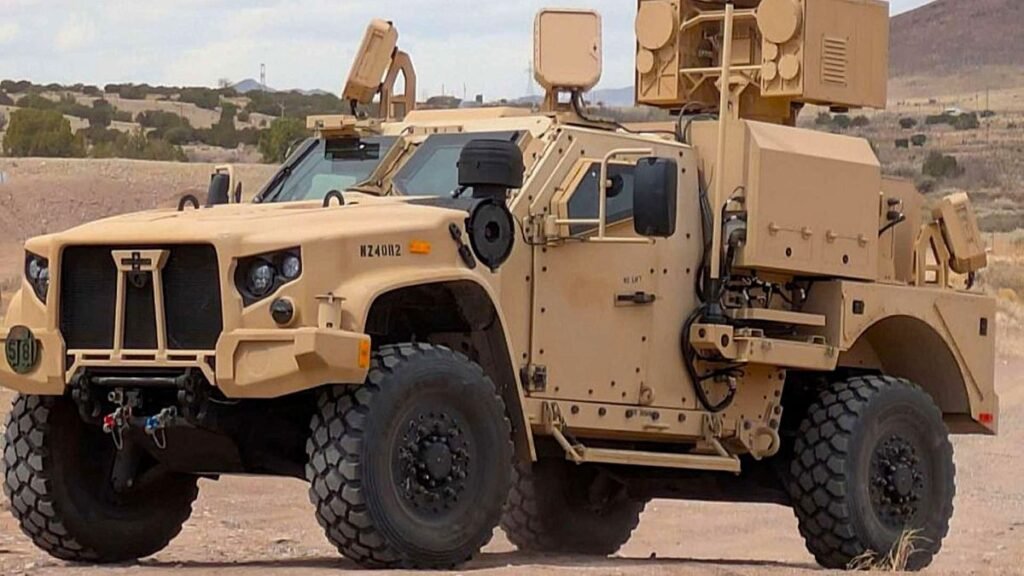
United States: The Army awarded AeroVironment a $464.8 million production deal in September for dozens of 30-kilowatt LOCUST lasers, its first high-energy laser production contract, Defense News reported. An earlier Stryker-mounted laser drew disappointing feedback from soldiers in the Middle East, the publication reported.
Hanwha’s next laser
Hanwha is now pitching a 50-kilowatt laser mounted on an armored vehicle for export, which it showed at the MSPO defense show in Kielce, Poland, in September, along with a separate 20-kilowatt tactical laser vehicle, according to the company. Defense News described the 50-kilowatt version on display as a model. A company manager, Hyungun Park, told Defense News a prototype exists and production should start by the end of 2027, with talks underway with possible buyers in Europe, Asia and the Middle East.
Sources
- Defense News via Military Times: South Korean lasers down three drones in Army demo, Hanwha says
- Korea JoongAng Daily: Korea’s laser drone killer enters mass production
- Korea JoongAng Daily: DAPA develops key part in laser-based antidrone system
- The Korea Times: Drone crash mars weapon demonstration on Armed Forces Day
- UPI: South Korea’s 2027 defense budget
- UK Ministry of Defence: DragonFire
- Defense News: US Army launches laser production with $465M contract award
- U.S. Army: Enduring High Energy Laser production contract
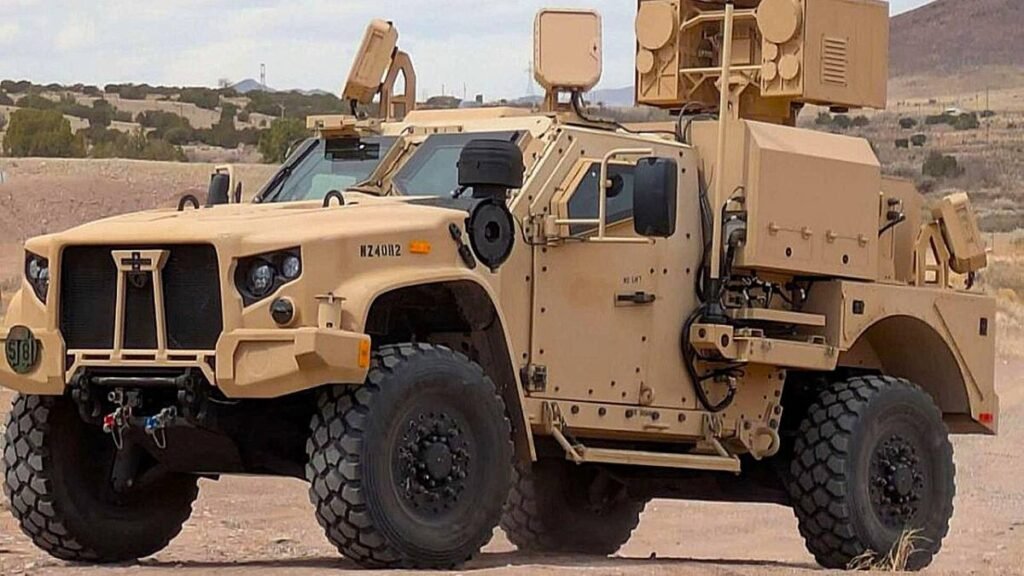
Photo: AeroVironment via Wikimedia Commons (CC BY 4.0). The image shows the U.S. LOCUST laser, not South Korea’s Cheongwang.