Updated Oct. 20: Adds Lockheed Martin’s Texas plant expansion, the AIM-260 seen on an Australian Super Hornet, Australia’s purchase, testing status and the fiscal 2027 budget request.
For years, the US military has kept one of its most important new weapons almost entirely under wraps. Last week, that started to change.
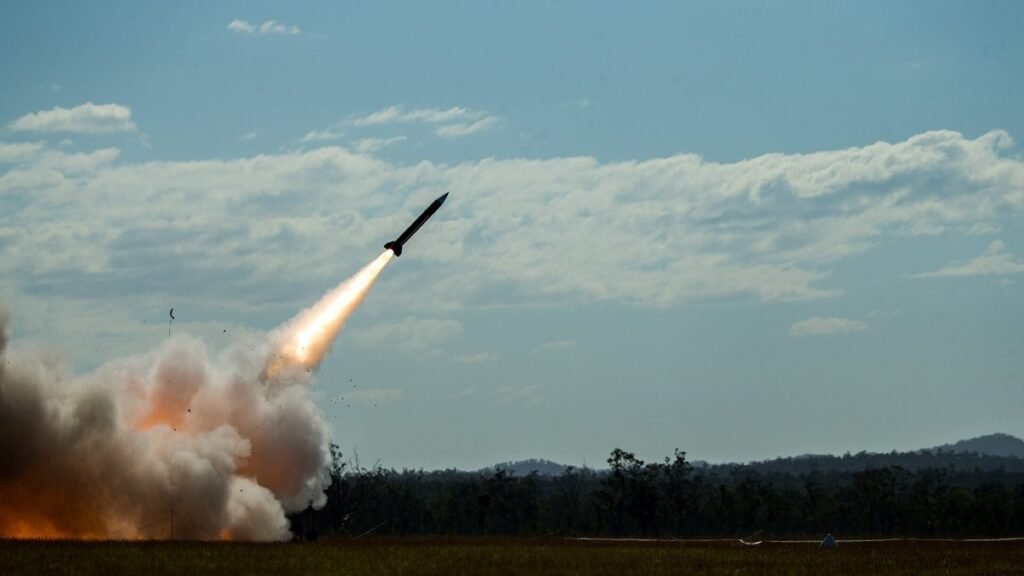
On September 17, the Pentagon and Lockheed Martin announced a plan to speed up production of the AIM-260 Joint Advanced Tactical Missile, better known as JATM. For a program that has lived mostly in classified briefings, that’s a big step into the open.
Here’s what the missile is, what the deal actually does, and why it matters.
What Is the AIM-260 JATM?
JATM is an air-to-air missile. Fighter jets use it to shoot down enemy aircraft, often from so far away that the target never comes into view. It’s the secretive weapon set to succeed the AMRAAM, the missile American fighter pilots have relied on since the early 1990s.
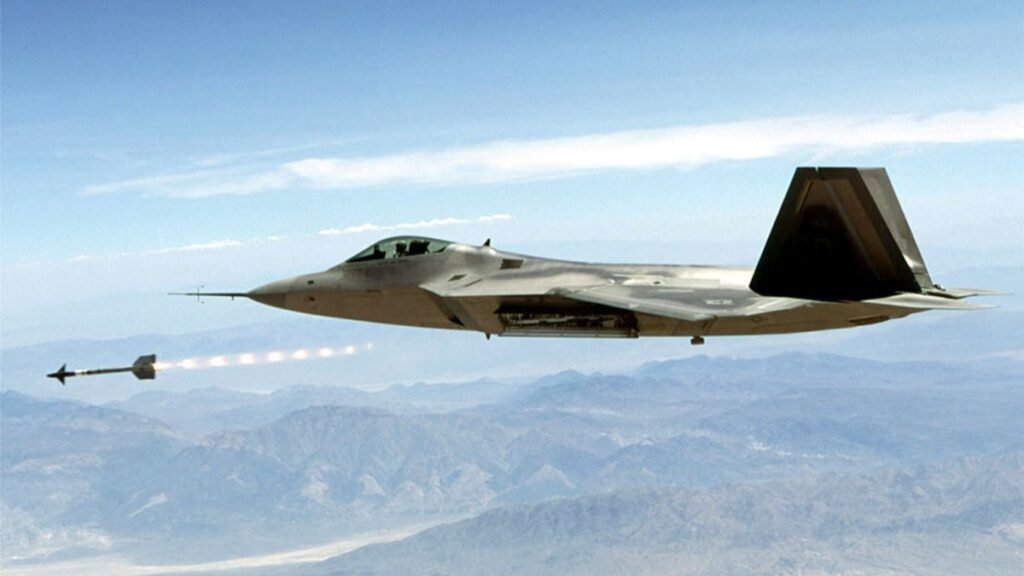
According to Lockheed Martin, the new weapon offers greater range and effectiveness than existing air-to-air weapons. It’s built to fit the stealth fighters that matter most. It’s designed for the F-22, the F-35 and the Collaborative Combat Aircraft, and it stays small enough to fit inside internal weapons bays.
That last point is more important than it sounds. Stealth jets have to carry weapons internally to stay hard to detect on radar, so a long-range missile that fits inside the jet is a real advantage.
Why Has It Been So Secret?
Development began in 2017, and the Pentagon has tightly controlled information about the classified program, which first became public in 2019.
Even Lockheed has had to stay quiet. Tim Cahill, who leads the company’s missiles business, admitted that the classified status meant JATM was “a story we haven’t been able to tell.”
What Did the New Deal Actually Do?
This is where a lot of headlines get it wrong. The agreement is not a purchase order.
It is neither a contract nor an order for missiles. Officials described it as a demand signal that gives Lockheed and its suppliers a reason to invest in capacity, workforce and production efficiencies. In simple terms, the Pentagon is telling industry: get ready, because we’re going to want a lot of these.
The framework lays the groundwork for a multiyear procurement contract, pending Congressional approval. Lockheed also says it will put its own money into expanding capacity before any orders arrive.
What we don’t know yet: the announcement left out the scale and timeline of the production ramp-up, as well as any dollar figure tied to the agreement.
Why Now? The China Factor
The short answer is deterrence. Bloomberg reported that the missile is seen as vital to deterring China.
In any potential conflict in the Pacific, distances are huge. Whoever can detect and hit the other side’s aircraft first, from the longest range, has a major edge. JATM is designed to give American pilots that first shot.
There’s also a broader worry about stockpiles. Defense analysts have been warning for months that the US doesn’t have enough advanced munitions for a major war. The JATM agreement is the latest in a string of framework deals the Pentagon has signed with industry this year to rapidly scale up weapons production.
Will Congress Actually Fund It?
That’s the big open question. Earlier deals offer a hint. Lockheed previously secured framework agreements for the Patriot PAC-3 and THAAD interceptors, which later turned into contract actions worth $59 billion and $35 billion respectively.
But there’s a catch. Final, definitized contracts for the dozen or so framework deals have been hard to come by, since much of the Pentagon’s munitions spending depends on a $350 billion reconciliation request that Congress hasn’t passed.
For context, the Air Force and Navy first publicly requested JATM procurement funding in their FY2026 budget, asking for about $670.5 million for procurement and $647.8 million for further development.
America’s Allies Want It Too
The US won’t be the only user. In August, Australia confirmed an investment of roughly A$736 million to acquire the missile, becoming the first international customer. The Australian missiles are destined for the F/A-18F Super Hornet, F-35A and EA-18G Growler.
The Pentagon specifically pointed to foreign military sales as a reason to expand production, and more export deals are widely expected to follow.
What’s happened since September
Lockheed Martin is building factory space with JATM in mind. On Oct. 14, the company said it would spend $300 million to expand its plant in Grand Prairie, Texas, which makes parts for several missiles including JATM, the formal name of the AIM-260, according to a company release. The site will grow to more than 735,000 square feet. Parts made there are shipped for final assembly in Camden, Arkansas, and Troy, Alabama.
“This expansion is more than just a new facility; it is a stronger supply chain and a more resilient industrial base,” said Michael Duffey, under secretary of war for acquisition and sustainment. The release did not give JATM-specific production numbers.
That follows the Sept. 17 framework agreement between Lockheed and the Pentagon, which the company called the “foundational agreement for a multiyear procurement contract, pending Congressional approval,” according to a Lockheed release. It is “neither a contract nor an order for missiles,” Military Times reported, and no production rate or dollar value was announced.
“We will deliver JATM at the speed our nation and allies demand while providing value for taxpayers and our shareholders,” said Tim Cahill, president of Lockheed Martin Missiles and Fire Control.
A sighting on an Australian jet
The missile has also started showing up in public. A Navy photo taken Sept. 11 during the Gray Flag 2026 exercise at Point Mugu, California, showed an inert AIM-260 training round under the wing of a Royal Australian Air Force F/A-18F Super Hornet from No. 1 Squadron, The War Zone reported. It was not clear whether the missile belonged to Australia or was a U.S. test asset.
Australia is the first foreign customer. In August, Defence Minister Richard Marles announced a purchase worth almost 736 million Australian dollars through the U.S. Foreign Military Sales program, with the missile going first on the F/A-18F, then the F-35A and the EA-18G Growler, according to the Australian Defence Ministry. The U.S. approved a possible sale of up to 450 missiles, valued at $3.16 billion, in March, Military Times reported.
Testing and the budget
“We’re actively testing JATM, and it’s progressing along its program path,” Brig. Gen. Mark Massaro of the Air Force Test Center said, according to The War Zone. The Navy’s F/A-18E/F and the Air Force’s F-22 are expected to carry it first, followed by F-35 variants and the new F-47.
No current date for initial operational capability is public. When the program was disclosed in 2019, fielding was targeted for 2022.
The fiscal 2027 budget request asks for up to $2.9 billion across the program for the Air Force and Navy combined, up from $894 million in fiscal 2026, Bloomberg reported. The Air Force bought 144 JATMs in 2024 and 2025 and planned at least 112 more, according to Air & Space Forces Magazine.
Lockheed reports third-quarter earnings on Oct. 22, which may bring more detail on production.
Frequently Asked Questions
What does JATM stand for?
Joint Advanced Tactical Missile. Its official designation is AIM-260.
What missile is JATM replacing?
The AIM-120 AMRAAM, the standard US air-to-air missile for decades.
Which jets will carry the AIM-260?
The F-22 Raptor and F-35 Lightning II, along with future Collaborative Combat Aircraft (drone wingmen).
Did the Pentagon order new missiles?
Not yet. The September 17 agreement is a framework that prepares for a future multiyear contract, which still needs Congressional approval.
Is any other country buying JATM?
Yes. Australia is the first international customer.
Featured image: U.S. Air Force Photo by Judson Brohmer / Wikimedia Commons, Public domain (cropped)