For the first time in Donald Trump’s second term, the president will face a Congress run by the other party. Democrats won control of both the House and the Senate in the Nov. 3 midterm elections, flipping at least seven Senate seats, including in Kansas, Iowa, Texas, Ohio, Maine, North Carolina and South Carolina, NBC News reported.
Democrats have secured at least 54 Senate seats, and CBS News estimates they will hold between 251 and 268 House seats, according to its live coverage. Many voters and leaders in both parties have linked the result to the war with Iran. Vice President JD Vance blamed the war for the Republican losses, NBC reported.
For people in uniform, military families and defense workers, the practical question is what changes. Here is a plain-language guide.
Nothing changes until January
The new Congress is sworn in on Jan. 3, 2027, under the 20th Amendment. Until then, Republicans still run both chambers, and the current Congress will handle any year-end spending and defense bills in a lame-duck session.
That means any decision about resuming or ending the Iran war over the next two months rests with Trump and a Republican Congress.
The Iran war: three tools, none of them easy
Democrats ran hard against the war. Rep. Ro Khanna of California said before the vote that if the war was still going, Democrats would pass a bill to end it on day one, Reason reported. Turning that promise into reality is harder.
1. War powers resolutions
Under the War Powers Resolution of 1973, Congress can direct the president to withdraw U.S. forces from hostilities it has not authorized. Votes like this have passed before in this war but have been largely symbolic, NPR reported, because a president can veto them. Overriding a veto takes two-thirds of both chambers.
2. The power of the purse
Congress’s strongest lever is money. Article I of the Constitution says no money can be drawn from the Treasury except through laws passed by Congress, as Section 9 sets out. A Democratic Congress could write a clause into defense spending bills that bars funds from being used for hostilities against Iran, The Conversation noted.
The risk is political. Threatening to withhold money from troops in the field is a fight Democrats have lost before, Reason noted, pointing to the period after the 2006 midterms during the Iraq War.
3. Oversight and investigations
This is the tool Democrats will use first. Committee staff told NPR they plan to press Pentagon officials, including Defense Secretary Pete Hegseth, on the war’s cost to the public. With subpoena power, they could also question officials about strikes on suspected drug-smuggling boats and Hegseth’s firings of senior officers, ABC News reported.
What Trump keeps
The president remains commander in chief. Experts told CNBC that Trump will retain broad authority over foreign policy, while Congress uses legislation, spending and oversight to try to constrain him. Democrats are also expected to look more closely at the administration’s handling of the war in Ukraine.
In practice, the next two years are likely to bring more hearings than new laws. Major legislation still needs Trump’s signature, and NPR noted that the next Congress is unlikely to see much of it signed into law.
The Pentagon budget
Every defense dollar runs through the House and Senate appropriations and armed services committees, which Democrats will chair from January. The Pentagon’s record budget request for next year will be one of their first big tests, and Democrats have signaled they will use it as leverage over the war.
That does not mean deep cuts are coming. Large parts of the defense budget, including pay, readiness, shipbuilding and munitions replacement, have broad support in both parties. The fight is more likely to be over war funding, specific programs and conditions attached to the money.
What it means for service members and families
- Pay and benefits: The election does not change current pay, housing allowances, TRICARE or GI Bill benefits. Those are set by law.
- Future raises: The size of military pay raises is set each year in defense legislation, which Democrats will now help write alongside the Republican president.
- Deployments: Decisions on where troops go remain with the president and the chain of command.
- Oversight: Expect more hearings on the Iran war, troop safety and how casualties and costs are reported.
For details on health coverage changes already set for next year, see our TRICARE open season guide.
Frequently asked questions
When does the new Democratic Congress take over?
The 120th Congress is sworn in on Jan. 3, 2027, under the 20th Amendment. Until then, Republicans keep their majorities in the House and Senate.
Can Congress end the Iran war?
Congress can pass war powers resolutions and limit funding, but the president can veto bills, and overriding a veto takes two-thirds of both chambers. Cutting off money for the war is the strongest tool, and the hardest politically.
Will military pay change because of the election?
No. Military pay and benefits are set by law, and the election does not change them. Future raises depend on the annual defense policy and spending bills, which Democrats will now help write.
Can Democrats remove Defense Secretary Pete Hegseth?
Only the president can fire him. The House can impeach him by a simple majority, but removal requires a two-thirds vote in the Senate, which Democrats cannot reach on their own.
Official links and further reading
- U.S. Constitution: 20th Amendment (start of congressional terms)
- U.S. Constitution: Article I, Section 9 (appropriations)
- 50 U.S.C. Chapter 33: War Powers Resolution
- NBC News: Democrats retake Congress
- CBS News: 2026 midterm election updates
- NPR: Democrats have plans for a long list of Trump investigations
- CNBC: What Trump losing power over Congress means for Iran, Ukraine and foreign policy
- The Conversation: How Democrats could stop Trump’s war in Iran
- Reason: How Democrats can stop the Iran war now
- ABC News: Trump dismisses prospect of replacing Hegseth
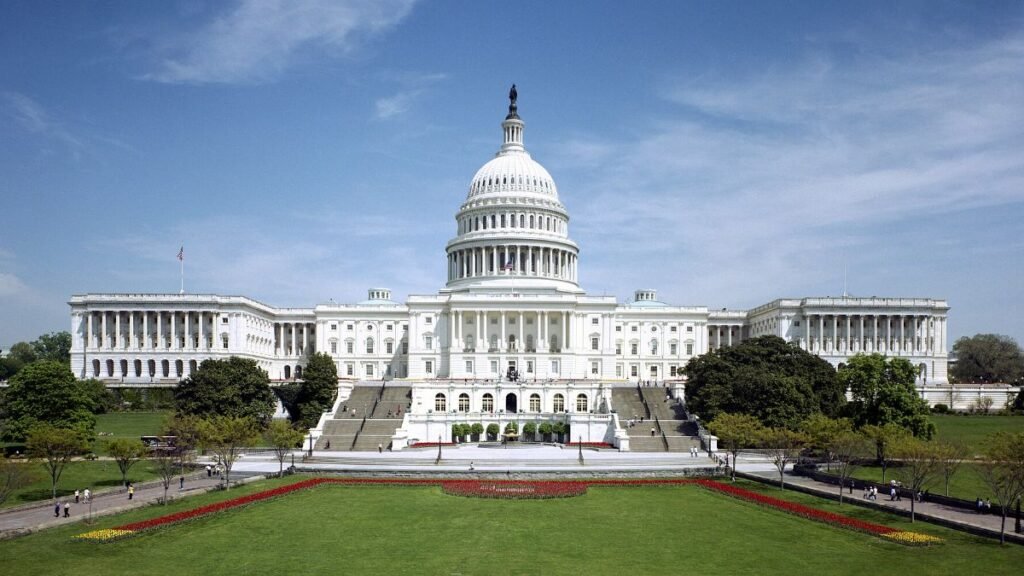
Photo: Architect of the Capitol (public domain), file photo.