This story discusses suicide. If you or someone you know is struggling, service members and veterans can reach the Veterans Crisis Line by dialing 988 and pressing 1, or by texting 838255.
The Navy has discharged Airman Nicholas McKelvey, the 19-year-old sailor who went overboard from the aircraft carrier USS Abraham Lincoln in August, after concluding that he faked a mental health crisis to get off a long combat deployment.
McKelvey was formally separated on Thursday, Oct. 29, with a general discharge under honorable conditions, The New York Times reported. That characterization leaves him without the GI Bill education benefits he expected when he enlisted in 2024.
Speaking publicly for the first time, McKelvey described to the Times how worn down he had become after months at sea. “I didn’t want to be there anymore,” he said.
What happened on the Lincoln
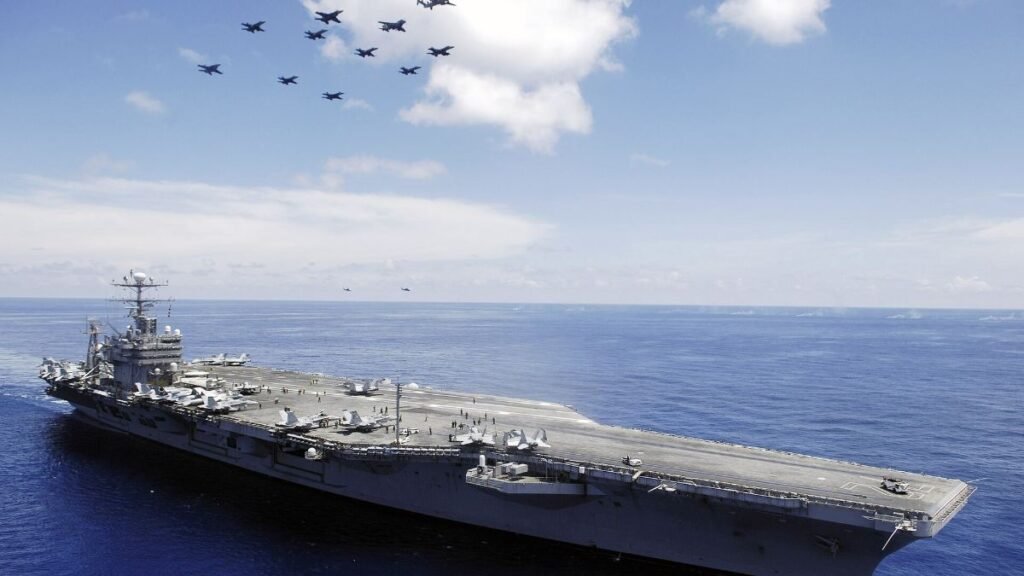
McKelvey, an aviation mechanic assigned to a helicopter squadron aboard the carrier, went overboard into the Arabian Sea on Aug. 3, about 255 days into the deployment. He was rescued and medically evacuated, and he returned to San Diego on Aug. 13. His wife has described what happened as a suicide attempt.
In the weeks before, he had repeatedly asked for paternity leave, according to MS NOW, which first reported the charges against him in late August.
The malingering charge
The Navy charged McKelvey under Article 83 of the Uniform Code of Military Justice, which covers malingering: faking an illness, or hurting oneself, to avoid work or duty. An absence-without-leave charge was later dropped.
At a captain’s mast, the nonjudicial punishment hearing run by a commanding officer, he was found guilty of malingering and of jumping from a vessel, his wife told MS NOW. He then faced a separation board to decide whether he would leave the Navy and with what kind of discharge. His family said he did not plan to fight it.
Navy records reviewed by the Times show why investigators doubted his account. An investigating officer wrote that McKelvey’s motives were undetermined but that the circumstances looked suspect: it was daylight, the carrier was moving slowly for maintenance, the water was relatively calm, and he was wearing a flotation coat.
A Pentagon spokesman told the Times that the fleet has specialized teams to provide tailored care to sailors. Military leaders did not directly address the family’s allegations of neglect and retaliation, the Times reported.
What a general discharge costs him
The type of discharge decides which benefits a former service member keeps, and the gap between “honorable” and “general” is larger than many people assume.
- Education: The Post-9/11 GI Bill generally requires a fully honorable discharge, according to the Department of Veterans Affairs. A general discharge does not qualify, and the older Montgomery GI Bill also requires an honorable discharge.
- Health care and other VA benefits: A general discharge under honorable conditions usually keeps a veteran eligible for most other VA benefits, including VA health care, subject to service requirements.
- Mental health care: VA offers emergency mental health care to many former service members regardless of discharge type.
- Appeals: Former sailors can ask the Naval Discharge Review Board to upgrade a discharge. The VA’s discharge upgrade guide explains how to apply and which board handles which cases.
The Times reported that McKelvey and his wife, Samantha Larry, have been staying in short-term rentals in San Diego and are preparing to move back to their hometown in Florida.
A strained deployment
McKelvey’s case did not happen in isolation. The Lincoln strike group spent months at sea supporting the war with Iran, and families of crew members raised concerns about exhaustion, living conditions and mental health during what became one of the longest carrier deployments in decades.
In August, several Democratic lawmakers demanded answers from the Navy about conditions aboard the ship. The Navy told CNN at the time that it had not seen an increase in suicidal ideation or attempts aboard the carrier and did not believe deployment length was linked to thoughts of self-harm.
In September, the Navy said there had been eight suicide attempts across the Lincoln strike group during the deployment, MS NOW reported.
Navy Times also reported over the summer on another Lincoln sailor’s wife who said her husband feared a dishonorable discharge after reaching a breaking point, and on a sailor who stopped a shipmate from going overboard in a separate incident.
Why the case is drawing attention
The case drew public backlash after MS NOW first reported the charges in August, and the Navy later revised them, dropping the absence-without-leave count but keeping malingering. The services have long urged troops to seek help for mental health problems without fear for their careers, and critics say punishing a sailor whose family calls the event a suicide attempt cuts against that message.
The Navy has said that any separate allegation of misconduct is weighed on its own facts with legal advice, an official told MS NOW.
For McKelvey, the next step is outside the Navy. He can apply to have his discharge upgraded, a process that can take months. Help is available now: the Veterans Crisis Line answers around the clock at 988, option 1, and online at VeteransCrisisLine.net.
Where sailors and families can get help
- Veterans Crisis Line (also serves active-duty troops and families): dial 988 and press 1, text 838255, or chat online. It is free and confidential.
- Military OneSource: free, confidential non-medical counseling for service members and families, available 24/7 at 800-342-9647 or militaryonesource.mil.
- On base: chaplains, Fleet and Family Support Centers and military treatment facilities can arrange care.
Sources
- The Daily Beast, citing The New York Times: Navy discharges sailor after Lincoln jump
- MS NOW: USS Lincoln sailor reprimanded after jumping overboard
- CNN: Sailor went overboard from the USS Abraham Lincoln as conditions prompt lawmakers’ demand for answers
- U.S. Department of Veterans Affairs: Education benefits eligibility
- U.S. Department of Veterans Affairs: Discharge upgrade instructions
- Veterans Crisis Line
- Military OneSource
Photo: U.S. Navy (public domain), file photo.