The U.S. Army’s longest-reaching ground weapons in Asia are no longer just passing through. Its Typhon missile launcher has stayed forward for more than 30 straight months, and HIMARS crews now train along China’s maritime edge from Balabac in the southern Philippines to Japan’s northern island of Hokkaido, Military Times reported on Oct. 22.
The report lands in the middle of Keen Sword 27, the U.S.-Japan field exercise that runs Oct. 19-29 across Japan’s southwestern islands. About 45,000 Japanese troops and 12,000 U.S. service members are taking part, the Associated Press reported. Army HIMARS launchers are on Ishigaki for the drill, and Typhon was moved to Okinawa for storage this month.
“It’s really a joint success story,” Gen. Ronald Clark, commander of U.S. Army Pacific, said of the long-range fires effort at the Association of the U.S. Army conference, according to Military Times.
Typhon in the Philippines: 30 months and counting
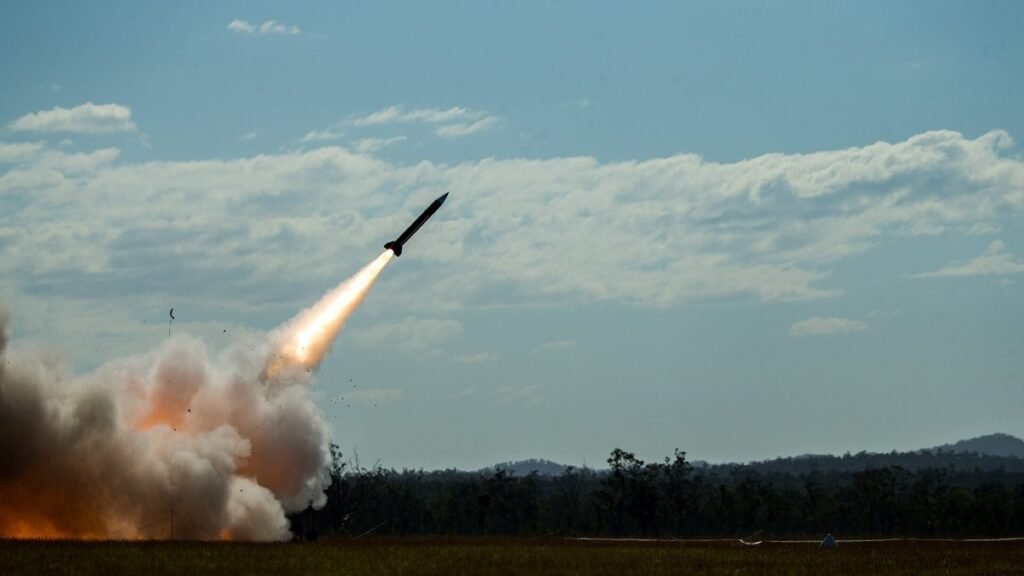
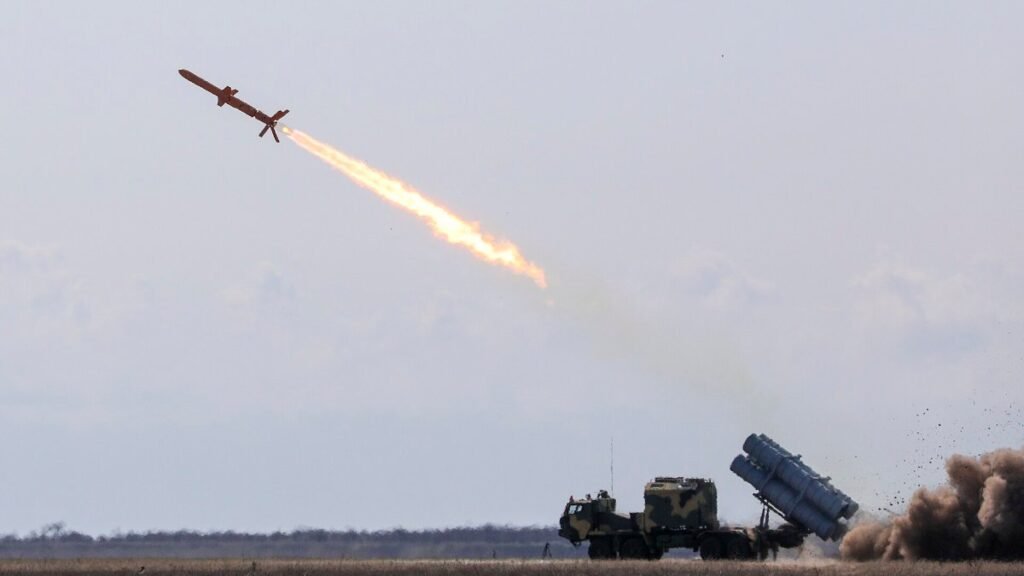
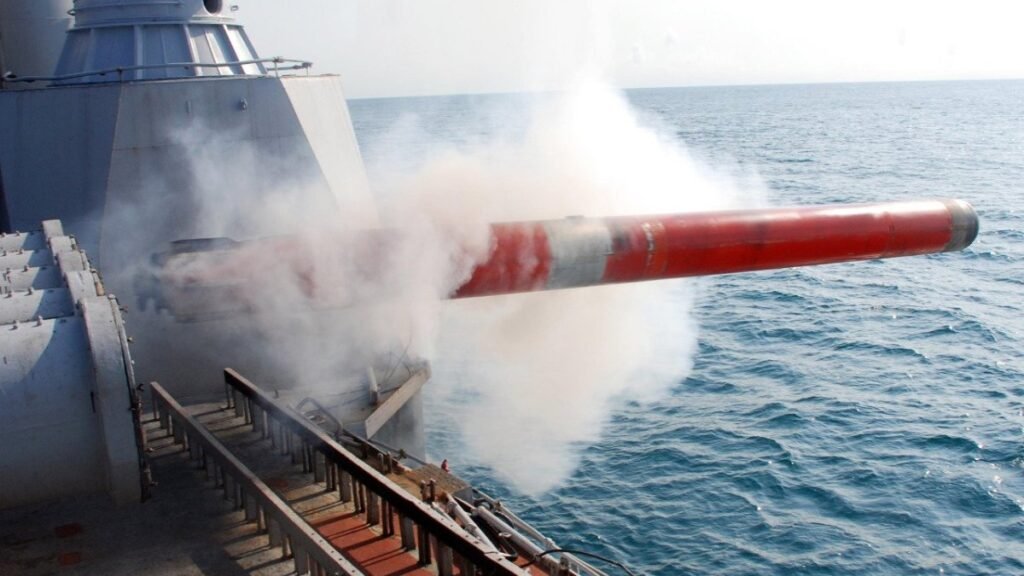
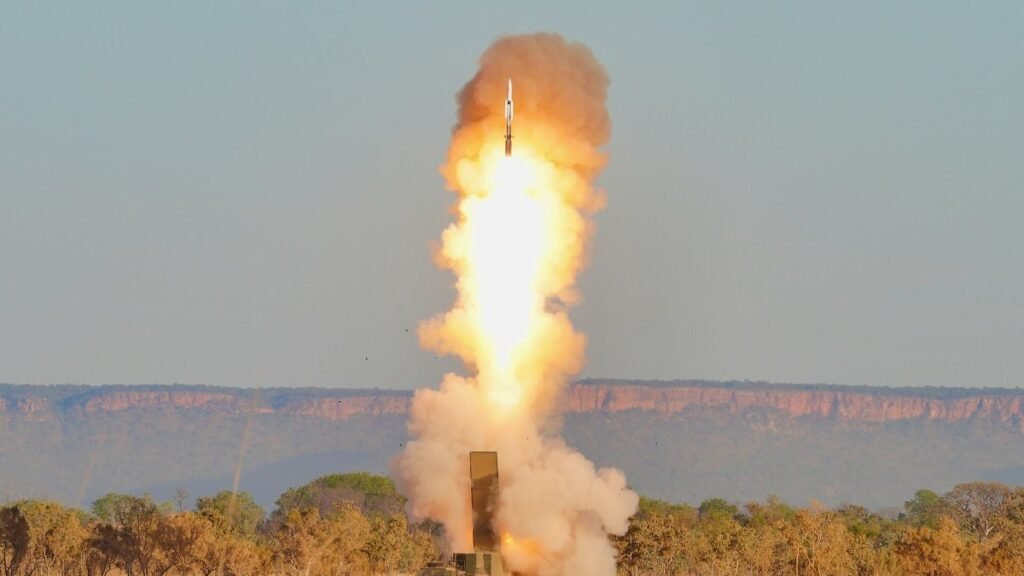
Typhon, which the Army formally calls the Mid-Range Capability, is a ground launcher that fires two Navy missiles from land: the SM-6, used against aircraft and ships, and the Tomahawk, a land-attack cruise missile. Military Times puts the SM-6’s reach at a few hundred miles and the Tomahawk’s at up to 1,000 miles.
The first battery reached northern Luzon on April 11, 2024, for the Salaknib exercise, according to the Army. Charlie Battery, 5th Battalion, 3rd Field Artillery Regiment, part of the 1st Multi-Domain Task Force, flew it in on an Air Force C-17 from Joint Base Lewis-McChord, Washington. Military Times reports that the deployment came at Manila’s request.
“This is a significant step in our partnership with the Philippines, our oldest treaty ally in the region,” then-Brig. Gen. Bernard Harrington said in the 2024 Army release. Harrington, now a major general commanding the 7th Infantry Division and Multi-Domain Command-Pacific, told the AUSA audience that Typhon “has maintained forward presence for now over 30 consecutive months,” Military Times reported.
The first Tomahawk shot from Philippine soil
The system finally fired in the Philippines during Balikatan in May. On May 5, a Typhon on the eastern island of Leyte launched a Tomahawk at a target on Luzon nearly 400 miles away, Stars and Stripes reported. In the scenario, troops based at Fort Magsaysay called for mid-range fire against a mock enemy force in Laur, a town in Nueva Ecija province.
That was not Typhon’s first live shot in the Western Pacific. In July 2025, during Talisman Sabre, the Army fired an SM-6 from the Bradshaw Training Area in Australia and hit a target at sea, Stars and Stripes reported.
Typhon moves into storage on Okinawa
Japan has hosted the launcher twice. It first deployed there from August to November 2025, then came back this summer for exercises on Kyushu in June and September, Military Times reported. The Army’s 3rd Multi-Domain Task Force temporarily deployed the systems to Kanoya Air Base on Kyushu for the Valiant Shield and Orient Shield exercises, Stars and Stripes reported.
Japan’s Defense Ministry said in an information sheet posted Sept. 25 on the Okinawa Defense Bureau’s website that Typhon and HIMARS would be flown from Kanoya to Kadena Air Base on C-17s, starting in mid-October, for temporary storage. Military Times reported that Typhon moved to Okinawa in October. The ministry’s notice said no operational units would move to Kadena and no more personnel would arrive, and that storage does not mean permanent deployment. It did not say how long the systems would stay. A spokesman for Kadena town’s base liaison division said the town planned to file a formal protest anyway, Stars and Stripes reported.
HIMARS: the island-hopping launcher
The M142 High Mobility Artillery Rocket System is the older, smaller and far more common weapon in this mix. It is a wheeled launcher built to fire a pod of guided rockets, or a larger missile, and then drive away before anyone can shoot back.
Its everyday round is the Guided Multiple Launch Rocket System, or GMLRS, which reaches “ranges greater than 70 kilometers,” about 43 miles, according to the Army. The new Precision Strike Missile, or PrSM, had a planned range of 499 kilometers, or 310 miles, when the Army announced it had received its first rounds in December 2023, Defense News reported. Lockheed tests at more than 200 miles have shown PrSM can hit moving ships, Stars and Stripes reported in May. That lets HIMARS threaten warships as well as land targets.
Itbayat and Balabac
Balikatan 2026 pushed HIMARS to both ends of the Philippine archipelago. In April, the Army flew a launcher to Itbayat, in the Batanes chain about 100 miles from Taiwan, for a dry-fire drill, Military Times reported.
Weeks later, Army watercraft from the 7th Infantry Division carried HIMARS ashore on Balabac, off southern Palawan, on May 2. The next day, after a U.S., Philippine and Australian raid force flown in on Marine MV-22B Ospreys secured the island’s airfield, the launchers took part in a live-fire demonstration against simulated maritime targets, according to an account posted on DVIDS. The Army said the mission was “to protect shipping going into the Sulu and Celebes Sea,” Military Times reported.
Japan has seen HIMARS since 2021, when it first operated in Hokkaido. On Sept. 22 this year, Army HIMARS and Japanese Multiple Launch Rocket Systems fired at the Yausubetsu Training Area in eastern Hokkaido during Orient Shield, Stars and Stripes reported.
How the Army, Marine and Japanese missiles compare
Keen Sword puts three of these weapons on Japan’s southwestern islands at once. The Marines brought their own anti-ship launcher, NMESIS, to Yonaguni for the first time, and Japan moved its new Type-25 missile there as well. None of the U.S. systems, and not the Type-25, will be fired during the exercise, a Japan Joint Staff spokesman told Stars and Stripes.
| System | Operator | Munitions | Published range | Recent locations |
|---|---|---|---|---|
| Typhon (Mid-Range Capability) | U.S. Army | SM-6; Tomahawk | SM-6: a few hundred miles; Tomahawk: up to 1,000 miles | Philippines since April 2024, first in northern Luzon; Tomahawk launch from Leyte, May 2026; Kanoya, Kyushu, summer 2026; Kadena storage, October 2026 |
| HIMARS (M142) | U.S. Army | GMLRS rockets; Precision Strike Missile | GMLRS: more than 70 km (43 miles); PrSM: 499 km (310 miles) planned | Itbayat (dry fire) and Balabac (live fire), 2026; Laoag; Hokkaido; Ishigaki for Keen Sword 27 |
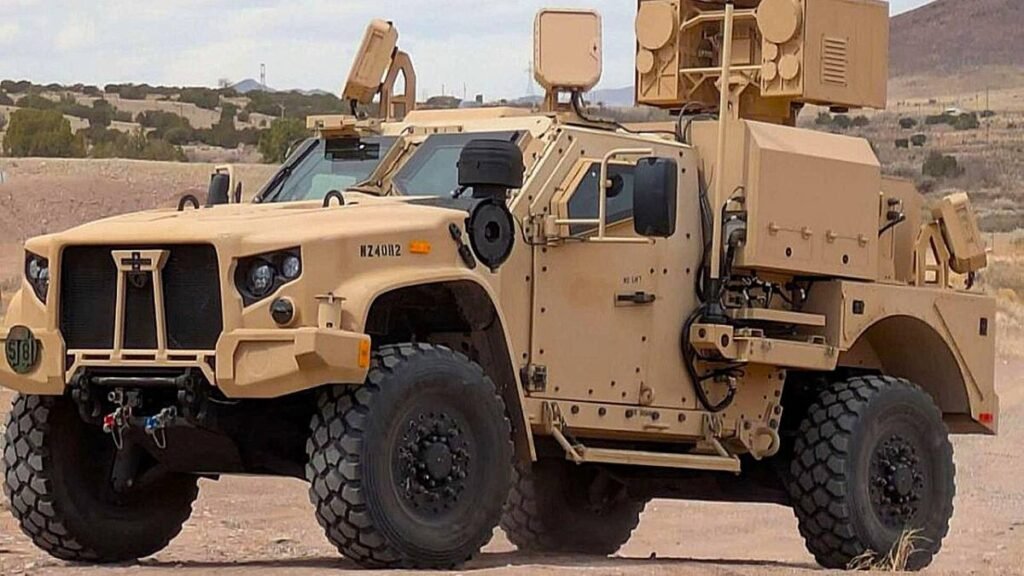
| NMESIS | U.S. Marine Corps (12th Marine Littoral Regiment) | Naval Strike Missile on a Joint Light Tactical Vehicle | About 115 miles | Batanes and Laoag, Philippines; Ishigaki and Yonaguni, Japan |
| Type-25 surface-to-ship missile | Japan Ground Self-Defense Force | Upgraded Type-12 anti-ship missile | About 1,000 km (620 miles) | Camp Kengun, Kumamoto, since March 31, 2026; Yonaguni for Keen Sword 27 |
Where NMESIS fits
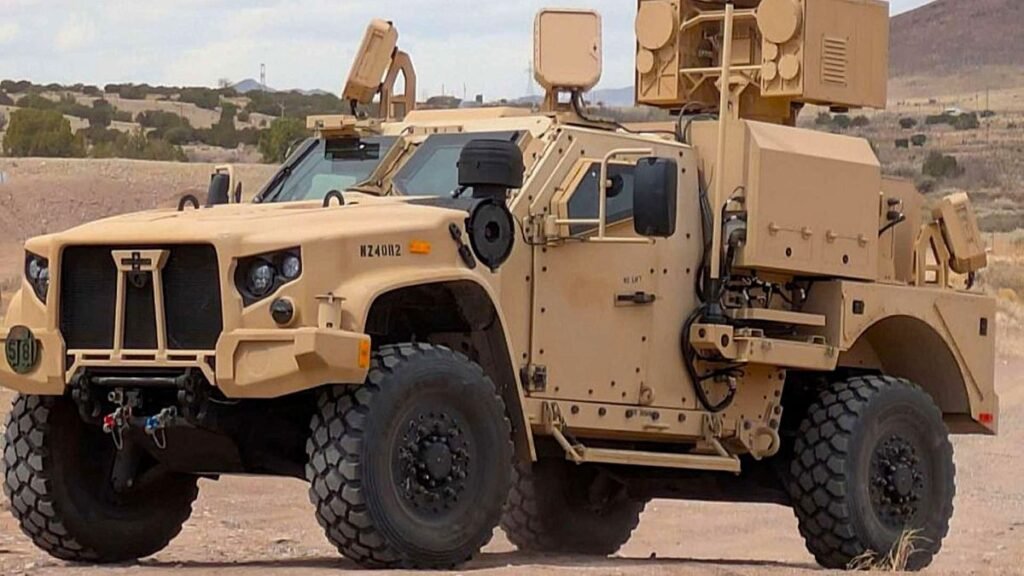
NMESIS is the Marine Corps answer to the same problem, built smaller. It mounts Naval Strike Missiles on Joint Light Tactical Vehicles and is meant only for sinking ships. It can strike targets at around 115 miles, so a launcher on Yonaguni, which sits about 68 miles from Taiwan, could threaten ships in waters around Taiwan, Defense News reported. The Okinawa-based 12th Marine Littoral Regiment had earlier taken NMESIS to the Batanes Islands and Laoag during Balikatan.
Taken together, the layers stack outward. NMESIS and HIMARS handle chokepoints and close-in shipping. PrSM stretches that to a few hundred miles. Typhon’s Tomahawks reach far deeper. Beijing has singled out Typhon deployments in its criticism, Military Times noted.
Beijing’s response
China’s Foreign Ministry has objected to Typhon since it arrived. In December 2024, spokesperson Mao Ning said, “China firmly opposes U.S. deployment of Mid-Range Capability missile system in the Philippines,” and urged Manila to “quickly pull out the Typhon missile system as publicly pledged,” China’s state news agency Xinhua reported. In February 2025, spokesperson Guo Jiakun warned that “China will not sit idly by when its security interests are harmed or threatened,” according to a transcript posted by the Chinese Embassy in the Philippines.
The target shifted to Tokyo this fall. On Sept. 21, Guo called Typhon “a strategic offensive weapon” and said its deployment “is yet another example of Japan’s accelerated remilitarization,” according to the ministry’s transcript. He said China had “lodged strong protests against Japan through diplomatic channels on multiple occasions” and “has recently sent a diplomatic note to Japan.” Russia’s Foreign Ministry also objected to the Kyushu deployment, Stars and Stripes reported.
Experts cited by Chinese state media argue that small islands near Taiwan are hard to defend: their terrain leaves launchers little room to move or hide, and their remoteness makes resupply difficult, Military Times reported.
The resupply problem the Army is training for
Harrington acknowledged the resupply challenge. Keeping Typhon forward has raised new training questions, he said at AUSA: “How do we sustain in the environment?” Military Times reported that his answer involves dispersing forces and pairing expensive missiles with cheaper, harder-to-detect weapons such as one-way attack drones and unmanned surface vessels.
Clark said the drills already affect how potential adversaries think, because “what that does is it gives them pause,” according to Military Times.
For now Typhon is in storage on Okinawa with no announced end date, HIMARS crews are on Ishigaki, and the Marines’ anti-ship launchers are on Yonaguni for an exercise that runs through Oct. 29.
Official links
- U.S. Army: Mid-Range Capability makes its first deployment in the Philippines
- U.S. Indo-Pacific Command: Mid-Range Capability in the Philippines
- DVIDS: Balikatan 2026 maritime security drill on Balabac Island
- Japan Joint Staff: Keen Sword 27 announcement (PDF)
- China Ministry of Foreign Affairs: Sept. 21, 2026, press conference
- Armed Forces of the Philippines
Photo: Sgt. Perla Alfaro/U.S. Army.