Iran’s supreme leader, Mojtaba Khamenei, has ordered the country’s armed forces to prepare a response “without geographical restriction” if Iran is attacked again, his office said Saturday, as Qatari mediators pressed on with talks in Tehran and a letter from Vice President JD Vance sat unanswered.
Khamenei met senior military commanders and gave them what his office called important strategic directives, demanding maximum deterrence and readiness for an immediate response, Al Jazeera reported. He has not been seen or heard in public since he replaced his father, Ayatollah Ali Khamenei, who was killed in the opening strikes of the war in February.
The message lands days before the U.S. midterm elections on Nov. 3, after which President Donald Trump has repeatedly said he could order new strikes.
What is in Vance’s letter?
The letter has not been published. U.S. media reports describe it as an attempt to restart direct talks and to see whether the two sides can narrow their differences enough to head off a new U.S. campaign.
- Who it went to: Mohsen Rezaei, the secretary of Iran’s Supreme National Security Council, a veteran hard-liner who has become a central voice in strategic decisions.
- How it was delivered: through Qatari mediators, last weekend, according to The New York Times as summarized by Al Jazeera.
- What it proposed: a meeting soon, with Vance leading the U.S. delegation as he did at talks in Switzerland in June, and Iran’s nuclear program on the table from the start. Qatar or Turkey were floated as venues.
- The pitch: Vance framed talks around preventing an Iranian nuclear weapon while letting Tehran rebuild its economy and keep its sovereignty, and offered to meet Rezaei personally, a U.S. official told i24NEWS.
The Wall Street Journal reported that Vance sent the letter at Trump’s direction. Trump has disputed that, telling reporters the outreach was about helping Iran get medical supplies, The Jerusalem Post reported, citing Reuters.
Has Iran answered?
Not yet. Iranian media have confirmed the letter arrived and said the leadership is preparing a response. The IRGC-linked Tasnim news agency said Washington has still not met Iran’s conditions for talks, The Washington Times reported.
Those conditions include lifting the U.S. naval blockade of Iranian ports, waivers on oil sanctions, the release of frozen assets and a truce in regional conflicts, including Lebanon. Parliament Speaker Mohammad Bagher Ghalibaf, who led Iran’s negotiating team earlier this year, said Washington’s mix of pressure and incentives has had no effect.
Some voices in Tehran want to engage. The state-linked Jomhouri-e Eslami newspaper said in an editorial Saturday that even though a deal looked unlikely, Iran should still respond positively to talks in the coming days rather than accept war as inevitable, Al Jazeera reported.
Why Rezaei matters
Addressing the letter to Rezaei, rather than the foreign ministry, signals a shift in who Washington thinks holds power in Tehran. U.S. intelligence officials believe he is in regular contact with Khamenei, i24NEWS reported. Hamidreza Azizi, a senior analyst at the International Crisis Group, told Al Jazeera the choice suggests Americans see better prospects in dealing with Rezaei directly, though Iran still doubts Vance can deliver anything Trump will not sign off on.
Ali Vaez of the International Crisis Group put the risk of new strikes after the elections at dangerously high. “He’s more likely to become a flame duck, taking bigger risks,” Vaez said of Trump.
The war of words is getting louder
Iran’s army spokesman, Mohammad Akraminia, warned that any new U.S. attack would spread the war across a wider area. Rezaei and Foreign Minister Abbas Araghchi also took aim at Europe after German Chancellor Friedrich Merz said the war has cost Europe more than 100 billion euros over eight months.
On the U.S. side, Sen. Chris Murphy, D-Conn., said he had been briefed on what a short, intense military campaign would look like and warned that it would lead to devastating escalation. Eric Brewer of the Nuclear Threat Initiative argued that strikes on energy targets are unlikely to force Iran to accept U.S. demands and that remaining nuclear sites have no military solution.
Meanwhile, at sea
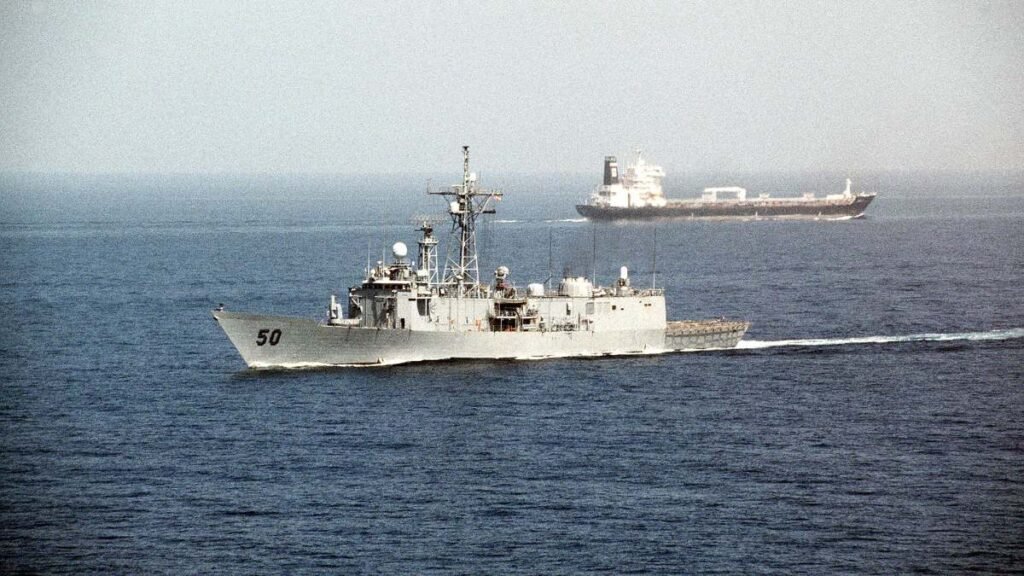
The standoff in the Strait of Hormuz continues. Iranian state television claimed Friday that at least six tankers had been damaged by mines in recent days on routes Tehran calls unauthorized. The British military’s UKMTO center counted 155 inbound and 122 outbound transits in the week ending Oct. 28, about 70% below prewar levels.
U.S. Central Command’s Adm. Brad Cooper said in a video Friday that he flew over the strait, saw dozens of ships moving with U.S. aircraft and sea drones overhead, and saw no Revolutionary Guard boats, claiming Iran’s navy had been sunk. Local Iranian authorities said Saturday that a U.S. drone bombed two fishing boats south of Qeshm Island, wounding several fishermen. The U.S. military has not commented on that claim.
For shipowners and Gulf governments, the open question is whether the next move comes from the mediators shuttling between Doha and Tehran or from Washington once Tuesday’s vote is over.
What to watch next
- Whether Rezaei formally replies before Tuesday’s U.S. election.
- The outcome of the Qatari delegation’s talks in Tehran, which were set to continue Saturday.
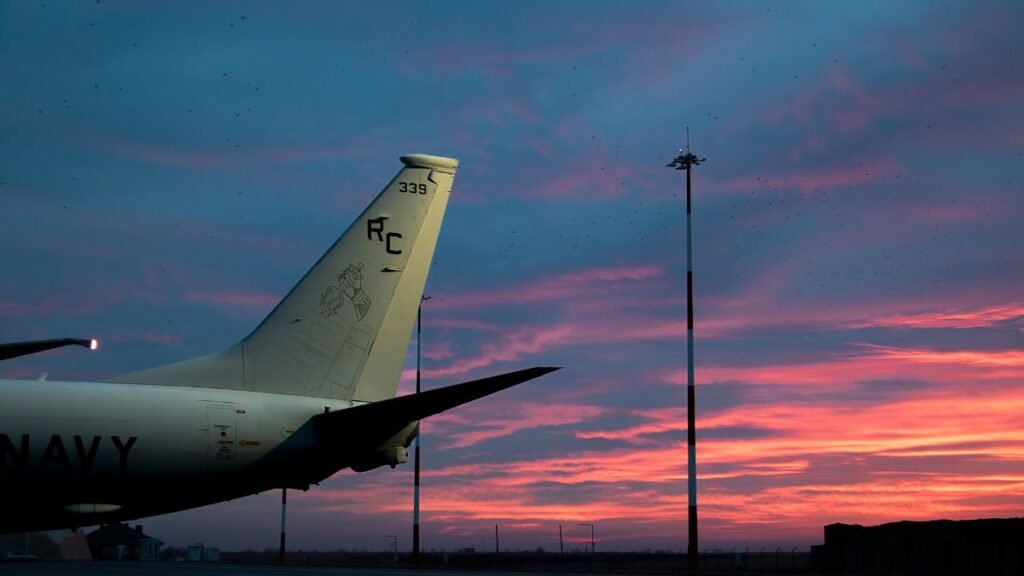
- Any change in U.S. force posture in the Gulf, where the USS Theodore Roosevelt and about 9,000 sailors and Marines have been sent.
- Whether Iran escalates at sea before a U.S. decision is made.
Read our earlier report on Iran’s new defense minister and his warning to Washington.
Sources
- Al Jazeera: Iran warns of unfettered retaliation if attacked as mediators try for peace
- Al Jazeera: What we know of Vance’s letter to Rezaei
- i24NEWS: Iran confirms receiving Vance letter seeking renewed talks
- The Washington Times: Iran says it’s drafting response to Vance letter
- The Jerusalem Post (Reuters): Iran received letter from US’s Vance
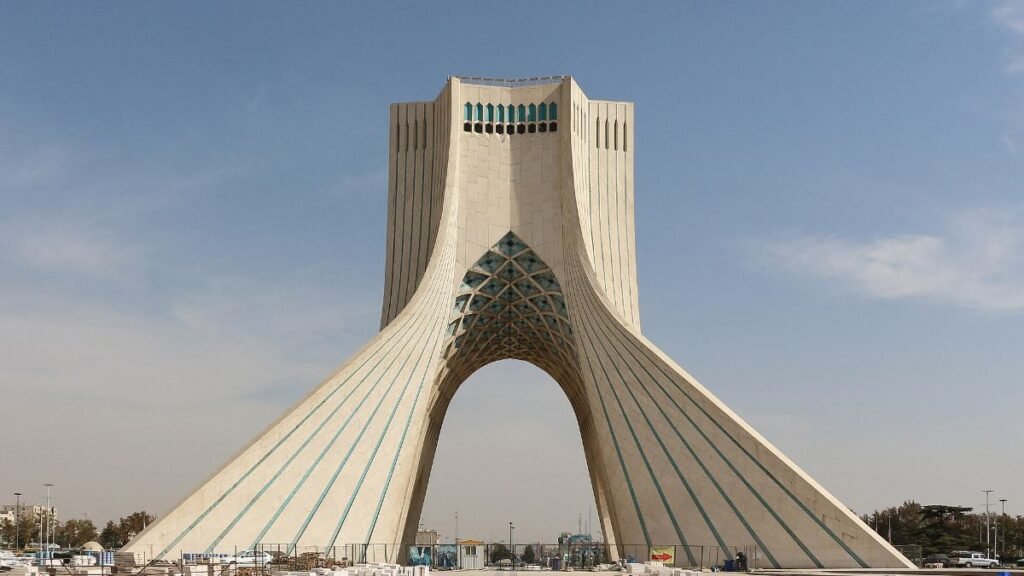
Photo: Bernard Gagnon/Wikimedia Commons (CC BY-SA 4.0), file photo.