The Pentagon has a number for what Iranian missiles and drones did to American bases in the Middle East. Five senators have heard it. Taxpayers have not.
That missing figure is the largest hole in every public tally of the Iran war’s cost. The Congressional Budget Office put the bill to the Defense Department at about $38 billion through Aug. 1, but it said plainly that it could not price the damage to U.S. installations. Now five Democrats on the Senate Armed Services Committee want the number released by Nov. 2.
Sen. Elizabeth Warren (D-Mass.) led a letter dated Oct. 18 to Navy Adm. Brad Cooper, head of U.S. Central Command, who gave the committee the estimate in a classified briefing, Stars and Stripes reported. Sens. Richard Blumenthal (D-Conn.), Mazie Hirono (D-Hawaii), Tammy Duckworth (D-Ill.) and Gary Peters (D-Mich.) signed on.
“There is no rationale for classifying that cost estimate,” the senators wrote.
What we know about the war’s cost
The verified figures below come from the CBO, the Pentagon and its inspector general. Notice the last row.
| Item | Figure | Source |
|---|---|---|
| Cost to the Defense Department through Aug. 1, 2026 | $38.1 billion | CBO, Sept. 15, 2026 |
| Replacing expended munitions (includes $13.1 billion in missile defense interceptors) | $21.7 billion | CBO |
| Increased flying hours | $10.4 billion | CBO |
| Higher fuel costs (fiscal 2026) | $2.7 billion | CBO |
| Replacing equipment lost in battle | $1.9 billion ($3.3 billion under an alternative estimate) | CBO |
| Other operations | $1.5 billion | CBO |
| Ongoing cost per additional month | About $2 billion to $3 billion, depending on intensity | CBO |
| Hegseth’s estimate for “certain aspects” of the war through Sept. 30 | $37.5 billion | Senate Appropriations testimony, July 2026 |
| White House supplemental request (Pentagon share: $67.1 billion) | $87.6 billion | White House, June 24, 2026 |
| Portion of the request directly tied to the war | $42.3 billion | CBO analysis |
| Damage to U.S. embassies, consulates and other diplomatic facilities, as of June 30 | About $184 million | DoD Inspector General, citing State Department estimates |
| Damage to U.S. military bases and facilities | Not public | Briefed to senators in a classified setting |
The CBO’s letter, written for Rep. Brendan Boyle (D-Pa.), the top Democrat on the House Budget Committee, put it directly: “CBO is unable to estimate the cost of damage to U.S. bases and facilities in the Middle East.” The agency said the Pentagon had not provided the value of damaged property, the scope of repairs was unclear and host nations may pick up part of the tab, according to the CBO report.
The $38.1 billion also leaves out casualties, future veterans’ care and later repair of equipment, the CBO said. That makes the headline number mostly the price of what was fired, flown and burned.
Senators set a Nov. 2 deadline for the base damage figure
The letter asks for unclassified answers, and it asks for more than one number. The senators want the cost of damage to U.S. bases since the war began on Feb. 28, the plant replacement value of what was destroyed, unplanned military construction and facility spending at overseas sites, whether repairs have started and how they are funded, the cost of moving operations and logistics hubs, and damage to allied bases that support U.S. forces, according to the letter posted by Warren’s office.
“Even if DOD has not yet determined which facilities it is planning to rebuild, disclosing these costs represents the bare minimum transparency DOD owes the public,” they wrote. If the estimate is classified, they added, “the Department should exercise its authority to declassify the costs.”
The letter cites a July NBC News report that, according to officials and people familiar with internal Pentagon estimates, rebuilding U.S. bases could exceed $30 billion. That figure has not been confirmed by the Pentagon. If it holds, it would nearly double the CBO’s total.
Warren took the argument public on Oct. 19. “Americans deserve to know how much of their money is being burned on Trump’s war with Iran,” she wrote on X, Stars and Stripes reported. CENTCOM did not immediately respond to the newspaper’s request for comment.
The base damage question is not new on Capitol Hill. At a July Senate Appropriations hearing, Sen. Jeanne Shaheen (D-N.H.) said she thought “the supplemental doesn’t include funding to repair damage to our bases,” and added, “I have not heard that we’ve gotten the full extent of any of those damage estimates,” Breaking Defense reported.
The bases Iran hit and what has been verified
The Pentagon has not released a full damage list. What follows is what officials have said on the record or what reputable outlets and the senators’ letter have reported.
Naval Support Activity Bahrain
Iran struck the base, home to the Navy’s Fifth Fleet headquarters, with missiles and one-way attack drones on Feb. 28. Damage reportedly hit the headquarters, barracks, warehouses and communication towers, and a Wall Street Journal investigation estimated construction costs of roughly $400 million, Military Times reported. Chief of Naval Operations Adm. Daryl Caudle was blunt: “We’re not getting back in there anytime soon.”
Acting Navy Secretary Hung Cao has acknowledged that Iran “blew the hell out of” the base, Stars and Stripes reported. The Navy has leaned on a logistics hub at Diego Garcia, an Indian Ocean atoll more than 2,000 miles from its carrier strike groups in the Middle East, according to Military Times. The senators’ letter, citing a Pentagon inspector general report, points to 14- to 18-day logistics cycles.
Al Udeid Air Base, Qatar
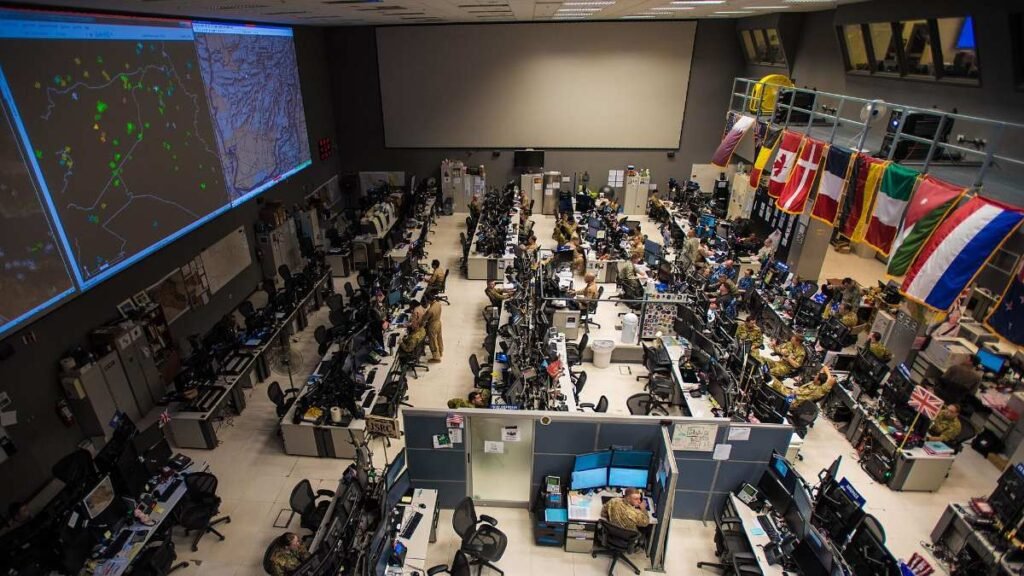
Iranian missiles struck the Combined Air Operations Center at Al Udeid in the war’s early weeks and left it inoperable, Air & Space Forces Magazine reported in June. The building was not in use, no injuries were reported and the air campaign was run from the operations center at Shaw Air Force Base, South Carolina. Breaking Defense has also reported the center was knocked out.
Kuwait, Jordan, Saudi Arabia and the UAE
- Camp Buehring and Camp Arifjan, Kuwait: struck within days of the first U.S. attacks, according to reports cited in the senators’ letter.
- Tower 22, Jordan: reportedly struck in July, the letter says.
- Muwaffaq Salti Air Base, Jordan: reportedly struck, the letter says.
- Prince Sultan Air Base, Saudi Arabia: reportedly struck, with an E-3 AWACS aircraft reportedly damaged, the letter says.
- Jebel Ali Port, Dubai: a U.S. Navy recreational area was reportedly damaged, the letter says.
Pentagon weighs posture before it pays for repairs
The Pentagon is not yet promising to rebuild everything. A senior defense official told reporters at a Defense Writers Group breakfast that the department is weighing future force posture against repair costs as it decides which bases to fix, Breaking Defense reported Oct. 20.
“We’re meeting with CENTCOM and doing the assessments right now from an installation perspective,” the official said. “Part of this is what will the global posture be in the future, and what does that require us to have?”
The official did not have a repair cost estimate readily available, according to Breaking Defense. The official said installations should be treated as weapon systems, “not just a piece of real estate,” and said the Golden Dome team is helping decide which locations get protected first.
Why the number matters for the FY27 budget and the war supplemental
Think of the war’s cost as two separate bills. The first, munitions, flight hours and fuel, is what the CBO counted. The second, concrete, hangars, barracks and command centers, has not been counted in public at all. Congress is being asked to pay the first without seeing the second.
The White House’s $87.6 billion supplemental request, sent in June, still has not cleared Congress. The CBO found that $42.3 billion of it appears directly tied to the war, about 10% more than its own estimate of the Pentagon’s costs. That request already sits on top of a record $1.5 trillion fiscal 2027 defense request, Defense One reported.
Meanwhile, the Pentagon is running on a stopgap. The continuing resolution the House passed Sept. 1, after the Senate, funds programs at fiscal 2026 levels through Dec. 11 and carries the standard ban on new programs, Breaking Defense reported. Those rules leave little room for large, unplanned construction projects overseas.
Base repair is the kind of cost that tends to land later, as military construction or in another emergency request. If the internal estimates reported by NBC News are close, lawmakers could be voting on war money this winter while a bill of similar size waits behind it.
What comes next
The senators’ deadline is Nov. 2. CENTCOM can answer in an unclassified form, decline or keep the figure inside a classified annex. The Pentagon’s posture review with CENTCOM will decide which bases are rebuilt, moved or left smaller, and each choice carries a different price.
The government’s current funding expires in December, when Congress also has to deal with the war supplemental and full-year fiscal 2027 appropriations.
Official links
- CBO: Estimating the Cost of Combat Operations Against Iran
- Sen. Elizabeth Warren: press release and letter to CENTCOM
- Senate Armed Services Committee
- U.S. Central Command
- Department of Defense Office of Inspector General
Photo: Staff Sgt. Alexander W. Riedel/U.S. Air Force.