Australia has opened a competition for a medium-range air and missile defense system for its army, asking manufacturers to offer a proven weapon that can shoot down cruise missiles and ballistic missiles in their final phase, with a winner to be chosen by the end of 2027.
The project, called LAND 6504 Medium Range Ground Based Air and Missile Defence, drew interest from companies in Europe, Israel, South Korea, Turkey and the United States, Defense News reported Oct. 19. The government plans to test-fire the chosen system at the Talisman Sabre exercise in mid-2029 and reach initial operating capability in the early 2030s.
Defense News described the program as moving at “lightning speed” and called the schedule itself a major risk.
What Australia is asking for
The army wants a system that can defeat ballistic missiles in their terminal phase, as they dive toward a target, as well as slower air-breathing threats such as cruise missiles, according to Defense News. It must be a “proven capability,” not a design still in development.
It also has to work with equipment Australia already has or is buying: radars made by CEA Technologies, an Australian company, and the Joint Air Battle Management System that Lockheed Martin Australia is developing to link sensors and weapons across the military.
No range or interceptor specifications have been made public, and no budget figure has been announced. Australia is pursuing the purchase through direct commercial sale and the U.S. Foreign Military Sales program at the same time, Defense News reported.
Why now
The push comes from Australia’s 2026 National Defence Strategy, which called for the “accelerated introduction of medium-range, ground-based, active missile defense,” according to Defense News. The strategy’s investment plan includes “new investment in a medium-range, ground-based air defence system” as a core part of a national integrated air and missile defense network that “will commence as a priority from 2026,” Defence Connect reported.
It sits inside a broader spending increase. Defense spending will rise to 3% of gross domestic product by 2033, with $425 billion in planned defense spending over the decade, according to the Defence Minister’s office.
China has given Canberra reasons to hurry. A Chinese navy task group sailed around Australia in early 2025. On July 6, 2026, a Chinese nuclear-powered submarine test-fired a ballistic missile carrying a dummy warhead into the Pacific, the South China Morning Post reported. The missile flew about 7,000 kilometers, according to the Arms Control Association.
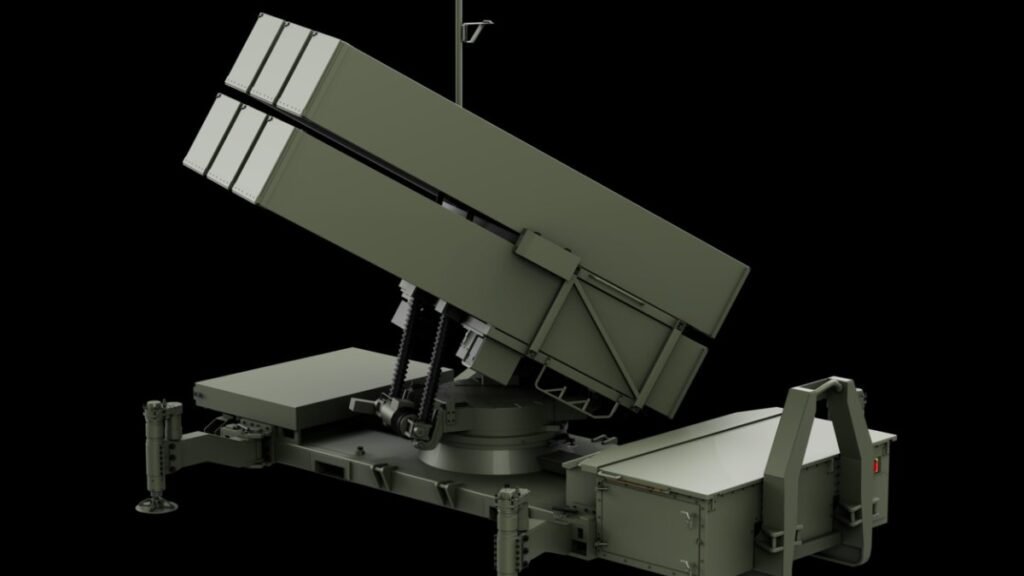
Australia’s current ground-based air defense is short range. The army’s NASAMS system, operated by the 16th Regiment, Royal Australian Artillery, in Adelaide, was declared ready for operations on Sept. 9, 2026, after it “met all requirements for operational service,” according to the Defence Minister’s office. It uses CEA radars and is designed to defeat cruise missiles, aircraft, helicopters and drones. It was bought under an earlier project, LAND 19 Phase 7B, with Raytheon Australia as prime integrator, according to the Defence Department.
Opposition politicians say that isn’t enough. Shadow Defence Minister James Paterson has said “Australia’s integrated air and missile defence (IAMD) is totally inadequate for an age of missiles and drones,” The Nightly reported.
The contenders
Several companies are already positioning themselves, according to Defense News.
Hanwha Aerospace (South Korea) showed its L-SAM long-range surface-to-air missile system at the Land Forces 2026 exhibition in Perth in early October. South Korea finished developing L-SAM in November 2024; it intercepts targets above 40 kilometers, forming the upper layer above the PAC-3 and M-SAM II, and a Block II version is in development, The Korea Times reported.
Kongsberg and Raytheon could offer an upgraded version of the NASAMS system Australia already operates, adding the extended-range AMRAAM-ER missile. “We’re definitely interested in that program,” said John Fry, managing director of Kongsberg Australia.
Lockheed Martin Australia and CEA Technologies are promoting a “hybrid” that would combine the Navy’s SM-2 missile with Australian radars and launchers.
Companies from Europe, Israel and Turkey have also shown interest, though Defense News did not name them.
A test in the desert
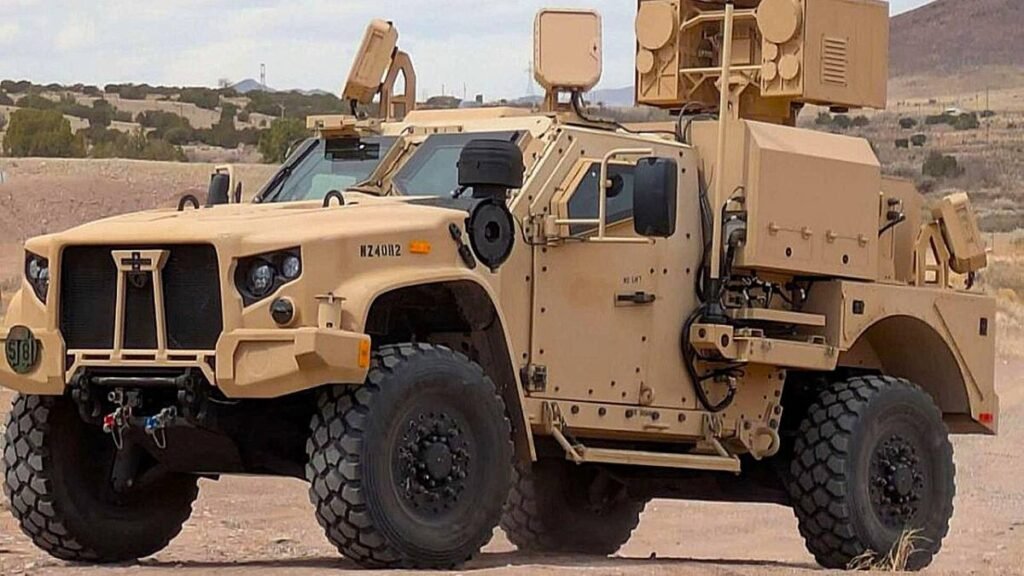
Australia has already tried one possible answer. In June 2026, at the Woomera range in South Australia during Exercise Taipan Strike 26, the military fired a Navy SM-2 missile from a trailer-mounted launcher called Derringer, guided by a CEA radar and a virtualized version of the Aegis combat system used on warships, Defense News reported. The missile engaged a BQM-74E target drone simulating a cruise missile.
The government called it a “first-of-type integration between a CEA radar and the Aegis Combat System” and a “potential capability option,” according to the Defence Minister’s office.
Chief of Air Force Air Marshal Stephen Chappell called the firing “an Air Force-led Integrated Air and Missile Defence activity.” Defence Minister Richard Marles called it “a practical demonstration of how the Australian Defence Force is working with its partners, and local industry to deliver crucial defence capabilities.”
The hard part: money and missiles
Money is the first problem. Defense News called funding a “perennial problem” for Australian defense projects because the AUKUS nuclear submarine program absorbs so much of the budget. The tight schedule is another risk.
Supply is the second. U.S. interceptor stocks have been drawn down by the war with Iran, and American factories are struggling to keep up with demand at home and abroad, Defense News reported. That could make non-U.S. options more attractive.
The Congressional Research Service has warned that “Finite U.S. industrial base capacity introduces trade-offs between filling FMS orders and replenishing U.S. stockpiles,” a reminder that foreign buyers may wait behind the Pentagon for American missiles.
What’s next
Defense will review industry responses before narrowing the field. The timeline published so far is tight:
- End of 2027: final vendor selection
- Mid-2029: live firing at Exercise Talisman Sabre
- Early 2030s: initial operating capability
Sources
- Defense News: Australia gets the ball rolling on medium-range air defense
- Defence Minister: Australia achieves landmark prototype missile defence live fire
- Defense News: Australia whips together a hybrid air defense weapon
- Defence Minister: Army air defence capability ready for operations
Photo: Defensie Nederlands via Wikimedia Commons (CC BY-SA 4.0). The image shows a NASAMS launcher in Dutch service.