The HS Dignity was part-loaded and bound for the Romanian port of Braila when drones caught it off the Bulgarian village of Krapets, near the Romanian border, overnight into Oct. 13. The Guinea-Bissau-flagged cargo ship went down. Five crew members were rescued. Eleven were still missing as a search and rescue operation went on, Al Jazeera and Reuters reported. The Syrian Sailors’ Union said 14 of the 16 crew were Syrian, Arab News reported.
The same night, three drones hit the Maltese-flagged, Ukrainian-owned Chelsea 3 about 18 nautical miles off Bulgaria. All 15 of its crew, seven Ukrainians and eight Azerbaijanis, were rescued.
A week later, NATO answered. After a meeting of the North Atlantic Council at alliance headquarters in Brussels on Oct. 20, NATO said allies would send more surveillance aircraft, sensors and specialists to the Black Sea in response to a string of drone strikes that has sunk or set ablaze ships off two member states’ coasts.
What NATO agreed to send to the Black Sea
The announcement came from U.S. Army Col. Martin O’Donnell, spokesman for Supreme Headquarters Allied Powers Europe, in a statement reported by Stars and Stripes.
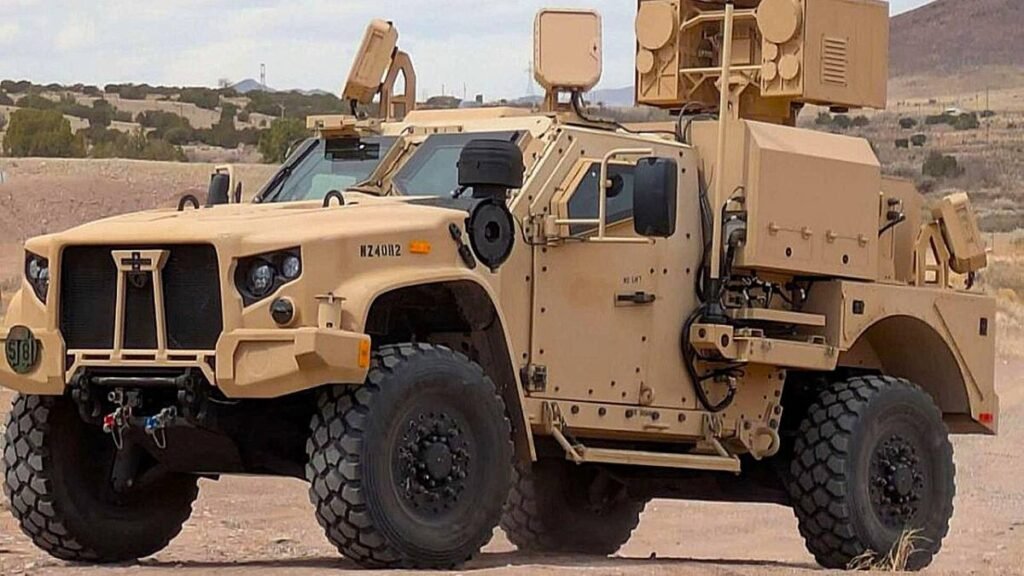
“Allies have or will send additional maritime patrol aircraft, radar systems, explosive exploitation teams, intelligence personnel, drones, and more to the Black Sea.”
— Col. Martin O’Donnell, SHAPE spokesman
Based on O’Donnell’s statement, the package includes:
- Additional maritime patrol aircraft
- Radar systems
- Drones
- Intelligence personnel
- Explosive exploitation teams to carry out forensic work on the weapons used
O’Donnell did not say which allies are contributing, how many aircraft are involved or when they will arrive. He said the top priority is better situational awareness “through increased sensors and data sharing.”
NATO spokesperson Allison Hart, in a post on X, said the alliance “has already strengthened our posture along the eastern flank, including with counter-drone capabilities,” Al Jazeera reported.
The alliance has not announced a mission to escort merchant ships or to intercept threats beyond its collective defense responsibilities, Stars and Stripes noted.
A two-week run of attacks off Romania and Bulgaria
The HS Dignity was not the first ship lost. About a week earlier, a vessel sank after drone strikes in Bulgaria’s Black Sea exclusive economic zone, and nine Syrian sailors and one Egyptian were lost at sea, according to Reuters.
Two days after the HS Dignity went down, the trouble moved north to the Danube Delta. Overnight into Oct. 15, two chemical tankers anchored near the mouth of the Sulina Canal caught fire: the San Marino-flagged Wine Trader and the Comoros-flagged Yara J. Five of the Wine Trader’s 12 crew were rescued and seven were missing, Reuters reported. The Yara J’s crew was safe. Officials did not immediately say what caused the Yara J fire.
NATO said four commercial vessels were targeted that night, according to Stars and Stripes. Besides the two tankers, they were the Marshall Islands-flagged bulk carrier Sea Destiny, in Romanian territorial waters, and the Tanzanian-flagged tanker Dania J, in the Danube at the Ukrainian port of Izmail.
By Reuters’ count, at least five other cargo vessels were hit near the Romanian and Bulgarian coasts over about 10 days before the tanker fires, with at least 23 sailors dead or missing. EU foreign policy chief Kaja Kallas said Oct. 20 that “six attacks in 10 days by suspected Russian drones marks a dangerous and unacceptable escalation,” Al Jazeera reported.
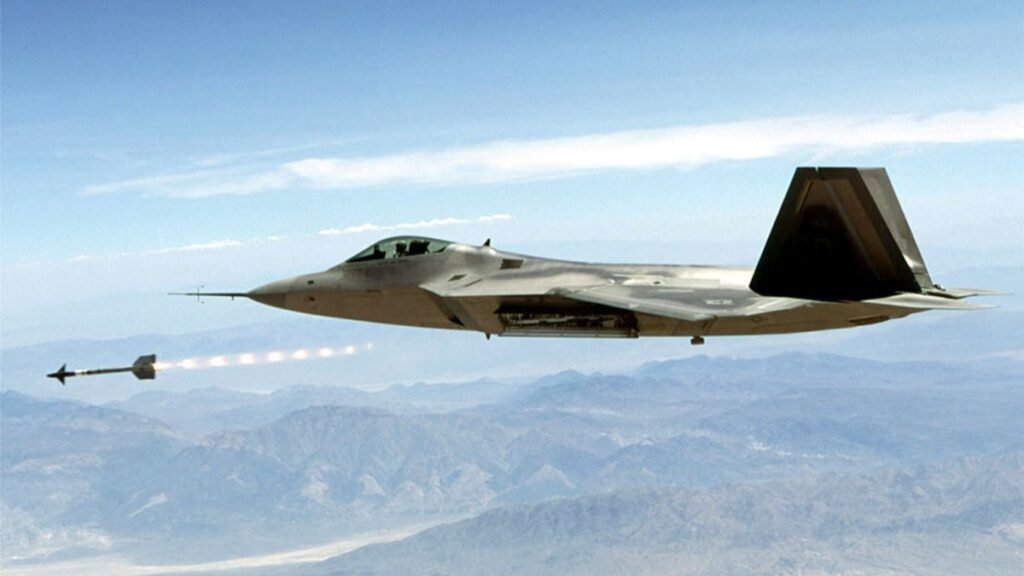
Romanian F-16s down two drones
On Saturday, Oct. 17, Romania’s Defense Ministry said two F-16s on air-policing duty from the 86th Air Base at Borcea shot down two drones over Romanian territorial waters near Sulina. Acting Defense Minister Radu Miruta said the drones were believed to be Russian-made Geran-4 drones, flying at about 450 kilometers per hour (about 280 mph). “This is the first time we’ve shot down drones like these,” he said, according to Reuters. The Kyiv Independent also reported the Geran-4 assessment.
The ministry itself identified the aircraft only as jet-powered attack drones from the “Geran family.”
No formal attribution from NATO
NATO has not said who is behind the attacks. Neither has Bulgaria or Romania, directly. Military analysts say Russia almost certainly carried them out, and Moscow has not acknowledged responsibility.
Bulgarian Prime Minister Rumen Radev called the HS Dignity attack “absolutely unacceptable” and said its outcome “benefits the Russian Federation,” Reuters reported. Speaking later to Parliament, he put the bind plainly: “The problem is that we cannot prove it,” The Associated Press reported. Russia’s ambassador in Sofia, summoned after the attacks, said Moscow’s Defense Ministry had no information about them, according to Reuters.
Moscow is open about hitting some ships. On Oct. 20, the same day NATO announced its reinforcements, Russia’s Defense Ministry said its forces had struck three cargo vessels at the Ukrainian Danube port of Reni and two more heading to Odesa, describing them as used for military purposes, Reuters reported. That statement did not mention the ships hit off Bulgaria or Romania.
Article 4 vs. Article 5: why the alliance is consulting, not fighting
Article 4 provides for consultations among allies whenever any of them believes its territorial integrity, political independence or security is threatened. According to NATO, Article 4 consultations are not a necessary precondition for action under Article 5.
Article 5 is the mutual defense clause: an armed attack on one ally “shall be considered an attack against them all.” It requires two conditions, an armed attack on an ally and that ally’s request for or consent to collective action. It has been invoked once, after the Sept. 11, 2001, attacks. Help under Article 5 does not have to involve armed force.
The Black Sea strikes sit in a gray zone. They have hit foreign-flagged merchant ships at sea, some in Bulgaria’s exclusive economic zone, rather than allied soil, and no one has formally assigned blame. Romanian defense analyst Radu Tudor told the AP: “It’s a matter of discussion whether the exclusive economic zone is included in the Article 5-type reaction or not.”
Reports on the Oct. 20 session described it as a North Atlantic Council discussion of Black Sea security. None said Romania or Bulgaria had formally invoked Article 4.
The Montreux Convention limits what NATO navies can do
The package does not include warships. Any allied naval surge from outside the region would run into the 1936 Montreux Convention, which gives Turkey control of passage through the Bosporus and Dardanelles and caps naval forces from countries outside the Black Sea.
Under the convention, as summarized by Turkey’s Foreign Ministry, warships of non-Black Sea states cannot stay in the Black Sea for more than 21 days. A single such state may have no more than 30,000 tons of warships there at once, and all of them combined no more than 45,000 tons. Transits must be notified to Turkey in advance through diplomatic channels.
Turkey tightened things further days after Russia’s full-scale invasion of Ukraine. On Feb. 28, 2022, then-Foreign Minister Mevlut Cavusoglu said Turkey would close the straits to warships, with an exception for vessels returning to home bases in the Black Sea, USNI News reported.
The upshot is that allied help from outside the region comes most easily by air. Patrol planes, radars and drones do not need to pass through the Turkish Straits. Among NATO members, only the three Black Sea allies, Romania, Bulgaria and Turkey, can keep warships there without Montreux’s time and tonnage limits.
What it means for US forces in the region
Americans are already involved, even if no U.S. ship is escorting merchant traffic. NATO’s top commander, U.S. Air Force Gen. Alexus Grynkewich, who also heads U.S. European Command, and his deputy have been in close contact with allied military leaders about the attacks, Stars and Stripes reported Oct. 15.
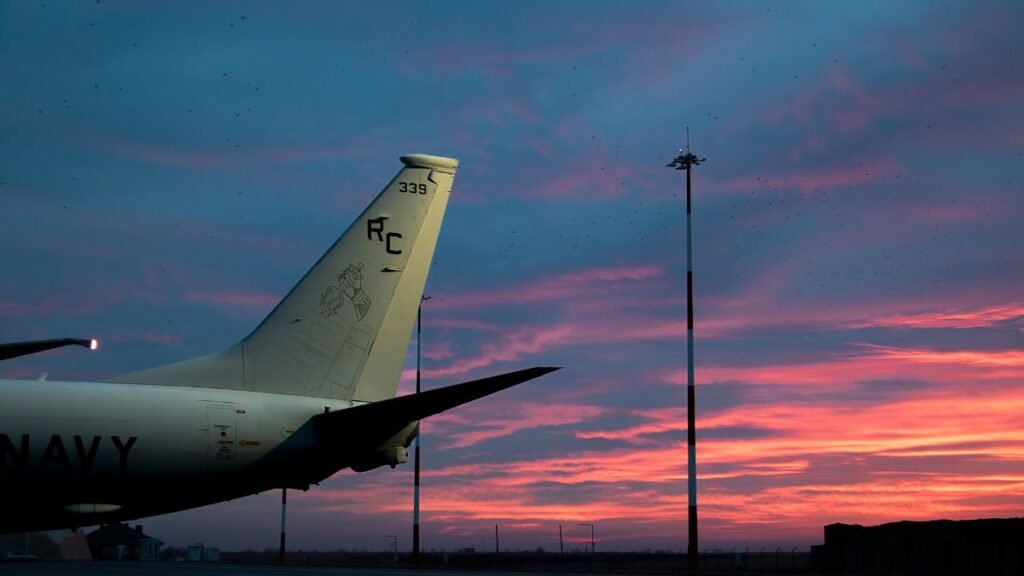
The United States also appears to have stepped up maritime surveillance. Bulgarian National Radio reported that a U.S. Navy P-8A Poseidon, a maritime patrol and anti-submarine aircraft, arrived in Varna on Sunday, Oct. 18, from Naval Air Station Sigonella in Italy, according to Stars and Stripes. It is not clear whether the plane is part of NATO’s new reinforcements.
Mihail Kogalniceanu Air Base near Constanta remains a hub for the alliance. During the Oct. 14-15 overnight alert, Spanish F-18 Hornets flying NATO’s enhanced air policing mission launched from the base, while Romanian F-16s responded to three drone incursions into Romanian airspace near the Ukrainian border, Stars and Stripes reported.
The American ground presence there is smaller than it was. In October 2025, Romania’s Defense Ministry said the 101st Airborne Division’s 2nd Brigade would not be replaced at the end of its rotation, leaving roughly 1,000 U.S. troops in Romania, down from several thousand, Stars and Stripes reported at the time. U.S. Army Europe and Africa said then that the move was “not an American withdrawal from Europe or a signal of lessened commitment to NATO.”
Bulgarian Defense Minister Dimitar Stoyanov has said Bulgaria plans to join NATO’s Drone Edge counter-drone project by the end of October, the AP reported. Romanian President Nicusor Dan has pressed for more. “We went to NATO, to our allies, and stated that we need equipment to ensure the protection of a NATO state on the Danube,” he said, according to Stars and Stripes.
Official links
- NATO: Collective defense and Article 5
- Turkish Ministry of Foreign Affairs: Implementation of the Montreux Convention
- Romanian Ministry of National Defence
- U.S. European Command
Photo: Petty Officer 2nd Class Jacquelin Frost/U.S. Navy.