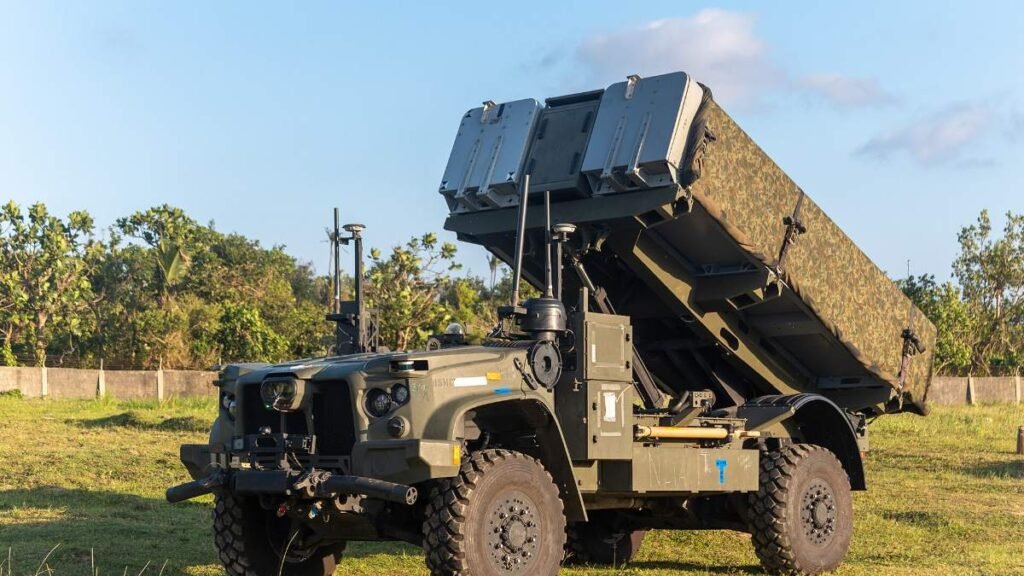
A Marine artillery battalion built to fire cannons now has a different job: hunting ships. On Oct. 9, the 1st Battalion, 10th Marine Regiment at Camp Lejeune, North Carolina, was redesignated as the service’s first medium missile battalion, built around the Navy-Marine Expeditionary Ship Interdiction System, or NMESIS.
At the ceremony on Lejeune’s WPT Hill Field, Lt. Col. Joseph Mozzi, the battalion commander, fixed a battle streamer to the unit’s new colors, Stars and Stripes reported. It is the first battalion-size unit in the Corps organized around the remotely operated anti-ship launcher. Until now, NMESIS has lived inside smaller batteries in the Pacific.
The battalion belongs to the 2nd Marine Division and II Marine Expeditionary Force, which gives the East Coast its first unit built around the weapon. USNI News reported that a service release called the change “the start in the modernization of artillery battalions.” Mozzi said NMESIS “will also be a ground-based long-range precision fires platform,” a nod to the fact that the missile can hit targets on land as well as at sea.
What NMESIS is: specs of the Marines’ ship-killing launcher
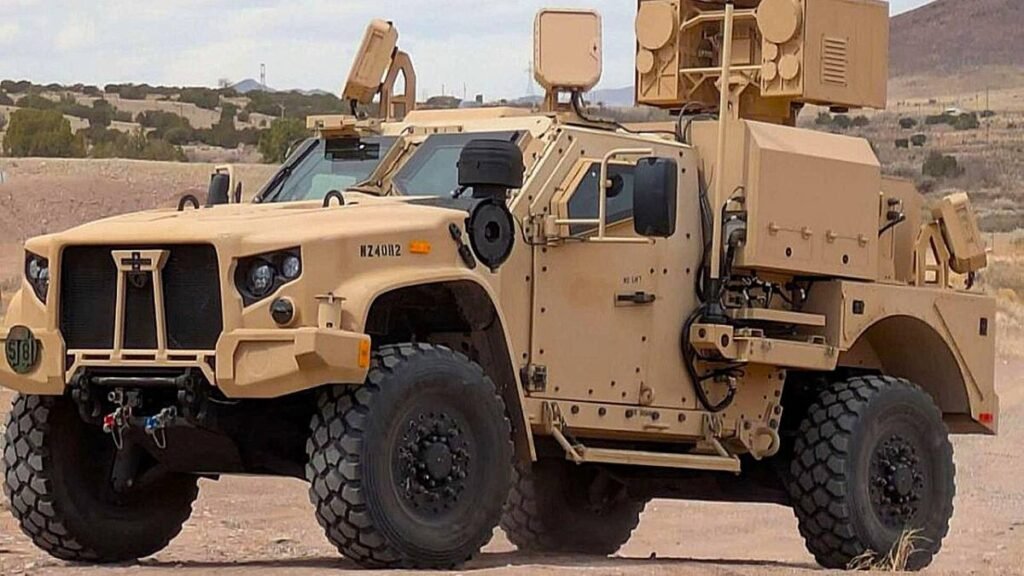
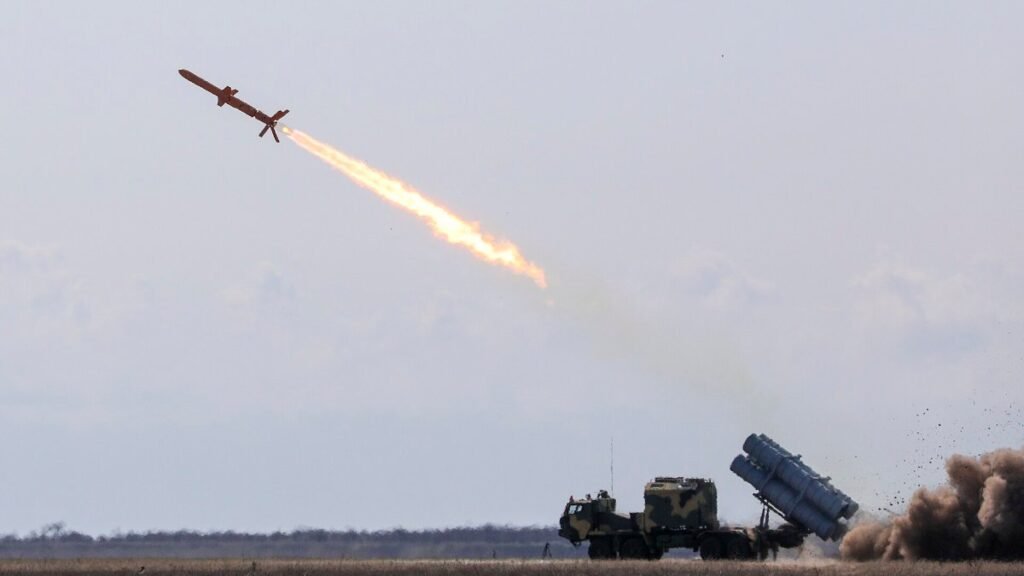
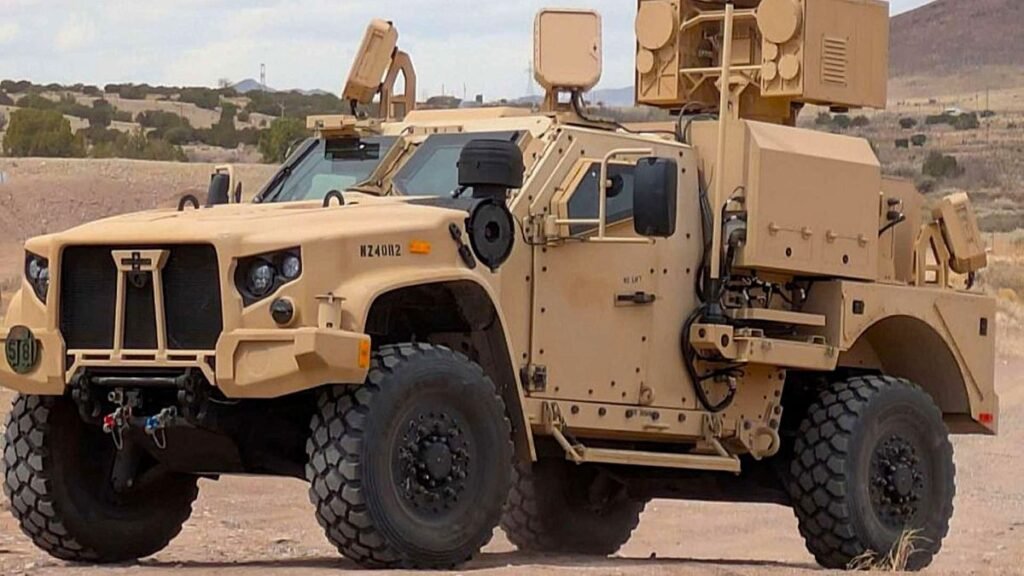
NMESIS is a missile truck with nobody in the cab. Marines can drive it remotely, park it on a coastline and fire from a distance. The main components and published performance figures:
- Vehicle: an unmanned, remotely operated version of the Joint Light Tactical Vehicle, according to Military Times.
- Weapon: two Naval Strike Missiles per launcher. The missile comes from Norway’s Kongsberg, which has teamed with Raytheon on it in the U.S.
- Range: Raytheon says the missile can engage ships at “greater than 100 nautical miles.” The Marine Corps says a 2021 test off Hawaii showed an effective range of 130 nautical miles, Military Times reported.
- Warhead and flight: a 500-pound-class warhead with a programmable fuze. The missile flies at sea-skimming altitude and maneuvers to evade radar and defenses, per Raytheon.
- Land attack: the missile can follow terrain to strike targets ashore, Raytheon says.
- Fire control: NMESIS pairs the missile with the Navy’s NSM fire control system, according to Marine Corps Systems Command.
- Transport: NMESIS has moved by C-130 aircraft and by Navy air-cushion landing craft (LCAC).
- Unit size: a full medium-range missile battery in a Marine Littoral Regiment has 18 launchers in six sections of three, USNI News reported. It is not yet clear whether the new battalion will use the same layout.
Why the Marines are trading cannons for missiles
The conversion grows out of Force Design 2030, the overhaul then-Commandant Gen. David Berger announced on March 23, 2020. That plan called for cutting the Corps’ cannon artillery batteries from 21 to five and increasing rocket artillery capacity by 300%, according to the Congressional Research Service. The aim was to align the Corps with a National Defense Strategy focused on strategic competition with China and Russia, with the Indo-Pacific as the main theater.
The Corps dropped “2030” from the name in early 2024, saying modernization is a continuous effort. Under the current commandant, Gen. Eric Smith, the program is simply Force Design. When Smith released the 2025 Force Design Update in October 2025, he called it “the Marine Corps’ strategic priority.”
NMESIS is central to that plan. The concept is called expeditionary advanced base operations: small Marine units go ashore on islands along a sea route, hide, and threaten any ship that comes within range. USNI News reported that NMESIS batteries are meant to be dropped along island chains by the Navy’s new Landing Ship Medium. They would be resupplied by air or by unmanned surface vessels carrying two missile canisters each.
Mozzi pointed to “the requirement for the Marine Corps to have a land-based capability to conduct sea denial,” Stars and Stripes reported. Military Times quoted him calling making the battalion NMESIS-capable a step “to facilitate the maritime component commanders to fight for sea control.” In plain terms, Marines on land would help the Navy keep enemy warships out of contested waters.
“Projecting combat power ashore from the sea is historically what [Marines] do.”
Col. William Soucie, commander of the 10th Marine Regiment, to Stars and Stripes
Where NMESIS has been used: tests, exercises and deployments
The 2021 sinking exercise off Hawaii
NMESIS made its name before it was ever fielded. On Aug. 15, 2021, during Large Scale Exercise 21 at the Pacific Missile Range Facility at Barking Sands, Hawaii, it fired two Naval Strike Missiles at a target ship, and both hit, Marine Corps Systems Command said. The missile flew more than 100 nautical miles before impact. The system was still a prototype at that point, so command engineers ran the fire control.
First fielding with 3rd Marine Littoral Regiment
The 3rd Marine Littoral Regiment in Hawaii became the first unit to field NMESIS at a ceremony at Marine Corps Base Hawaii on Nov. 26, 2024, according to the Marine Corps. A medium-range missile battery inside the regiment’s 3rd Littoral Combat Team operates the launchers.
Balikatan in the Philippines
On April 26, 2025, during the U.S.-Philippine exercise Balikatan, C-130s carried NMESIS to Batan Island in the Batanes chain, north of Luzon. It was the system’s first deployment in the Philippines, I Marine Expeditionary Force said. Lt. Gen. Michael Cederholm, the U.S. joint task force commander, called it “a significant day for the Marine Corps.”
Okinawa and Ishigaki with 12th Marine Littoral Regiment
The 12th Marine Littoral Regiment’s missile battery brought NMESIS to Okinawa on July 10, 2025, and trained with it at Camp Hansen, USNI News reported. That September, during the U.S.-Japan exercise Resolute Dragon, the battery took the launchers to Ishigaki Island, about 150 miles east of Taiwan. It was the system’s first time on the island, and no missiles were fired, Stars and Stripes reported.
NMESIS cost and production
Public figures on NMESIS spending are scattered, and the Corps has not published a total program cost. The available numbers come from contracts and budget documents:
- According to its fiscal 2025 budget request, the Marine Corps bought 97 NMESIS in fiscal 2023 and 24 in fiscal 2024, and procurement was paused for fiscal 2025, Military Times reported.
- In November 2024, the Navy gave Kongsberg a five-year, $900 million contract to provide NMESIS and the Naval Strike Missile, Military Times reported.
- On July 9, 2025, Marine Corps Systems Command awarded Kongsberg about $47.4 million for logistics support, engineering and prototype Block 2 hardware and software for the launcher’s weapon control and fire control systems. Work is due by Sept. 7, 2027, according to the Pentagon’s contract announcement. About 10% of the work is in Johnstown, Pennsylvania.
Raytheon says Kongsberg builds Naval Strike Missile launchers in the United States and uses its U.S. supply base to build the missile and other components here.
What changes for the 10th Marines
The battalion is not giving up its howitzers. The Marine Corps says it will keep its lightweight howitzer capability, and the 10th Marines still has cannon artillery in another battalion. Soucie said NMESIS will complement the regiment’s other artillery platforms, Stars and Stripes reported.
The Corps sees this unit as a model. USNI News reported that the service picked the battalion as the main candidate to handle II MEF’s NMESIS units, and that the unit brings 86 years of artillery experience to the mission. Until now, NMESIS has been fielded in the Pacific littoral regiments, the 3rd in Hawaii and the 12th in Okinawa. A missile battalion at Lejeune gives the East Coast division a sea-denial weapon of its own.
Soucie told Stars and Stripes the missiles would let the unit shoot in support of maneuver already ashore as well as maneuver at sea. He stressed to Military Times that the people are staying put: “the Marines and Sailors in that formation are not changing.”
Official links
- U.S. Marine Corps: Force Design
- 10th Marine Regiment
- Marine Corps: 3d Marine Littoral Regiment receives NMESIS
- Marine Corps Systems Command: NMESIS demonstration during LSE 21
- Raytheon: Naval Strike Missile
- Kongsberg newsroom
- Congressional Research Service: Force Design 2030
Photo: Chief Warrant Officer Trent Randolph/U.S. Marine Corps.