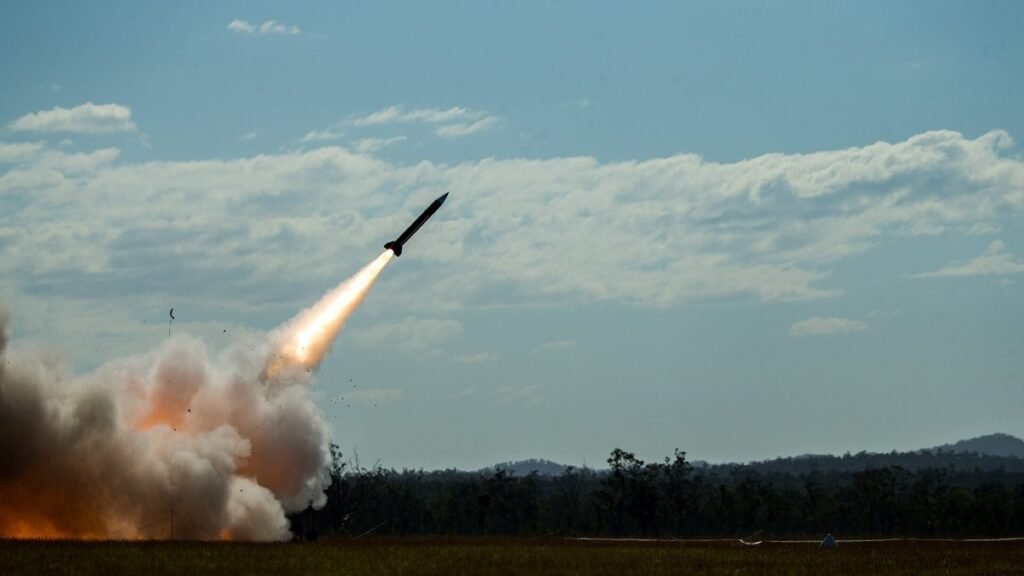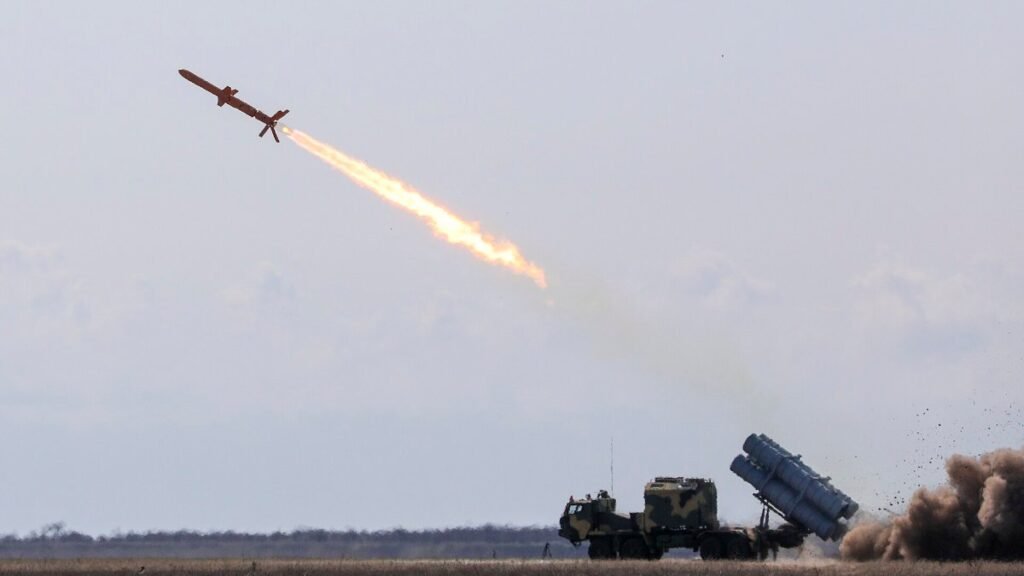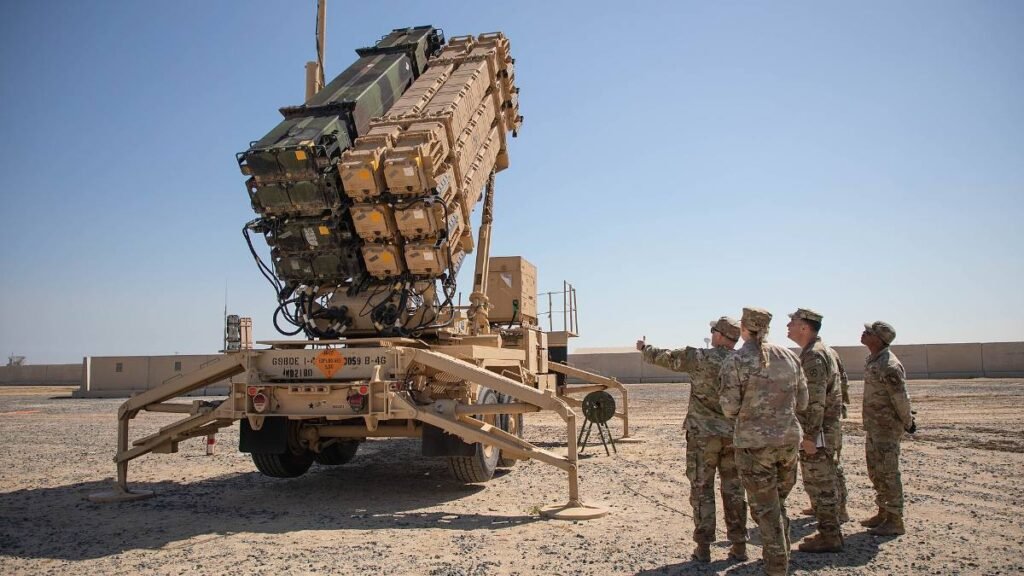
The Army has set aside an air defense unit to support Golden Dome for America, the Pentagon’s planned homeland missile shield, even as most of the program’s 2027 money sits in a budget bill Congress has shown little appetite to pass.
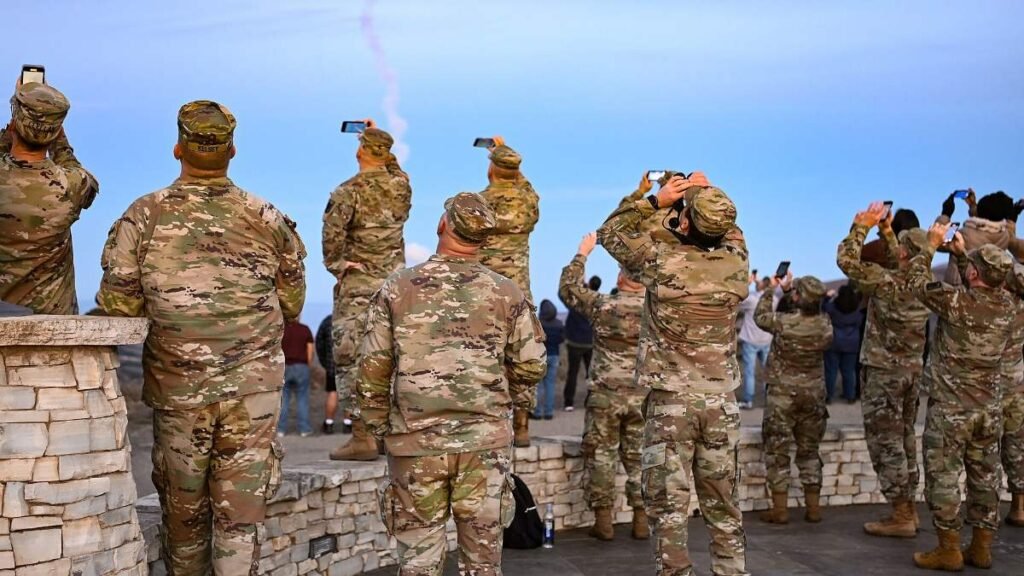
Lt. Gen. John L. Rafferty, commanding general of U.S. Army Space and Missile Defense Command, told reporters at the Association of the United States Army’s annual meeting that a unit has been “earmarked” for the mission, Military Times reported. He did not name it. He described it as “a well-trained organization that we know can meet the demands of Golden Dome for America when the systems are fielded.”
The disclosure is one of the first concrete signs of how the Army’s existing air and missile defense force will plug into a program that has so far been defined mostly by executive orders, cost estimates and classified briefings.
What the Army’s role in Golden Dome will be
Rafferty, who took command of SMDC on April 29 from Lt. Gen. Sean Gainey, according to the Army, framed the service’s contribution around people and experience rather than hardware. “We have the most experienced air defense and combat-seasoned air defense formations in the world,” he said, as quoted by Military Times.
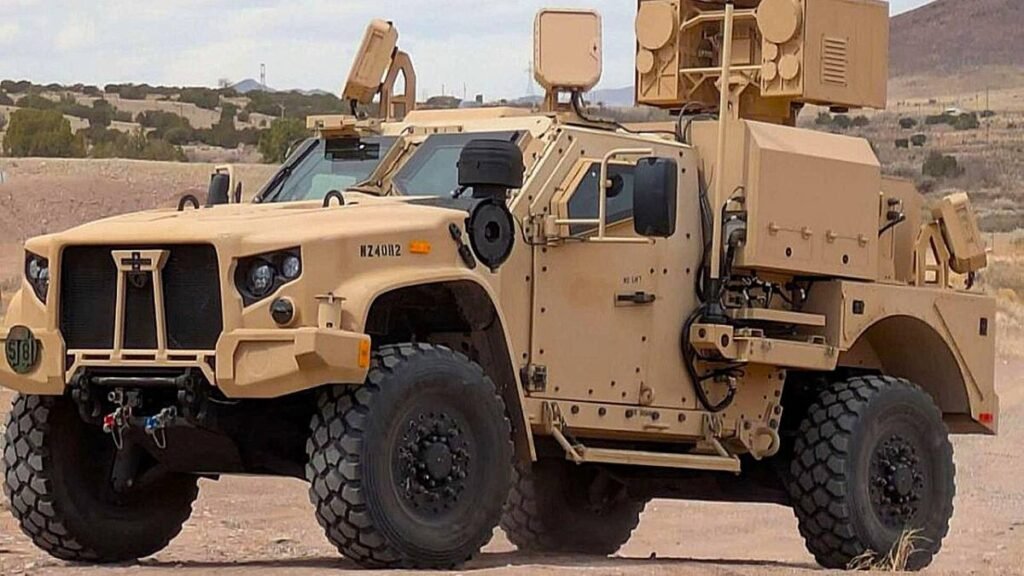
He also pointed to a structural change. Army air defense today is fielded in grouped packages, with a set of sensors, interceptors and command-and-control nodes that work together inside one formation. Rafferty said Golden Dome could break those bundles apart so that any sensor, interceptor or command-and-control system can work with any other across the country, Defense News reported. That is a bigger shift than adding a battery or two. It points toward tying Army equipment into sensors and shooters run by other services on a continental scale.
“It’s going to take all of us to help enable the defense of the homeland through Golden Dome for America,” Rafferty said, adding that “we’re all in to help to deliver that.” He called protecting the homeland “SMDC’s No. 1 priority,” Military Times reported.
A parallel push on Army space
The Golden Dome work is landing at the same time the Army is building out its own space force structure. The service established a Space Operations Branch in June and this month moved more than 600 enlisted soldiers into it, picked from nearly 3,000 applicants, as the first permanent cadre of the new 40D tactical space operations specialty, Military Times reported.
How Joint Task Force Gold works
The day-to-day planning sits with Joint Task Force-Gold, which U.S. Northern Command announced in January. NORTHCOM said the task force “enhances the integration and synchronization of the homeland’s integrated air and missile defense (IAMD) enterprise.” It is co-located with SMDC at Peterson Space Force Base in Colorado, and at its launch it was led by Gainey, then SMDC’s commander.
The cell is small, roughly 100 people, and led by Army officers. Since February it has run planning “sprints” in Colorado Springs that pull together about 300 stakeholders. The next one is scheduled for the end of October, according to Military Times and Defense News. Rafferty said he tries to draw no distinction between SMDC and JTF-Gold.
Col. Kevin “Stoney” Stonerook, the task force’s deputy commander, described its job as assembling “the team of teams, all the different stakeholder communities,” including vendors and other agencies. One assignment is “to really provide a cyber warfare capability for GDA,” he said, as quoted by Military Times.
The task force is also helping decide where things go. “We definitely know that we are involved in putting together some of the sites,” Stonerook said, while acknowledging that “there’s a lot we still have to figure out.”
The money problem behind the missile shield
The Army can earmark units, but the bigger question is whether Golden Dome has money to spend after this fall.
For fiscal 2027, the White House asked for $1.5 trillion for the Defense Department, split between a $1.15 trillion base budget and a $350 billion reconciliation request, Breaking Defense reported. Nearly all of Golden Dome’s share was placed in the reconciliation piece.
| FY2027 Golden Dome funding piece | Amount | Where it sits |
|---|---|---|
| Total Golden Dome request | $17.5 billion | Combined |
| Reconciliation portion | A little more than $17 billion | Proposed $350 billion reconciliation package |
| Base budget research and development | Less than $400 million | $1.15 trillion base defense budget |
Figures as reported by Defense One, citing an Office of Management and Budget spokesperson, and by Breaking Defense.
Reconciliation lets Congress pass spending with a simple majority, and it is how Golden Dome got started: the 2025 reconciliation law provided about $25 billion. Gen. Michael Guetlein, the Space Force officer who runs the program, said in August that 90% of it had been obligated. He was blunt about what happens if no new money arrives. “If they don’t figure it out, there’s no Golden Dome because there is no funding,” Guetlein said at the Space and Missile Defense Symposium in Huntsville, Alabama, Breaking Defense reported.
That warning is now live. A continuing resolution took effect Oct. 1, and because Golden Dome never had a fiscal 2026 appropriation, there is no baseline for the stopgap to carry forward, Air & Space Forces Magazine reported. The magazine reported that there appears to be little political will for another reconciliation bill. In August, Breaking Defense reported that Pentagon leaders were discussing ways to reshuffle fiscal 2027 funds to keep the work going, though Guetlein said no decisions had been made.
The long-term bill
The near-term fight is over billions. The long-term number is far larger. The Pentagon first pegged Golden Dome at $175 billion, and Guetlein raised that to $185 billion in March. The Congressional Budget Office, in a May analysis requested by Sen. Jeff Merkley, D-Ore., estimated that a notional system meeting the executive order’s requirements would cost about $1.2 trillion to develop, deploy and operate over 20 years. Space-based interceptors alone made up about $720 billion of that.
CBO built its own architecture because the Defense Department has not released one. It also said such a system could be overwhelmed by a full-scale attack from a peer adversary.
What lawmakers say about Golden Dome
Support for homeland missile defense runs across the aisle. Frustration with how the program is being run does too.
At a Sept. 29 hearing of the Senate Armed Services strategic forces subcommittee, Sen. Mike Rounds, R-S.D., said the program should not have needed reconciliation. “This should have been on a bipartisan basis,” he said, according to Air & Space Forces Magazine. He urged putting Golden Dome in the regular appropriations bill. Sen. Angus King, I-Maine, called bypassing appropriations “very bothersome.” Sen. Deb Fischer, R-Neb., noted that the committee wrote layered missile defense language into the fiscal 2024 defense policy bill. “So, it came from us,” she said.
Republicans who back the effort have complained about the pace. Rep. Jeff Crank, R-Colo., a co-founder of the House Golden Dome Caucus, said in January that the delayed architecture had “certainly been frustrating.” “I’d like to be three or four months ahead of where we are right now,” he told Military Times.
Golden Dome timeline
- Jan. 27, 2025: President Donald Trump signs Executive Order 14186, “The Iron Dome for America,” ordering a shield against ballistic, hypersonic and advanced cruise missiles.
- May 20, 2025: Trump puts the cost at $175 billion and names Guetlein to lead it, Breaking Defense reported.
- July 17, 2025: The Senate confirms Guetlein as direct reporting program manager, Air & Space Forces Magazine reported.
- January 2026: NORTHCOM stands up Joint Task Force-Gold.
- February 2026: JTF-Gold begins planning sprints in Colorado Springs.
- May 2026: CBO estimates about $1.2 trillion over 20 years.
- Oct. 1, 2026: A continuing resolution takes effect with no Golden Dome baseline.
- Late October 2026: Next JTF-Gold planning sprint.
- End of 2027: Pentagon target for fielding an early version of the shield.
- End of Trump’s second term (January 2029): Goal of an operational shield.
- 2035: Target for a fuller system.
Much of the Army’s piece is still being worked out, including which unit will carry the mission. “We’re continuing to find out more,” Stonerook said.
Official links
- U.S. Northern Command: NORTHCOM establishes JTF-Gold
- U.S. Army: USASMDC welcomes new leader
- Congressional Budget Office: Potential Costs of a National Missile Defense System
- GovInfo: Executive Order 14186, The Iron Dome for America
Photo: Staff Sgt. Clara Harty/U.S. Army.