President Donald Trump has said he will not attack Iran before Tuesday’s midterm elections. What happens after the vote is the question hanging over the Gulf, oil markets and U.S. forces in the region.
No decision has been announced. But U.S. officials, allies and Iranian leaders have said enough in the past two weeks to sketch what a new round of strikes could look like and how Iran says it would answer. This explainer pulls that reporting together.
Has Trump decided?
Not publicly. “Do I finish it off, which would be very easy to do, or do I make a deal?” Trump said in a Fox News interview on Oct. 25, CNBC reported. The last confirmed U.S. strikes on Iran were on Sept. 1.
He has pulled back before. Trump has called off major strikes six times since July, Fox News reported, citing officials. At the same time, U.S. officials have told several Middle East governments to prepare for possible renewed action after the election and for Iranian retaliation, two diplomats told The Associated Press.
Diplomacy is running in parallel. Vice President JD Vance has sent a letter to Iran’s security chief, Mohsen Rezaei, proposing direct talks, and Qatari mediators have been shuttling to Tehran. We covered where that outreach stands.
What could be hit?
Reporting points to four broad categories:
- Nuclear sites, especially Pickaxe Mountain. Trump has repeatedly named the deeply buried site near Natanz, which Iranians call Kooh Kolang. CNN reported that military plans for striking Iranian nuclear sites, including Pickaxe, call for using the GBU-43/B Massive Ordnance Air Blast bomb, known as the Mother of All Bombs.
- Energy infrastructure. The New York Times reported that possible targets include Iran’s energy facilities, according to Time. Trump has also mentioned Kharg Island, Iran’s main oil export terminal, which U.S. bombers struck in March.
- Missile and drone stockpiles. Iran’s arsenals, partly rebuilt during the spring ceasefire, are also on the reported target list.
- Military and leadership targets inland. A former senior Defense Intelligence Agency officer, Harrison Mann, told The Hill that one escalation path would be a return to striking military and political targets deep inside Iran, rather than mostly coastal sites.
How big would it be?
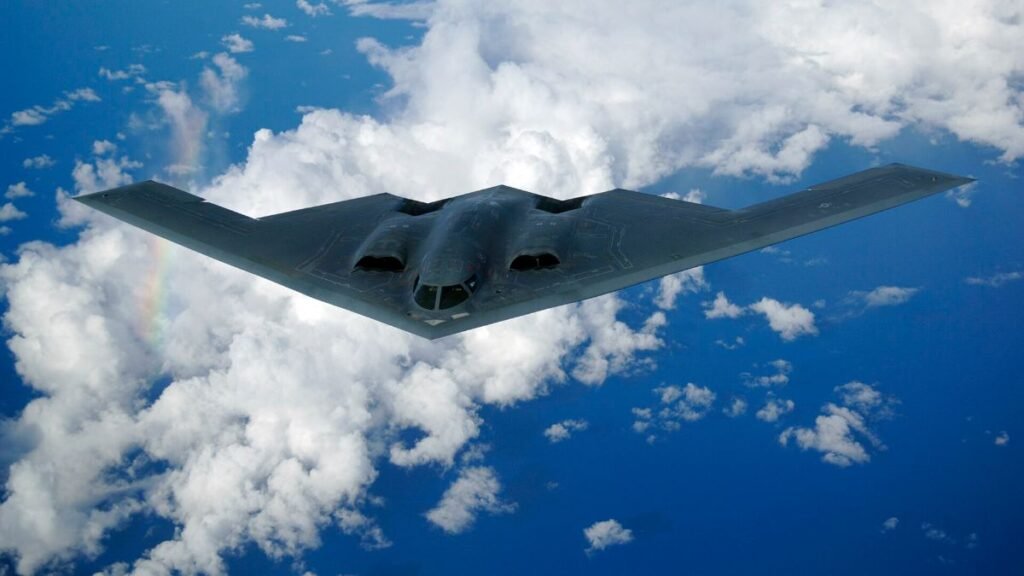
Washington has described it to allies as short and intense. The U.S. told regional partners a new round could last several days, the AP reported, and the Wall Street Journal reported that Gulf states were told to prepare for a brief, high-intensity campaign.
CNN also reported that some Pentagon options amount to what one source called a “fireworks show,” designed to give Trump an off-ramp from the war even if the strikes fall short of his original goals. A White House official told CNN the administration does not comment on military plans that may or may not exist.
The force is in place. The aircraft carrier USS Theodore Roosevelt and amphibious ships carrying Marines, about 9,000 troops in all, were sent to the region late last month. CENTCOM commander Adm. Brad Cooper briefed Trump in person on options on Oct. 29.
How does Iran say it would respond?
Tehran’s threats have grown broader. On Oct. 31, Supreme Leader Mojtaba Khamenei ordered the armed forces to be ready for an immediate response without geographic limits if Iran is attacked again, Al Jazeera reported.
Iranian officials have named specific kinds of targets. An adviser to Iran’s parliament speaker described the country’s strategy as having no red lines, and officials have warned that oil facilities, undersea internet cables, data centers and artificial intelligence facilities in the Gulf could all be hit, according to Al Jazeera and The Hill.
Iran also has tools short of missiles. It has been attacking or claiming mine strikes on tankers in the Strait of Hormuz for weeks, and the Houthis in Yemen, its allies, have been firing missiles and drones at Saudi Arabia. U.S. officials have told Gulf partners to take precautions to protect energy facilities and critical infrastructure, the AP reported.
Would it work?
Analysts are split, and many are skeptical. Eric Brewer of the Nuclear Threat Initiative argued that there is no military solution for Iran’s remaining nuclear sites and that striking energy targets is unlikely to force Iran to accept U.S. demands, Al Jazeera reported. He also warned that Iran would try to make any war longer than Washington wants.
Supporters of strikes argue that a heavy blow could make Tehran more willing to negotiate, a view U.S. officials described to the Times and one Trump has at times shared. Trump has also suggested the war could end quickly. “I think the war is going to end immediately after the election,” he said, according to Time.
What it would cost
The Pentagon now estimates the war has cost more than $47 billion, with over $29 billion of that needed to replace munitions. The Congressional Budget Office has said the conflict used up two-thirds of U.S. missile interceptors. A new campaign would add to both, while Iranian retaliation would test air defenses across the Gulf again.
The Pentagon’s casualty system lists 23 U.S. service members who have died since the war began, 11 of them killed by enemy fire, CBS News reported.
What we don’t know
- Whether Trump will approve any strike, and when.
- Whether Israel would take part, and on what targets.
- Whether Iran will answer Vance’s letter before the vote.
- How Gulf states hosting U.S. forces would respond to Iranian retaliation on their soil.
Sources
- CBS News: Iran war updates, Oct. 30
- CNBC: Trump says he’ll soon decide whether to make a deal with Iran or finish it off
- Fox News: Military options being prepared for Trump
- The Associated Press: US warns allies to prepare for possible Iran strikes after elections
- CNN: US considering using Mother of All Bombs against Iran
- Time: US reportedly considering major strikes on Iran after midterms
- The Hill: US prepares options for potential post-midterm strikes on Iran
- Al Jazeera: Iran warns of unfettered retaliation if attacked
- Al Jazeera: What we know of Vance’s letter to Rezaei
Photo: Staff Sgt. Bennie J. Davis III/U.S. Air Force (public domain), file photo.